How DO We Learn Math?

cat-learns-through-osmosis

What makes it possible to learn advanced math fairly quickly is that the human brain is capable of learning to follow a given set of rules without understanding them, and apply them in an intelligent and useful fashion. Given sufficient practice, the brain eventually discovers (or creates) meaning in what began as a meaningless game.

Keith Devlin
Should Children Learn Math by Starting with Counting?

It seems obvious that our children must have a wide range of experience with real world objects before counting, addition, or subtraction mean anything to them. But are other topics, such as calculus, better learned as abstract rules — as a game that we play with symbols? And what about the topics in the middle? For instance, how best can we break our algebra students of common errors such as distributing the square or canceling out addition terms?

To teach effectively, I need to understand how students learn. Do different approaches work best with different concepts? Or at different ages or stages of development? I can think of at least 3 ways that I have learned math — what about you? How do you and your children learn?


Continue reading How DO We Learn Math?

Math Teachers at Play #2

[Photo by Sister72.]

Welcome to the second Math Teachers At Play blog carnival! Some articles were submitted by their authors, other were drawn from the back-log in my blog reader, and I’ve spiced it all up with a few of my favorite quotations.

Let the mathematical fun begin…

Continue reading Math Teachers at Play #2

Math Teachers at Play #1

[Photo by StuSeeger.]

Welcome to the inaugural edition of the Math Teachers At Play blog carnival! I hope you enjoy this collection of tips, tidbits, games, and activities for students and teachers of preschool-12th grade mathematics.

For this first carnival, I’ve drawn several recent posts from my blog reader as examples of the types of posts I’d love to include in future editions of Math Teachers at Play. I tried to find something for everyone, from multiplication drill for elementary students to advice for understanding high school math equations.

Let the mathematical fun begin…

Continue reading Math Teachers at Play #1

Writing to Learn Math II

[Photo by Andy Hay.]

In addition to all the funny Google searches, I get plenty of normal inquiries about math topics. People come here looking for help with fractions, word problems, and math club activities — no surprise, those — but I would never have predicted the popularity of the search topic “writing in math class.”

Last year, I compiled a variety of math journal resources, but I’ve found many more since then, especially for older (high school and college) students. So if you’re looking for new ways to get your math students writing…

Continue reading Writing to Learn Math II

Free Learning Tools, Games, and More


[Photo by ♥Sage (resting… finally!).]

Browsing the Internet, I came across a slideshow called 101 Free Learning Tools, which explores “the idea that there is at least one excellent free learning tool (or site) for every learning problem, need or issue.”

Of course, many of these sites I already knew, at least by reputation. But there are plenty of interesting places that were new to me.

Continue reading Free Learning Tools, Games, and More

What’s Wrong with “Repeated Addition”?

[Photo by Alejandra Mavroski.]

Myrtle called it The article that launched a thousand posts…, and counting comments on this and several other blogs, that may not be too much of an exaggeration. Yet the discussion feels incomplete — I have not been able to put into words all that I want to say. Thus, at the risk of once again revealing my mathematical ignorance, I am going to try another response to Keith Devlin’s multiplication articles.

Let me state up front that I speak as a teacher, not as a mathematician. I am not qualified, nor do I intend, to argue about the implications of Peano’s Axioms. My experience lies primarily in teaching K-10, from elementary arithmetic through basic algebra and geometry. I remember only snippets of my college math classes, back in the days when we worried more about nuclear winter than global warming.

I will start with a few things we can all agree on…

Continue reading What’s Wrong with “Repeated Addition”?

If It Ain’t Repeated Addition, What Is It?

[Photo by SuperFantastic.]

Keith Devlin’s latest article, It Ain’t No Repeated Addition, brought me up short. I have used the “multiplication is repeated addition” formula many times in the past — for instance, in explaining order of operations. But according to Devlin:

Multiplication simply is not repeated addition, and telling young pupils it is inevitably leads to problems when they subsequently learn that it is not.

I found myself arguing with the article as I read it. (Does anybody else do that?) If multiplication is not repeated addition, then what in the world is it?

Continue reading If It Ain’t Repeated Addition, What Is It?

Summer: Time to Sharpen Math Skills

[Photo by Vox Efx.]

School’s out — and what could be more fun in the lazy, hazy days of summer than to study math? Check out these articles from Maria Miller of Homeschool Math Blog:

How to Help a Student Who is Behind in Math

Keeping Your Math Skills Sharp Over The Summer

Continue reading Summer: Time to Sharpen Math Skills

Hooray for (Math) History

Photo by Benimoto.

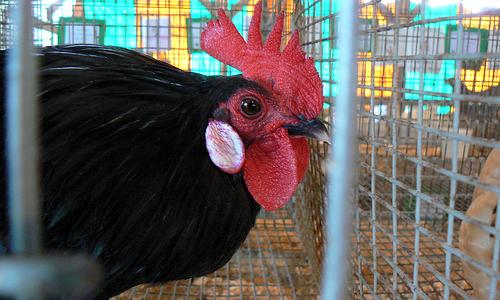
John Napier foiled a thief with the aid of logic and a black rooster. For this and other acts of creative problem solving, his servants and neighbors suspected him of witchcraft.

What does this have to do with mathematics?

Math was Napier’s favorite hobby. He invented logarithms to help people handle large numbers easily, and he even created a calculator out of a chessboard. [See how it works: addition, subtraction, multiplication.]

Continue reading Hooray for (Math) History

Alexandria’s Dog is Now a Teacher


Photo by alex-s.

A reader of Indian descent has been kind enough to write to me about a difference in our cultures. In the US, or at least in the parts with which I am familiar, it is common to name one’s pet after a famous person. In India, however, to name a dog after a human is a very deep insult.

I am sorry! It was not intended that way.

Therefore, I have re-named Alexandria Jones‘s dog after a Westerner. I would like to keep the tradition of naming the characters in my Alex stories after people in math history, so I am hoping this one will not offend anyone.

Continue reading Alexandria’s Dog is Now a Teacher