Professional Mathemusician Vi Hart is back with more mathematical holiday fun. Enjoy!
HexaFlexaParty This Weekend!
Sunday, October 21, is the worldwide hexaflexagon party in honor of Martin Gardner’s birthday. Gardner’s article about hexaflexagons launched his career as a recreational math guru who inspired people all around the world to love math.
Here’s how to join in the fun:
Hexaflexagon History
What Is a Proof?
I’ve been enjoying the Introduction to Mathematical Thinking course by Keith Devlin. For the first few weeks, we mostly talked about language, especially the language of logical thinking. This week, we started working on proofs.
For a bit of fun, the professor emailed a link to this video. My daughter Kitten enjoyed it, and I hope you do, too.
Who Killed Professor X?
What a Fun Book!
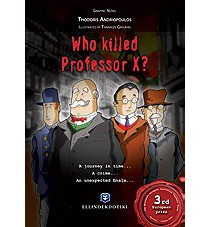
Who Killed Professor X? is a work of fiction based on actual incidents, and its heroes are real people who left their mark on the history of mathematics. The murder takes place in Paris in 1900, and the suspects are the greatest mathematicians of all time. Each suspect’s statement to the police leads to a mathematical problem, the solution of which requires some knowledge of secondary-school mathematics. But you don’t have to solve the puzzles in order to enjoy the book.
Fourteen pages of endnote biographies explain which parts of the mystery are true, which details are fictional, and which are both (true incidents slightly modified for the sake of the story).
My daughter Kitten, voracious as always, devoured it in one sitting — and even though she hasn’t studied high school geometry yet, she was able to work a couple of the problems.
The World of Mathematical Reality
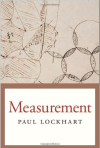
I wanted to include this video last week when I mentioned Paul Lockhart’s new book, but I couldn’t figure out how to copy it from Amazon. So today I read Shecky’s review of Measurement, which included the YouTube video. Thanks, Shecky!
Rate × Time = Distance Problems
I love how Richard Rusczyk explains math problems. It’s a new school year, and that means it’s time for new MathCounts Mini videos. Woohoo!
- Download the activity sheet with warm-up and follow-up problems.
Sample from the Introduction to Mathematical Thinking Class
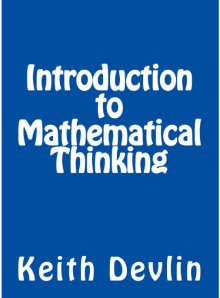
I’m really looking forward to Keith Devlin’s free Introduction to Mathematical Thinking class, which starts in mid-September. There are more than 30,000 nearly 40,000 students signed up already. Will you join us?
These days, mathematics books tend to be awash with symbols, but mathematical notation no more is mathematics than musical notation is music.
A page of sheet music represents a piece of music: the music itself is what you get when the notes on the page are sung or performed on a musical instrument. It is in its performance that the music comes alive and becomes part of our experience. The music exists not on the printed page but in our minds.
The same is true for mathematics. The symbols on a page are just a representation of the mathematics. When read by a competent performer (in this case, someone trained in mathematics), the symbols on the printed page come alive — the mathematics lives and breathes in the mind of the reader like some abstract symphony.
— Keith Devlin
Introduction to Mathematical Thinking
How Big Is Infinity?
How Crazy Can You Make It?
And here is yet more fun from Education Unboxed. This type of page was always one of my my favorites in Miquon Math.
Update:
Handmade “How Crazy…?” worksheets are wonderful, but if you want something a tad more polished, I created a printable. The first page has a sample number, and the second is blank so that you can fill in any target:
Add an extra degree of freedom: students can fill in the blanks with equivalent and non-equivalent expressions. Draw lines anchoring the ones that are equivalent to the target number, but leave the non-answers floating in space.
Or don’t draw lines. Let the kids create a worksheet for you to solve. After they finish their expressions, can you figure out which ones connect to the target number?

Princess in the Dungeon Game
Yet more fun from Rosie at Education Unboxed. I found these while looking for videos to use in my PUFM Subtraction post. Rosie says:
This is seriously embarrassing and I debated whether to put this video online or not because this is NOT my normal personality, but my girls made up this game and will play it for over an hour and ask for it repeatedly… so I figured someone out there might be able to use it with their kids, too.
If you know me, please don’t ever ask me to do this in public. I will refuse.
Princess in the Dungeon, Part 1 – Fractions with Cuisenaire Rods
 Denise Gaskins' Let's Play Math