Make Your Own Nim Games

tower of rocks on a beach

Nim is a pure strategy game for two players. On each turn, players remove an option until finally no choice remains.

Game options might include:

  • How many stones to take from a pile.
  • Which position to claim on a gameboard.
  • How far to count in a given sequence.

The rules can vary at the players’ whim (as long as both players agree). How many possibilities do you start with, what are the rules for removing options, and how do you win or lose the game? Everything is open to change. And with every tweak, players must reanalyze their strategy.

Continue reading Make Your Own Nim Games

Math Game Monday: Dominoes

Learn a new math game every week, for free

This classic family game is a great way to play with numbers and logical strategy.

Many parents remember struggling to learn math. We hope to provide a better experience for our children. And one of the best ways for children to enjoy learning is through hands-on play.

So what are you waiting for? Let’s play some math!

Dominoes

Math Concepts: subitizing dot patterns, thinking ahead.

Players: two or more.

Equipment: one set of double-six or double-nine dominoes, or two sets for five or more players.

Continue reading Math Game Monday: Dominoes

Math Game Monday: Farkle

Learn a new math game every week, for free

A great classic game for groups or family play.

Many parents remember struggling to learn math. We hope to provide a better experience for our children. And one of the best ways for children to enjoy learning is through hands-on play.

So what are you waiting for? Let’s play some math!

Farkle

Math Concepts: addition to ten thousand, probability with dice.

Players: any number.

Equipment: six six-sided dice, pencil and paper for keeping score.

Continue reading Math Game Monday: Farkle

Thinking Thursday: Math Eyes

Thinking Thursday math journal prompt

Writing to Learn Math: Math journal explanations avoid the formality that turns so many students away from geometry proofs.

Do you want your children to develop the ability to reason creatively and figure out things on their own?

Help kids practice slowing down and taking the time to fully comprehend a math topic or problem-solving situation with these classic tools of learning: Notice. Wonder. Create.

Continue reading Thinking Thursday: Math Eyes

Math Game Monday: Pattern Blocks Challenge

Learn a new math game every week, for free

This cooperative game fosters vocabulary and geometric visualization skills.

Many parents remember struggling to learn math. We hope to provide a better experience for our children. And one of the best ways for children to enjoy learning is through hands-on play.

So what are you waiting for? Let’s play some math!

Pattern Blocks Challenge

Math Concepts: geometric vocabulary, visualization.

Players: two or more (a cooperative game).

Equipment: pattern blocks.

Continue reading Math Game Monday: Pattern Blocks Challenge

2026 Mathematics Game

2026 annual math game

Now that we’re a few months into the year, many of our New Near’s resolutions have probably fallen by the wayside. It’s inevitable, according to Mark Twain, that we shall “cast our reformation to the winds and go to cutting our ancient shortcomings considerably shorter than ever.”

But there is one resolution that I enjoy keeping—the resolve to play more math.

My favorite way to celebrate at any time of the year is by playing the Year Game. It’s a prime opportunity for players of all ages to fulfill the two most popular resolutions: spending more time with family and friends, and getting more exercise.

So grab a partner, slip into your workout clothes, and pump up those mental muscles!

Continue reading 2026 Mathematics Game

Playful Math 184: Carnival of Living Math

Playful Math Carnival 184

Welcome to the 184th edition of the Playful Math Education Blog Carnival — a smorgasbord of delectable tidbits of mathy fun. It’s like a free online magazine devoted to learning, teaching, and playing around with math from preschool to high school.

With all the links, a blog carnival can feel overwhelming. Bookmark this article, so you can take your time reading the posts.

“Living math” means bringing our children face-to-face with the big ideas of mathematics to help them develop their reasoning skills. When the ideas of math come to life for our children, their minds delight in seeing how numbers and shapes connect to each other and exploring these relationships.

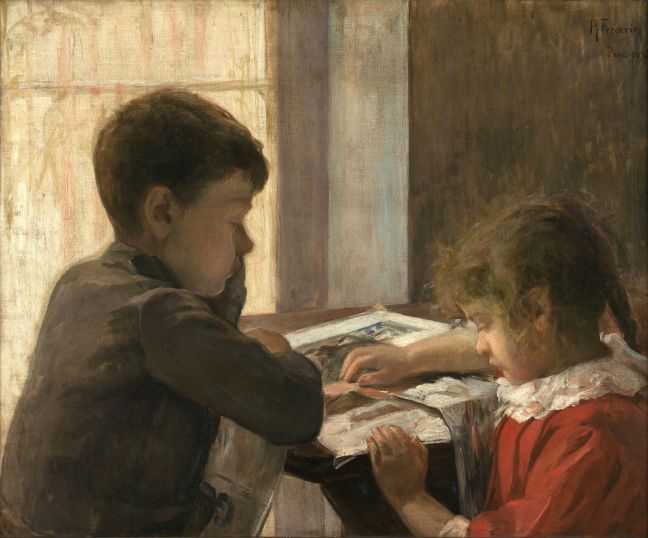
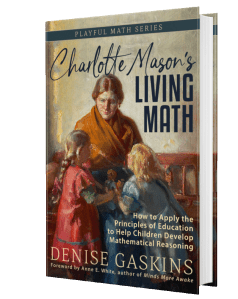
Scattered between the playful math links below, you’ll find quotations from my new book Charlotte Mason’s Living Math, along with several paintings of children playing and learning which I considered for the book but ran out of room.

“The lesson” by Rafael Frederico, 1895.

By tradition, we start the carnival with a puzzle/activity in honor of our 184th edition. But if you’d rather jump straight to our featured blog posts, click here to see the Table of Contents.

Continue reading Playful Math 184: Carnival of Living Math

Mental Math: Do’s and Don’ts

Father and son working on math homework

Over the course of this series, we’ve seen how mental math relies on a child’s own creative ways of thinking. In mental math, children develop understanding of how numbers interact with each other in many ways.

In this way, they learn the true 3R’s of math: to Recognize and Reason about the Relationships between numbers.

And the principles that underlie mental calculation are also fundamental to algebra, so that flexibility and confidence in mental math is one of the best predictors of success in high school math and beyond.

But as we went through the various example problems, did you find the written-out calculations hard to follow?

Don’t force your children to write down their mental math. It looks dreary when I write the calculations out step by step, but that’s not how it works in a child’s mind. With regular practice, this sort of thinking becomes second nature.

Continue reading Mental Math: Do’s and Don’ts

FAQ: Playful Math Journaling

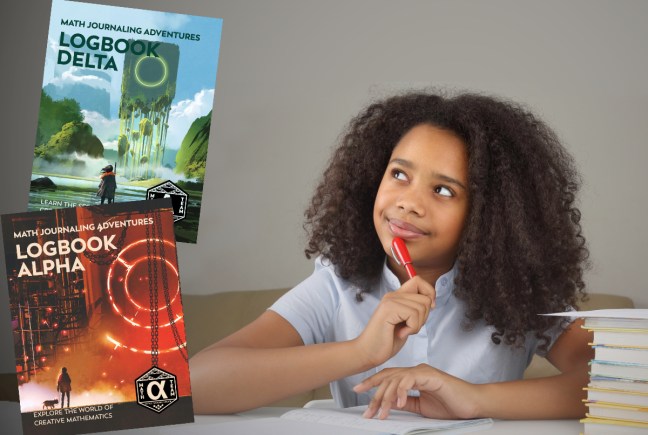
Girl student thinking about her math journal prompt

Ever since the school year started, I’ve been getting questions about how to use my new Math Journaling Adventures logbooks.

[SIDE NOTE: These logbooks are included in this month’s Thanksgiving Sale! You’ll get an automatic 10% discount off all print books, applied at checkout, no special code required.]

“I love the way your math books get my children thinking.

    “Finally, they are having fun with math!

      “But sometimes I have no idea what the journaling prompt is all about or how to teach it. Where can I buy a solutions manual?”

      Um, that’s not how math journals work.

      The cool thing about journaling prompts is that they have no “right” answer. They are explorations into different parts of the world of math, nature walks in the land of numbers, shapes, and patterns. Springboards into whatever our children want to investigate, whatever sparks their interest.

      A few of the problem-solving prompts may have specific answers, but it really doesn’t matter if our kids find the exact solution a math professional might give. If they write what makes sense to them, they’ve accomplished the goal.

      If later, they think of something they hadn’t noticed, or they want to change their answer — well, that is mathematical thinking, too.

      Continue reading FAQ: Playful Math Journaling