It’s been a busy day, though I haven’t gotten much work done on my book. We welcomed a new member to our family: Mariah.
Isn’t she beautiful?
And she’s just a sweet as she looks!
It’s been a busy day, though I haven’t gotten much work done on my book. We welcomed a new member to our family: Mariah.
Isn’t she beautiful?
And she’s just a sweet as she looks!
Gel pens are wonderful for editing because they show up so well against the manuscript text. Each pass gets a new color. The picture above is the 5th cycle through my Prealgebra & Geometry Games index, this time with purple ink.
When I printed the output from cycle #4, everything looked so neat in three columns with alphabet headers in place. I thought, “This is almost done!”
Moral: Don’t judge an index by how nice it looks.
Still, it’s also not as bad as the marked-up pages make it seem. Only a few of those will be major tweaks. (Like, how did we not notice that the Jack Lyon quote got left out of the reference section?!)
Plenty of work to go, but the end is in sight…
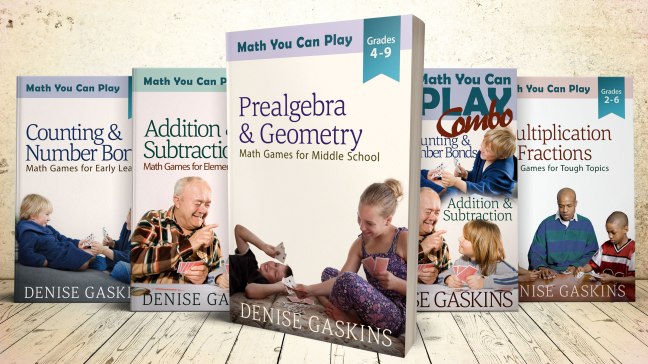
Prealgebra & Geometry: Math Games for Middle School is scheduled for publication in early 2021. Sign up for my newsletter to get updates.
Here’s a bit of fun I found on YouTube. Happy Friday!
Mathematicians and maths educators in order of appearance:
Eddie Woo @misterwootube
Hannah Fry @FryRSquared
James Tanton @jamestanton
Chris Smith @aap03102
Bobby Seagull @Bobby_Seagull
Jo Morgan @mathsjem
David Wees @DavidWees
Matt Parker @standupmaths
Michael Stevens @tweetsauce
Lieven Schiere @lievenscheire
Ben Sparks @SparksMaths
Rob Eastaway @robeastaway
Nira Chamberlain @ch_nira
Ed Southall @edsouthall
Steven Strogatz @stevenstrogatz
Simon Pampena @mathemaniac
Rachel Riley @RachelRileyRR
Alex Bellos @alexbellos
Simon Singh @SLSingh
Katie Steckles @stecks
Craig Barton @mrbartonmaths
Kyle Evans @kyledevans
With the less-than-help of my daughter’s cat, I’ve made it through several cycles of editing my Prealgebra & Geometry index. If you’re curious about the process, you may enjoy my behind-the-scenes peek at How to DIY a Nonfiction Index.
There’s yet a ways to go, but it’s starting to look like what I want. The index includes game listings by category: card games, pencil and paper games, cooperative games, solitaires, etc.
One of the entries is “Games, Complete List of.”
So I counted…
Officially, the book features 41 games that help prepare students for high school math by playing with number properties, mixed operations, integers, algebraic functions, coordinate geometry, and more.
But when I counted all the official game listings plus all the game variations that were different enough to have their own names — 62 games.
Wow!
Prealgebra & Geometry: Math Games for Middle School is scheduled for publication in early 2021. Sign up for my newsletter to get updates.
The full quote, as it appears in my new book:
When we give students a rule, we give them permission not to think. All they need to do is remember our instructions.
But it is only by thinking — by struggling their way through mental difficulties — that our students can build a foundation of mathematical knowledge strong enough to support future learning.
—Denise Gaskins
Prealgebra & Geometry: Math Games for Middle School
* * *
Excerpted from my upcoming book,
This blog is reader-supported.
If you’d like to help fund the blog on an on-going basis, then please join me on Patreon for mathy inspiration, tips, and an ever-growing archive of printable activities.
If you liked this post, and want to show your one-time appreciation, the place to do that is PayPal: paypal.me/DeniseGaskinsMath. If you go that route, please include your email address in the notes section, so I can say thank you.
Which I am going to say right now. Thank you!
“Only by Thinking” copyright © 2020 by Denise Gaskins. Image at the top of the post copyright © Sean Kong on Unsplash.
I believe this was the first math game I ever invented. Of course, ideas are common currency, so I’m sure other math teachers thought of it before I did. But to me, it was original.
I’ve blogged about the game before, but here’s the updated version as it appears in my new book Prealgebra & Geometry: Math Games for Middle School — scheduled for publication in early 2021. Sign up for my newsletter to get updates.
Math Concepts: integer addition, absolute value.
Players: two or more.
Equipment: playing cards (two decks may be needed for a large group).

One of the best ways we can help our children learn mathematics (or anything else) is to always be learning ourselves.
Here are a few stories to read with your morning coffee this week:
“The happy truth about doing math with your kids is that it’s way more fun than you’re expecting it to be. It’s not about right answers, and it’s not about speed. It’s about playing, counting, building, sorting, and studying the wonderful, colorful world around us.”
—Dan Finkel and Katherine Cook
How to help your kids fall in love with math: a guide for grown-ups
This morning is day-of-rest time, streaming the church service. I’m still avoiding as much contact with people as I can manage since I may be going back at any time to help my elderly mom, and I don’t want to carry the virus to her.
But this evening, I’ll probably be back at my desk, slogging through the Index work on my Prealgebra & Geometry Games book — scheduled for publication in early 2021. (Sign up for my newsletter to get updates.)
So here’s the second installment of my behind-the-scenes peek at just part of what goes into making a book, reprinted from the Alliance of Independent Authors blog.
Now I’ve got a tiny streak going, it seems like a shame to miss a day of blogging. So here’s a bit of behind-the-scenes as I work on finishing up the new book.
By the way: Prealgebra & Geometry: Math Games for Middle School is scheduled for publication in early 2021. Sign up for my newsletter to get updates.
So, back to the Index. Here’s a post I wrote for the Alliance of Independent Authors blog last year. If you ever wondered what goes into designing a book, this is just a little of the detail work…
The full quote, as it appears in my Math You Can Play books:
Mathematicians don’t sit around doing the kind of math that you learned in school. What they do is “play around” with number games, spatial puzzles, strategy, and logic.
They don’t just play the same old games, though. They change the rules a little, and then they look at how the game changes.
So, when you play games, you are doing exactly what mathematicians really do — IF you fool with the games a bit, experiment, see how the play changes if you change a rule here and there.
Oh, and when you make up games and they flop, be sure to examine why they flop — that is a big huge part of what mathematicians do, too.
—Pam Sorooshian
Games and Math
Excerpted from my upcoming book, Prealgebra & Geometry: Math Games for Middle School, scheduled for publication in early 2021. Sign up for my newsletter to get updates.
CREDIT: “Blue night” photo by Vincent Chin on Unsplash.