I sat in class three days ago and thought to myself, “They need a class called ‘Math as a second language’ or MSL for short.”
It is easy to understand what a median is, or what attributes a kite has, or why is a rectangle a square but a square not a rectangle… for a minute or a day.
It is easy to temporarily memorize a fact. But without true understanding of the concept those “definitions” fade. If the foundation of truly understanding is not there to begin with then there is little hope for any true scaffolding and even less chance of any true learning.
Alexandria Jones collapsed onto the couch with a dramatic sigh. Her father, the world-famous archaeologist Dr. Fibonacci Jones, glanced up from his newspaper and rolled his eyes.
“I don’t even want to hear about it,” he said.
Alex’s brother Leonhard was playing on the floor, making faces at the baby. He looked up at Alex and grinned.
“I’ll take the bait,” he said. “What happened?”
“Mom called my bedroom a Strange Attractor.”
“Oh? What does it attract?”
“I don’t know. Mostly books and model horses. But what’s so strange about that?”
The Mathematics of Chaos
Animation of a double compound pendulum showing chaotic behaviour.
Dr. Jones laughed and put down his paper. “Strange attractor is a technical term from the branch of mathematics called dynamical systems analysis — often called chaos theory.”
“So my bedroom is a math problem?”
“No. I think Mom meant your bedroom was chaos.”
“Oh.” Alex looked like she might pout, then she shrugged. “I guess she’s right, at that. So what is a strange attractor, really?”
“Well, when scientists first drew graphs of classical, non-chaotic systems — like a planet’s orbit or the flight of a football — it was surprising how often they got an ellipse or parabola or some similar curve,” Dr. Jones explained. “For some reason, nature seemed to be attracted to the shapes of classical geometry.”
Do you like Pinterest? I’ve enjoyed exploring the site lately, so I set up a few boards where I can pin the goodies I find. It may take awhile before I get all the old games and posts from this blog loaded up, so save the links and come back often…
Playful Math Games & Activities
As our children (and their parents!) play around with mathematical ideas and the relationships between them, we develop deep understanding that is strong enough to support future learning. Playful math links include math games, activities, and interesting lesson plans.
Making abstract math visual: Math doodles let us see and experiment with a wide range of mathematical structures — and even to feel them, if we include hands-on 3D doodles in clay or other media. Links include art projects, geometry constructions, and physical models to explore.
A variety of math teaching ideas for homeschool families or classroom teachers. Learning mathematics is more than just answer-getting: help your students make conceptual connections. These links are more “schooly” than on the other boards, and they include conceptual lessons that build your own understanding of mathematics as well as that of your students. And math notebooking resources, too.
Since early 2009, the Math Teachers at Play (MTaP) blog carnival has offered tips, tidbits, games, and activities for students and teachers of preschool through pre-college mathematics. Now published once a month, the carnival welcomes entries from parents, students, teachers, homeschoolers, and just plain folks. If you like to learn new things and play around with ideas, you are sure to find something of interest.
Last week, Kitten and I reached her textbook’s chapter on graphing linear equations, and a minor mistake with negative numbers threw her into an “I can’t do it!” funk. It’s not easy teaching a perfectionist kid.
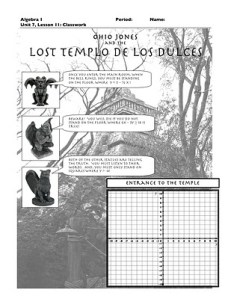
Usually her mood improves if we switch to a slightly more advanced topic, and luckily I had saved these worksheets on my desktop, waiting for just such an opportunity. Today’s lesson:
Some fun(ish) worksheets
“For tomorrow, students will be graphing systems of inequalities, so I decided to create a little Ohio Jones adventure (Indiana’s lesser known brother)…”
I offered to give her a hint, but she wanted to try it totally on her own. It took her about 40 minutes to work through the first few rooms of the Lost Templo de los Dulces and explain her solutions to me. I’m sure she’ll speed up with experience.
So far, she’s enjoying it much more than the textbook lesson. It’s fascinating to me how the mere hint of fantasy adventure can change graphing equations from boring to cool. Thanks, Dan!
Do you enjoy math? I hope so! If not, browsing this post just may change your mind.
Welcome to the 70th edition of the Math Teachers At Play math education blog carnival — a smorgasbord of 42+ links to bloggers all around the internet who have great ideas for learning, teaching, and playing around with math from preschool to pre-college. Let the mathematical fun begin!
By tradition, we start the carnival with a puzzle in honor of our 70th edition. But if you would like to jump straight to our featured blog posts, click here to see the Table of Contents.
Have you made a New Year’s resolution to spend more time with your family this year, and to get more exercise? Problem-solvers of all ages can pump up their (mental) muscles with the Annual Mathematics Year Game Extravaganza!
For many years mathematicians, scientists, engineers and others interested in mathematics have played “year games” via e-mail and in newsgroups. We don’t always know whether it is possible to write expressions for all the numbers from 1 to 100 using only the digits in the current year, but it is fun to try to see how many you can find.
Use the digits in the year 2014 to write mathematical expressions for the counting numbers 1 through 100. The goal is adjustable by age: Young children can start with looking for 1-10, or 1-25.
You must use all four digits. You may not use any other numbers.
Solutions that keep the year digits in 2-0-1-4 order are preferred, but not required.
You may use a decimal point to create numbers such as .2, .02, etc., but you cannot write 0.02 because we only have one zero in this year’s number.
You may use the overhead-bar (vinculum), dots, or brackets to mark a repeating decimal.
You may create multi-digit numbers such as 10 or 201 or .01, but we prefer solutions that avoid them.
You may use a double factorial, but we prefer solutions that avoid them. n!! = the product of all integers from 1 to n that have the same parity (odd or even) as n.
I discovered this gem in my blog reading today. One of the secrets of great teaching:
Audrey seemed, for once, at a loss for words. She was thinking about the question.
I try to stay focused on being silent after I ask young children questions, even semi-serious accidental ones. Unlike most adults, they actually take time to think about their answers and that often means waiting for a response, at least if you want an honest answer.
If you’re only looking for the “right” answer, it’s fairly easy to gently badger a child into it, but I’m not interested in doing that.
If you’d like to help fund the blog on an on-going basis, then please join me on Patreon for mathy inspiration, tips, and an ever-growing archive of printable activities.
If you liked this post, and want to show your one-time appreciation, the place to do that is PayPal: paypal.me/DeniseGaskinsMath. If you go that route, please include your email address in the notes section, so I can say thank you.
Homeschooling parents know that one of the biggest challenges for any middle-elementary math student is to master the multiplication facts. It can seem like an unending task to memorize so many facts and be able to pull them out of mental storage in any order on demand.
Too often, we are tempted to stress the rote aspect of such memory work, which makes our children lose their focus on what multiplication really means. Before practicing the times table facts, make sure your student gets plenty of practice recognizing and using the common models for multiplication.
You may want to pick up this poster and use it for ideas as you play the Tell Me a (Math) Story game. Word problems are important for children learning any new topic in math, because they give children a mental “hook” on which to hang the abstract number concepts.
And for extra practice, you can play my free card game…
 photo by fdecomite via flickr (CC BY 2.0)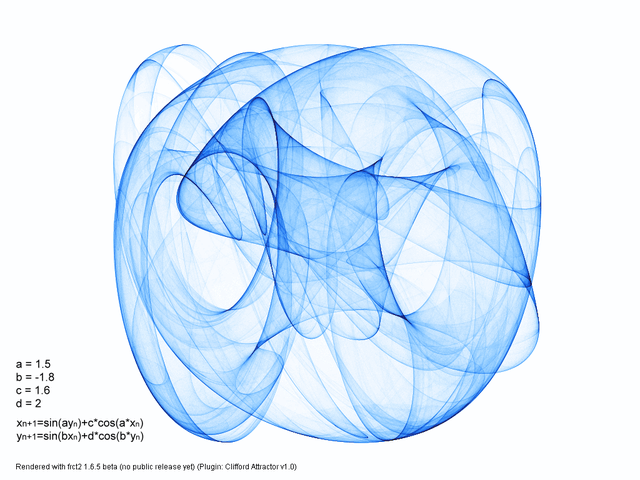








 Denise Gaskins' Let's Play Math
