
I just sent out my first newsletter to everyone who signed up for math updates. If you’re not on the mailing list, you can still join in the fun:
I just sent out my first newsletter to everyone who signed up for math updates. If you’re not on the mailing list, you can still join in the fun:

[Feature photo above by Scott Lewis and title background (right) by Carol VanHook, both via Flickr (CC BY 2.0, text added).]
Did you know that playing games is one of the Top 10 Ways To Improve Your Brain Fitness? So slip into your workout clothes and pump up those mental muscles with the Annual Mathematics Year Game Extravaganza!
For many years mathematicians, scientists, engineers and others interested in math have played “year games” via e-mail. We don’t always know whether it’s possible to write all the numbers from 1 to 100 using only the digits in the current year, but it’s fun to see how many you can find.
Use the digits in the year 2015 to write mathematical expressions for the counting numbers 1 through 100. The goal is adjustable: Young children can start with looking for 1-10, middle grades with 1-25.
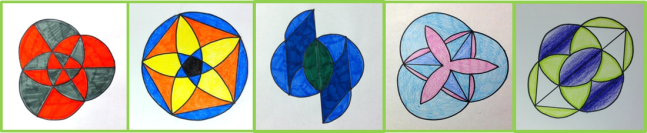
[Featured Image (above) by Math Giraffe, and Math Goggles image (right) by Moebius Noodles — two great posts from this month’s carnival.]

Number sense, measurement, place value, functions, calculus for kids, Christmas math activities, art, and much more — check out the December math education blog carnival:
Math Teachers at Play (MTaP) Blog Carnival #81
Welcome to the 81st edition of Math Teachers at Play (MTaP) Blog Carnival. I am extremely exited to host this post in my favorite month of the year, December…
Understanding 81: An interesting fact is that 81 is a tribonacci number (sounds a lot like Fibonacci) – the sequence of tribonacci numbers start with 3 predetermined terms (0,0,1) and each term afterwards is the sum of the preceding 3 terms. Thus the sequence starts like this: 0,0,1,1,2,4,7,13,24,44,81,… (you can go further if you want to see how fast the numbers go).
Now the maths posts…

Are you looking for playful ways to help your children learn math? Now you can get math tips and activity ideas by email, as well as find out when I put out a new book or revise an old one.
I hope to send out a “Math Snack” (no-preparation math activity idea) at least once a month. In the meantime, your sign-up bonuses include a 4-page article on solving word problems and a pre-publication peek at my new Math You Can Play book series of games for preschool to prealgebra.
Our Christmas gift to you: my daughter’s fantasy adventure Banished will be FREE for Kindle on Amazon.com this weekend only, December 11-15.
I don’t know whether the other Amazons (UK, CA, AU, IN, etc.) will also run the sale, but I hope so.
As I type, the paperback edition is also on sale at a 10% discount, though we have no control over how long Amazon will be offering that price. Banished is part of the Kindle Matchbook program, so if you buy a copy of the paperback, you can get the ebook for free — even after our weekend sale runs out.
Read an excerpt: the first four chapters of Banished
Don’t have a Kindle? You can get a Kindle app that will let you read Teresa’s book on almost any device.
The second book in The Riddled Stone series is scheduled for publication in Spring 2015, and so are the first two volumes of my Math You Can Play series. If you want a head’s-up when these books arrive, be sure to join my Tabletop Academy Press Updates email list:

[Feature photo (above) by Austin Kirk via Flickr (CC BY 2.0).]
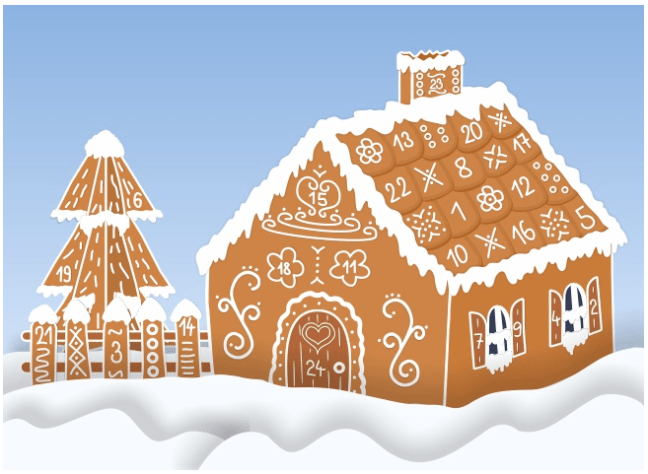
Click on the pictures below to explore a mathy Advent Calendar with a new game, activity, or challenge puzzle for each day during the run-up to Christmas. Enjoy!

[Feature photo (above) by alicepopkorn via Flickr (CC BY 2.0).]
Therefore, as God’s chosen people, holy and dearly loved,
clothe yourselves with compassion, kindness,
humility, gentleness and patience.
Bear with each other and forgive
whatever grievances you may have against one another.
Forgive as the Lord forgave you.
And over all these virtues put on love,
which binds them all together in perfect unity.Let the peace of Christ rule in your hearts,
since as members of one body you were called to peace.
And be thankful.
Let the word of Christ dwell in you richly
as you teach and admonish one another with all wisdom,
and as you sing psalms, hymns and spiritual songs
with gratitude in your hearts to God.And whatever you do,
whether in word or deed,
do it all in the name of the Lord Jesus,
giving thanks to God the Father through him.— Colossians 3:12-17
[Taken from the Holy Bible, New International Version, (c)1973, 1978, 1984 by the International Bible Society, used by permission of Zondervan Bible Publishers.]
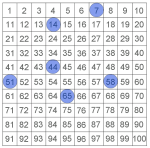
Wow! My all-time most popular post continues to grow. Thanks to an entry from this week’s blog carnival, there are now more than thirty great ideas for mathematical play:
The latest tips:
(31) Have a math debate: Should the hundred chart count 1-100 or 0-99? Give evidence for your opinion and critique each other’s reasoning.
[Hat tip: Tricia Stohr-Hunt, Instructional Conundrum: 100 Board or 0-99 Chart?]
(32) Rearrange the chart (either 0-99 or 1-100) so that as you count to greater numbers, you climb higher on the board. Have another math debate: Which way makes more intuitive sense?
[Hat tip: Graham Fletcher, Bottoms Up to Conceptually Understanding Numbers.]
(33) Cut the chart into rows and paste them into a long number line. Try a counting pattern, or Race to 100 game, or the Sieve of Eratosthenes on the number line. Have a new math debate: Grid chart or number line — which do you prefer?
[Hat tip: Joe Schwartz, Number Grids and Number Lines: Can They Live Together in Peace? ]
The new Math Teachers at Play math education blog carnival is up for your browsing pleasure. Each month, we feature activities, lessons, and games about math topics from preschool through high school. Check it out!
[Photo by Paul Downey. (CC BY 2.0 via Flickr)]
Welcome to the 80th Edition of the Math Teachers at Play (MTaP) blog carnival.
Before we dive into some math posts from around the web, let’s see what is special about the number eighty.
80 is…
- how long it took Phileas Fogg to travel around the world in Jules Verne’s novel Around the World in Eighty Days.
- 4 scores.
- commonly used in the “80:20 rule,” which originated from Vilfredo Pareto, an Italian economist…
…And more! Click here to read the whole carnival, featuring 17 posts of mathy awesomeness!

A frequently-asked question on homeschooling forums is, “Are my children working at grade level? What do they need to know?”
The Council of the Great City Schools has published a handy 6-page pdf summary of third grade math concepts, with suggestions for how parents can support their children’s learning:
Whether you are a radical unschooler or passionately devoted to your textbook — or, like me, somewhere in between — you can help your children toward these grade-level goals by encouraging them to view mathematics as mental play. Don’t think of the standards as a “to do” list, but as your guide to an adventure of exploration. The key to learning math is to see it the mathematician’s way, as a game of playing with ideas.
The following are excerpts from the roadmap document (along with a few extra tips) and links to related posts from the past eight years of playing with math on this blog…

