
Check out the new Mathematics and Multimedia Blog Carnival #22. Fun!
Other math carnivals you may enjoy:
Check out the new Mathematics and Multimedia Blog Carnival #22. Fun!
Other math carnivals you may enjoy:

Photo by Song_sing via flickr. In this Homeschooling Math with Profound Understanding (PUFM) Series, we are studying Elementary Mathematics for Teachers and applying its lessons to home education.
My apologies to those of you who dislike conflict. This week’s topic inevitably draws us into a simmering Internet controversy.
Thinking my way through such disputes helps me to grow as a teacher, to re-think on a deeper level concepts that I thought I understood. This is why I loved Liping Ma’s book when I first read it, and it’s why I thoroughly enjoyed Terezina Nunes and Peter Bryant’s book Children Doing Mathematics.
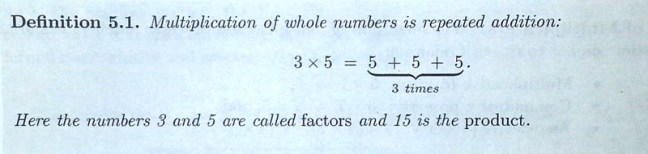
Multiplication of whole numbers is defined as repeated addition…
— Thomas H. Parker & Scott J. Baldridge
Elementary Mathematics for TeachersMultiplication simply is not repeated addition, and telling young pupils it is inevitably leads to problems when they subsequently learn that it is not… Adding numbers tells you how many things (or parts of things) you have when you combine collections. Multiplication is useful if you want to know the result of scaling some quantity.
— Keith Devlin
It Ain’t No Repeated Addition
[Photo by bumeister1 via flickr.]
Welcome to the Math Teachers At Play blog carnival — which is not just for math teachers! We have games, lessons, and learning activities from preschool math to calculus. If you like to learn new things and play around with mathematical ideas, you are sure to find something of interest.
Scattered between all the math blog links, I’ve included highlights from the Common Core Standards for Mathematical Practice, which describe the types of expertise that teachers at all levels — whether in traditional, experimental, or home schools — should seek to develop in their math students.
Let the mathematical fun begin…
By tradition, we start the carnival with a couple of puzzles in honor of our 52nd edition. Since there are 52 playing cards in a standard deck, I chose two card puzzles from the Maths Is Fun Card Puzzles page:
The answers are at Maths Is Fun, but don’t look there. Having someone give you the answer is no fun at all!
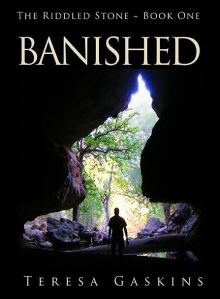
My 13-year-old daughter just released her first book on Kindle:
[Update 7/6/12: The paperback book is now “In Stock” at Amazon (yay!).]
Teresa (also known as Princess Kitten) has done the NaNoWriMo Youth Program as part of her language studies for the past three years and has written many stories on her blog, but this is the first time we’ve followed through and published one of her books.
Of course I’m biased, but I think she did a pretty good job, as first books go. It’s clearly the beginning of a series, so she sets up more plot threads than she resolves — but I did convince her not to wait for this year’s NaNoWriMo to start Book Two. (I want to find out what happens next!)
Anyway, if you or your kids enjoy fantasy fiction and are interested in reading something written by a teenage homeschooler, please check out her book. She would love to get some reviews!
Dover Publications is offering a free sample chapter from The Moscow Puzzles.
Cat and Mice
Purrer has decided to take a nap. He dreams he is encircle by 13 mice: 12 gray and 1 white. He hears his owner saying: “Purrer, you are to eat each thirteenth mouse, keeping the same direction. The last mouse you eat must be the white one.”
And here is yet more fun from Education Unboxed. This type of page was always one of my my favorites in Miquon Math.
Handmade “How Crazy…?” worksheets are wonderful, but if you want something a tad more polished, I created a printable. The first page has a sample number, and the second is blank so that you can fill in any target:
Add an extra degree of freedom: students can fill in the blanks with equivalent and non-equivalent expressions. Draw lines anchoring the ones that are equivalent to the target number, but leave the non-answers floating in space.
Or don’t draw lines. Let the kids create a worksheet for you to solve. After they finish their expressions, can you figure out which ones connect to the target number?

I love logic puzzles! Nrich Maths offers four fun Olympics Logic puzzles. And be sure to check out the rest of their Nrich Olympics Math as well.

Medals Count
Given the following clues, can you work out the number of gold, silver and bronze medals that France, Italy and Japan got in this international sports competition?
- Japan has 1 more gold medal, but 3 fewer silver medals, than Italy.
- France has the most bronze medals (18), but fewest gold medals (7).
- Each country has at least 6 medals of each type.
- Italy has 27 medals in total.
- Italy has 2 more bronze medals than gold medals.
- The three countries have 38 bronze medals in total.
- France has twice as many silver medals as Italy has gold medals.
Yet more fun from Rosie at Education Unboxed. I found these while looking for videos to use in my PUFM Subtraction post. Rosie says:
This is seriously embarrassing and I debated whether to put this video online or not because this is NOT my normal personality, but my girls made up this game and will play it for over an hour and ask for it repeatedly… so I figured someone out there might be able to use it with their kids, too.
If you know me, please don’t ever ask me to do this in public. I will refuse.
Princess in the Dungeon, Part 1 – Fractions with Cuisenaire Rods
The new Math Teachers at Play blog carnival is up and running, with 51 math-related topics for your reading pleasure.
Noticing & Wondering
I’m a pentagonal number,
I have just two factors,
and if you put me in base 2, 4 or 16,
I’m a palindrome.
I wonder:
Is there anyone else like me in the number universe?
photo by Darwin Bell via flickr
As you may know, I’ve been working hard on my Let’s Play Math! books, and I’m still hoping to get at least couple of them out this summer. (Though if I keep thinking of more sections to add, I may never get them done!) I’m also finishing up the editing on my daughter’s novel and plan to release it soon.
One of the most useful resources I’ve found for self-publishing information is Joel Friedlander’s blog, The Book Designer. The last time I published my books, a dozen years ago, I made nearly every one of the mistakes he mentions in Amateur Hour Books and 5 Book Design Mistakes to Avoid.
 Denise Gaskins' Let's Play Math