A Mathematical Advent Calendar

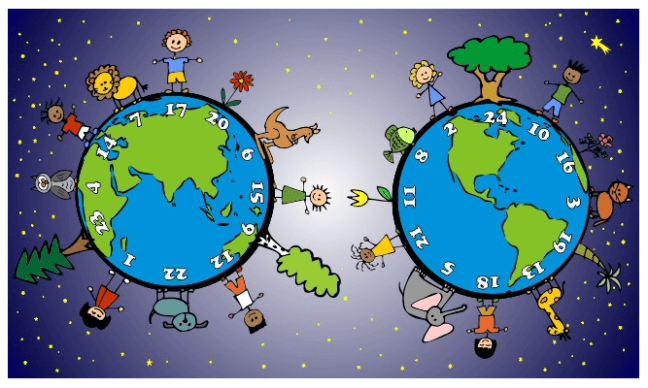
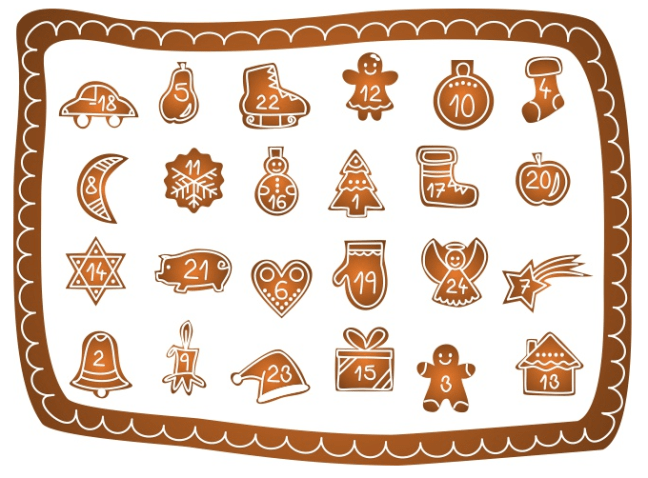
It’s always a challenge to keep up with homeschooling during the holiday season, but here’s a wonderful way to weave mathematics into your daily schedule: The Nrich Advent Calendars offer a fun math game or activity for every day in December until Christmas Eve. Click the image to visit the calendar that fits your student’s level.

Advent Calendar 2012 – Primary

Advent Calendar 2012 – Secondary

Welcome, TIME Readers!

[Photo by Luis Argerich via flickr.]

If you’ve come here from Bonnie Rochman’s article, Bedtime Math: A Problem a Day Keeps Fear of Arithmetic Away, thank you for dropping in! I have nearly 800 published posts about learning and teaching math, which can seem pretty overwhelming.

Here are a few good places to start:

  • Tell Me a (Math) Story
    What better way could there be to do math than snuggled up on a couch with your little one, or side by side at the sink while your middle-school student helps you wash the dishes, or passing the time on a car ride into town?
  • Homeschooling with Math Anxiety Series
    Our childhood struggles with schoolwork gave most of us a warped view of mathematics. Yet even parents who suffer from math anxiety can learn to enjoy math with their children.
  • How to Conquer the Times Table
    Challenge your student to a joint experiment in mental math. Over the next two months, without flashcards or memory drill, how many math facts can the two of you learn together? We will use the world’s oldest interactive game — conversation — to explore multiplication patterns while memorizing as little as possible.

I hope you enjoy your visit to my blog.

HexaFlexaParty This Weekend!

Sunday, October 21, is the worldwide hexaflexagon party in honor of Martin Gardner’s birthday. Gardner’s article about hexaflexagons launched his career as a recreational math guru who inspired people all around the world to love math.

Here’s how to join in the fun:

Hexaflexagon History

Continue reading HexaFlexaParty This Weekend!

Sample The Moscow Puzzles

Dover Publications is offering a free sample chapter from The Moscow Puzzles.

Cat and Mice
Purrer has decided to take a nap. He dreams he is encircle by 13 mice: 12 gray and 1 white. He hears his owner saying: “Purrer, you are to eat each thirteenth mouse, keeping the same direction. The last mouse you eat must be the white one.”

Download the sample chapter from The Moscow Puzzles.

More Free Math from Dover Publications

How Crazy Can You Make It?

And here is yet more fun from Education Unboxed. This type of page was always one of my my favorites in Miquon Math.

Update:

Handmade “How Crazy…?” worksheets are wonderful, but if you want something a tad more polished, I created a printable. The first page has a sample number, and the second is blank so that you can fill in any target:

Add an extra degree of freedom: students can fill in the blanks with equivalent and non-equivalent expressions. Draw lines anchoring the ones that are equivalent to the target number, but leave the non-answers floating in space.

Or don’t draw lines. Let the kids create a worksheet for you to solve. After they finish their expressions, can you figure out which ones connect to the target number?

How CRAZY Can You Make It

Olympic Logic

I love logic puzzles! Nrich Maths offers four fun Olympics Logic puzzles. And be sure to check out the rest of their Nrich Olympics Math as well.

Medals Count

Given the following clues, can you work out the number of gold, silver and bronze medals that France, Italy and Japan got in this international sports competition?

  • Japan has 1 more gold medal, but 3 fewer silver medals, than Italy.
  • France has the most bronze medals (18), but fewest gold medals (7).
  • Each country has at least 6 medals of each type.
  • Italy has 27 medals in total.
  • Italy has 2 more bronze medals than gold medals.
  • The three countries have 38 bronze medals in total.
  • France has twice as many silver medals as Italy has gold medals.

Go to Nrich Maths and try all four puzzles!

Princess in the Dungeon Game

Yet more fun from Rosie at Education Unboxed. I found these while looking for videos to use in my PUFM Subtraction post. Rosie says:

This is seriously embarrassing and I debated whether to put this video online or not because this is NOT my normal personality, but my girls made up this game and will play it for over an hour and ask for it repeatedly… so I figured someone out there might be able to use it with their kids, too.

If you know me, please don’t ever ask me to do this in public. I will refuse.

Princess in the Dungeon, Part 1 – Fractions with Cuisenaire Rods

http://vimeo.com/42739095

Continue reading Princess in the Dungeon Game

Tell Me a (Math) Story

[Feature photo above by Keoni Cabral via Flickr (CC BY 2.0).]

My favorite playful math lessons rely on adult/child conversation — a proven method for increasing a child’s reasoning skills. What better way could there be to do math than snuggled up on a couch with your little one, or side by side at the sink while your middle-school student helps you wash the dishes, or passing the time on a car ride into town?

As soon as your little ones can count past five, start giving them simple, oral story problems to solve: “If you have a cookie and I give you two more cookies, how many cookies will you have then?”

The fastest way to a young child’s mind is through the taste buds. Children can easily visualize their favorite foods, so we use mainly edible stories at first. Then we expand our range, adding stories about other familiar things: toys, pets, trains.

Continue reading Tell Me a (Math) Story