Updated Geometric Coloring Designs (Free)

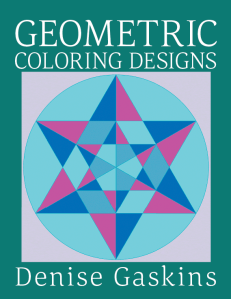
I created these coloring pages for my homeschool co-op math kids, and then collected them into a downloadable 42-page PDF coloring book for your family to enjoy.

The booklet includes several ready-to-color designs, a wide assortment of graph paper, advanced create-your-own tessellation pages, and links to all sorts of online math art resources.

But when I posted the link to Twitter, a friend noticed that several of the resource links were broken. (Thanks, Mark!)

While I was fixing those, I added some new links (to the wonderful School of Islamic Geometric Design pattern templates and classroom resources).

So even if you’ve downloaded the file before, you may want to pick up this new-and-improved edition.

Click to Visit My Free Printables Page

More Ways to Play with Math Art

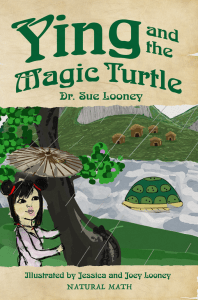
New Book: Ying and the Magic Turtle

Math your children can enjoy.

That’s the power of living books.

And there’s a new one coming soon, from the wonderful people at Natural Math.

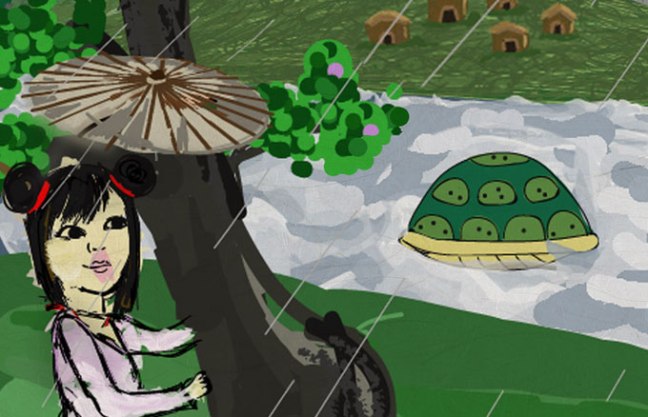
“Long ago in the land of China, there were many rain storms … and the land of China was slowly sinking into the sea. This is the story of how a wise emperor, an observant girl, and a magic turtle saved the villages of China from the great flood.”

So begins the story of Ying and the Magic Turtle.

Children, parents, and teachers can enjoy the book for its rich beauty in mathematics and as an ancient legend.

We can play with the mathematics, too, solving the puzzle of the turtle’s shell right alongside Ying.

And we can delve deeper into the power of magic squares by working with puzzles presented at the end of the story.

Join the Crowdfunding Campaign

For more details about Ying and the Magic Turtle, including a peek at the delightful illustrations, check out the Kickstarter crowdfunding page:

Click here for Ying and the Magic Turtle

Donate to support the ongoing adventure of playful math for children!

8 Weeks of Playful Math for Families

Yes, your kids CAN learn to love math. Keep your children’s math skills fresh with my 8-week email series of math games and activities.

No purchase necessary! Just sign up for my email newsletter, and every week for the next two months you’ll automatically receive one of my favorite math club activities or an excerpt from my series of math game books.

And I’ll send you occasional news updates with playful math tips, resource links, and book sales or other promotions.

Click Here To Sign Up
Continue reading 8 Weeks of Playful Math for Families

2019 Mathematics Game: Playful Math for All Ages

Happy 2019! Have you set any goals for the year?

My goals are to continue playing with math (1) in my homeschool coop classes and (2) on this blog — and (3) hopefully to publish a couple of new books as well.

My favorite way to celebrate any new year is by playing the Year Game. It’s a prime opportunity for players of all ages to fulfill the two most popular New Year’s Resolutions: spending more time with family and friends, and getting more exercise.

So grab a partner, slip into your workout clothes, and pump up those mental muscles!

Rules of the Game

Use the digits in the year 2019 to write mathematical expressions for the counting numbers 1 through 100. The goal is adjustable: Young children can start with looking for 1-10, middle grades with 1-25.

  • You must use all four digits. You may not use any other numbers.
  • Solutions that keep the year digits in 2-0-1-9 order are preferred, but not required.
  • You may use a decimal point to create numbers such as .2, .02, etc., but you cannot write 0.02 because we only have one zero in this year’s number.
  • You may create multi-digit numbers such as 10 or 201 or .01, but we prefer solutions that avoid them.

My Special Variations on the Rules

  • You MAY use the overhead-bar (vinculum), dots, or brackets to mark a repeating decimal. But students and teachers beware: you can’t submit answers with repeating decimals to Math Forum.
  • You may NOT use a double factorial, n!! = the product of all integers from 1 to n that have the same parity (odd or even) as n. The Math Forum allows them, but I feel much more creative when I can wrangle a solution without invoking them.

For many years mathematicians, scientists, engineers and others interested in mathematics have played “year games” via e-mail and in newsgroups. We don’t always know whether it is possible to write expressions for all the numbers from 1 to 100 using only the digits in the current year, but it is fun to try to see how many you can find.

Math Forum Year Game Site

Click here to continue reading.

Holiday Math Puzzles and Activities for Christmas, Winter Break

Hapollonian Holidays from my Math Circle kids, and best wishes for a grace-filled holiday season.
Hapollonian Holiday Greetings from my co-op class kids, and best wishes for a grace-filled holiday season.

Do you know of any great math-related seasonal games, crafts, or activities I missed? Please add them to the comments section below.

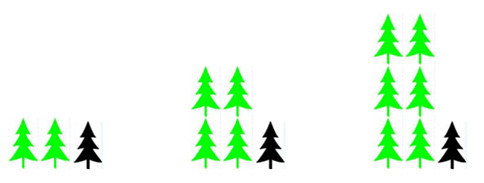
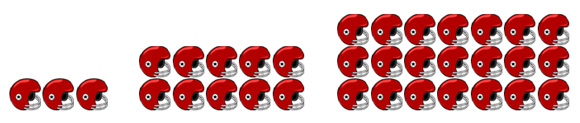
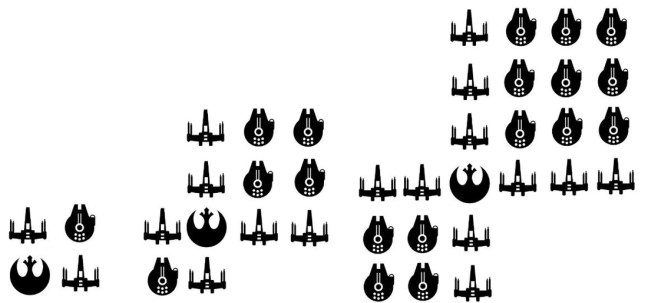
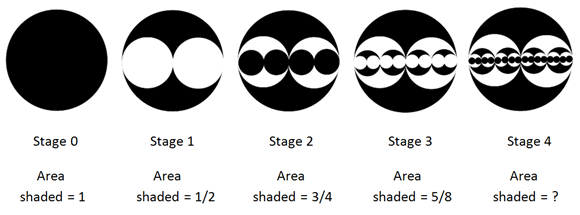
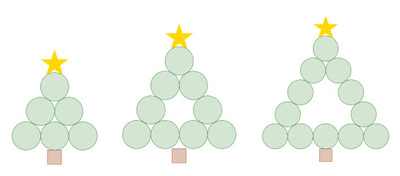
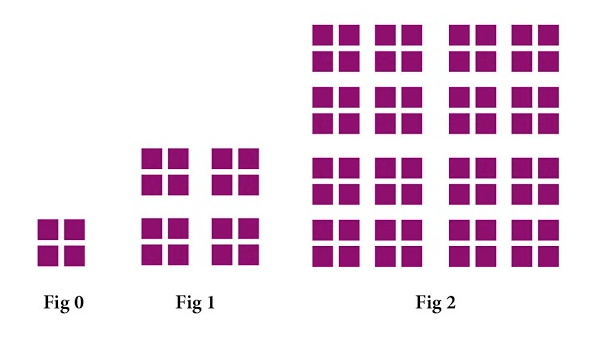
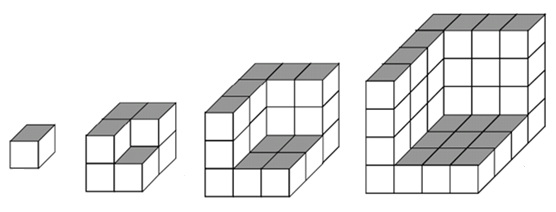
As you scroll through the links below, you find several puzzle graphics from the wonderful Visual Patterns website.

Use them as conversation-starters with your kids: What do you notice? How does each pattern grow?

For older students: Can you write a formula to describe how each pattern? What will it look at stage 43?

Pattern #7, Trees

A Bit of Fun

Setting the mood: Enjoy this bit of seasonal fidgeting from Vi Hart. If you don’t understand some of the references, that’s normal! Pick a phrase, Google it, and enjoy the fun of learning something new.

https://youtu.be/sxnX5_LbBDU&rel=0

Advent Math Activity Calendars

Every year, some of my favorite websites offer a seasonal selection of activities to encourage your children’s (and your own!) mathematical creativity, one for each day in the run-up to Christmas.

Colleen Young updates the list every year, so check out her pages:

Pattern #9, Snowflakes

Let It Snow! Let It Snow! Let It Snow!

  • Clarissa (@c0mplexnumber) demonstrates how to make beautiful, challenging origami snowflakes. She recommends beginners try the first few folds — which create a pretty cool design on their own. Let it Snow…
Pattern #20, Helmets

Happy Hanukkah

Pattern #30, from John Golden, Squares

Hands-on Holidays

Pattern #197, from Stephanie Bowyer, Symbols

Following Yonder Star

Pattern #132, from Math Curmudgeon, Diagonals

Mathy Christmas Cards

Pattern #98, Centers are collinear, Fraction of the original circle shaded

Santa Claus Is Coming

Pattern #8, Penguins

Rockin’ Around the Christmas Tree

Pattern #152, from John Golden, Circles

Puzzles Under the Tree

  • Unfortunately, the holidays come smack in the middle of flu season. Did you come down with The Grinch Bug?
Pattern #52, Cubes
  • Speaking of Christmas carols, the Christmas Price Index shows the current cost for one set of each of the gifts given in the song “The Twelve Days of Christmas.” I wonder what’s the cumulative cost of all the gifts, when you count each repetition in the song?

https://youtu.be/A4C1DacGYVA&rel=0

Christmas Adventures with Alexandria Jones

Alexandria Jones and her family are fictional characters from my old Mathematical Adventures newsletter. Their stories appear sporadically as I find time to transcribe them from the back-issues. You can find them all on this blog page.

Here are all the Alexandria Jones stories Christmas stories, with activity and craft ideas…

Pattern #174, from Katie Gates, Squares

What About Worksheets?

Do you need to keep your kids busy and work in a bit of math practice? Try these Christmas word problems:

Or visit the sites below for worksheets to cover all ages:

Pattern #28, Surface area

CREDITS: “Circle Packing” feature graphic (top) by fdecomite via Flickr (CC BY 2.0). Picture pattern puzzles from Visual Patterns website.

Playful Math Education Carnival 123: Hundred Chart Edition

Do you enjoy math? I hope so!

If not, browsing this post just may change your mind.

Welcome to the 123rd edition of the Playful Math Education Blog Carnival — a smorgasbord of delectable tidbits of mathy fun.

The Playful Math Carnival is like a free online magazine devoted to learning, teaching, and playing around with math from preschool to high school. This month’s edition features \left ( 1 + 2 + 3 \right )^{2} = 36 \: articles from bloggers all across the internet.

You’re sure to find something that will delight both you and your child.

By tradition, we start the carnival with a puzzle in honor of our 123rd edition. But if you would like to jump straight to our featured blog posts, click here to see the Table of Contents.

Or more, depending on how you count. And on whether I keep finding things to squeeze in under the looming deadline. But if there are more, then there are certainly 36. Right?

Continue reading Playful Math Education Carnival 123: Hundred Chart Edition

Happy National Coloring Book Day

I don’t know who comes up with these holidays. But according to my Dover Publications newsletter, tomorrow (August 2nd) is National Coloring Book Day.

Sounds like a good excuse to play some math!

Mathy Coloring Resources to Download

geometric-coloring-designs-cover

If you know of any other free math coloring resources, please share a link in the comments below.

CREDITS: “School Crayons” photo by Sharon McCutcheon on Unsplash.

FAQ: Forgetting What They Learned

“As we go through each lesson, it seems like my daughter has a good handle on the concepts, but when we get to the test she forgets everything. When I ask her about it, she shrugs and says, ‘I don’t know.’ What do you do when your child completely loses what she has learned?”

Forgetting is the human brain’s natural defense mechanism. It keeps us from being overwhelmed by the abundance of sensory data that bombards us each moment of every day.

Our children’s minds will never work like a computer that can store a program and recall it flawlessly months later.

Sometimes, for my children, a gentle reminder is enough to drag the forgotten concept back out of the dust-bunnies of memory.

Other times, I find that they answer “I don’t know” out of habit, because it’s easier than thinking about the question. And because they’d prefer to be doing something else.

Continue reading FAQ: Forgetting What They Learned

2018 Mathematics Game — Join the Fun!

Let’s resolve to have fun with math this year. Ben has posted a preview of 2018’s mathematical holidays. Iva offers plenty of cool ways to think about the number 2018. And Patrick proposes a new mathematical conjecture.

But my favorite way to celebrate any new year is by playing the Year Game. It’s a prime opportunity for players of all ages to fulfill the two most popular New Year’s Resolutions: spending more time with family and friends, and getting more exercise.

So grab a partner, slip into your workout clothes, and pump up those mental muscles!

For many years mathematicians, scientists, engineers and others interested in mathematics have played “year games” via e-mail and in newsgroups. We don’t always know whether it is possible to write expressions for all the numbers from 1 to 100 using only the digits in the current year, but it is fun to try to see how many you can find. This year may prove to be a challenge.

Math Forum Year Game Site

Rules of the Game

Use the digits in the year 2018 to write mathematical expressions for the counting numbers 1 through 100. The goal is adjustable: Young children can start with looking for 1-10, middle grades with 1-25.

  • You must use all four digits. You may not use any other numbers.
  • Solutions that keep the year digits in 2-0-1-8 order are preferred, but not required.
  • You may use +, -, x, ÷, sqrt (square root), ^ (raise to a power), ! (factorial), and parentheses, brackets, or other grouping symbols.
  • You may use a decimal point to create numbers such as .2, .02, etc., but you cannot write 0.02 because we only have one zero in this year’s number.
  • You may create multi-digit numbers such as 10 or 201 or .01, but we prefer solutions that avoid them.

My Special Variations on the Rules

  • You MAY use the overhead-bar (vinculum), dots, or brackets to mark a repeating decimal. But students and teachers beware: you can’t submit answers with repeating decimals to Math Forum.
  • You MAY use a double factorial, n!! = the product of all integers from 1 to n that have the same parity (odd or even) as n. I’m including these because Math Forum allows them, but I personally try to avoid the beasts. I feel much more creative when I can wrangle a solution without invoking them.

Click here to continue reading.

How to Succeed in Math: Answer-Getting vs. Problem-Solving

You want your child to succeed in math because it opens so many doors in the future.

But kids have a short-term perspective. They don’t really care about the future. They care about getting through tonight’s homework and moving on to something more interesting.

So how can you help your child learn math?
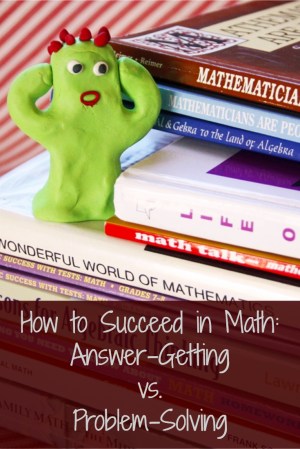
When kids face a difficult math problem, their attitude can make all the difference. Not so much their “I hate homework!” attitude, but their mathematical worldview.

Does your child see math as answer-getting? Or as problem-solving?

Answer-getting asks “What is the answer?”, decides whether it is right, and then goes on to the next question.

Problem-solving asks “Why do you say that?” and listens for the explanation.

Problem-solving is not really interested in “right” or “wrong”—it cares more about “makes sense” or “needs justification.”

Homeschool Memories

In our quarter-century-plus of homeschooling, my children and I worked our way through a lot of math problems. But often, we didn’t bother to take the calculation all the way to the end.

Why didn’t I care whether my kids found the answer?

Because the thing that intrigued me about math was the web of interrelated ideas we discovered along the way:

  • How can we recognize this type of problem?
  • What other problems are related to it, and how can they help us understand this one? Or can this problem help us figure out those others?
  • What could we do if we had never seen a problem like this one before? How would we reason it out?
  • Why does the formula work? Where did it come from, and how is it related to basic principles?
  • What is the easiest or most efficient way to manipulative the numbers? Does this help us see more of the patterns and connections within our number system?
  • Is there another way to approach the problem? How many different ways can we think of? Which way do we like best, and why?

What Do You think?

How did you learn math? Did your school experience focus on answer-getting or problem-solving?

How can we help our children learn to think their way through math problems?

I’d love to hear from you! Please share your opinions in the Comments section below.

CREDITS: “Math Phobia” photo by Jimmie (blog post title added) via Flickr (CC BY 2.0). Phil Daro video by SERP Media (the Strategic Education Research Partnership) via Vimeo.