Astronomer Dr Meghan Gray explains how messed up our calendar is. The mis-match between the length of a day and the time it takes the earth to travel around the sun makes a leap year necessary. From Numberphile.
Do You Teach Math to Young Children?
Sue VanHattum is trying to convince the publishers that this excellent book would reach a wider audience if they made it available at a lower price. What do you think?
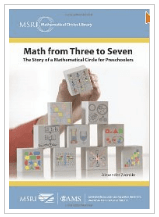
As anyone who has taught or raised young children knows, mathematical education for little kids is a real mystery. What are they capable of? What should they learn first? How hard should they work? Should they even “work” at all? Should we push them, or just let them be?
There are no correct answers to these questions, and Zvonkin deals with them in classic math-circle style: He doesn’t ask and then answer a question, but shows us a problem — be it mathematical or pedagogical — and describes to us what happened. His book is a narrative about what he did, what he tried, what worked, what failed, but most important, what the kids experienced.
This book is not a guidebook. It does not purport to show you how to create precocious high achievers. It is just one person’s story about things he tried with a half-dozen young children. On the other hand, if you are interested in running a math circle, or homeschooling children, you will find this book to be an invaluable, inspiring resource. It’s not a “how to” manual as much as a “this happened” journal. … Just about every page contains a really clever teaching idea, a cool math problem, and an inspiring and funny story.
— Paul Zeitz
Introduction to Math from Three to Seven
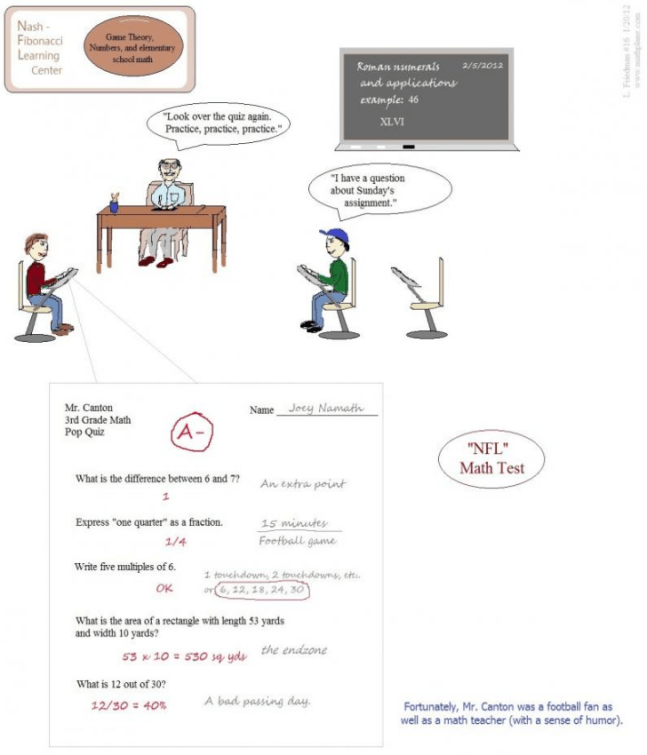
Super Bowl XLVI Math Worksheet and Football Comic
Lance Friedman of MathPlane.com has posted two bits of fun in honor of Super Bowl XLVI. (Click the images to go to Lance’s site.) And if you’re a homeschooler, Currclick is offering a Super Bowl Mini-Helper free this week.
NFL Math Quiz
Continue reading Super Bowl XLVI Math Worksheet and Football Comic
Fibonacci Numbers and Plants
Have you ever wondered why so many plants grow in Fibonacci Numbers? Vi Hart offers a great explanation (with hands-on activities) in these three videos — and she introduces a new species called the slugcat, which my daughter thinks is adorable.
Spirals, Fibonacci, and Being a Plant [1 of 3]
Christmas Math from Vi Hart
You can find just the song here: http://vihart.com/music/gauss12days.mp3.
Carnival Reminder
Send in your submission for the Math Teachers at Play blog carnival by Wednesday night.
While you’re waiting for Friday’s carnival, check out the new Carnival of Mathematics.
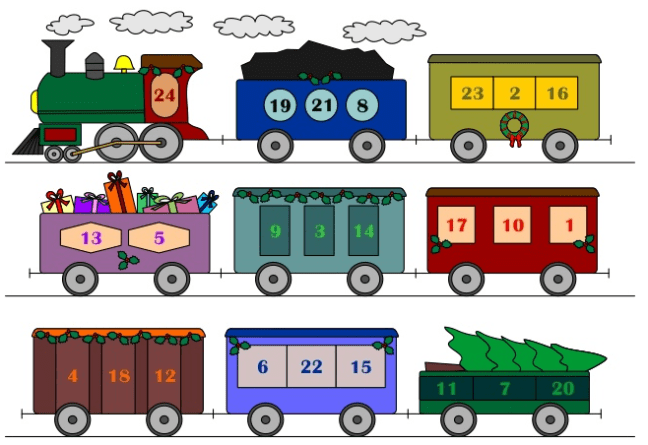
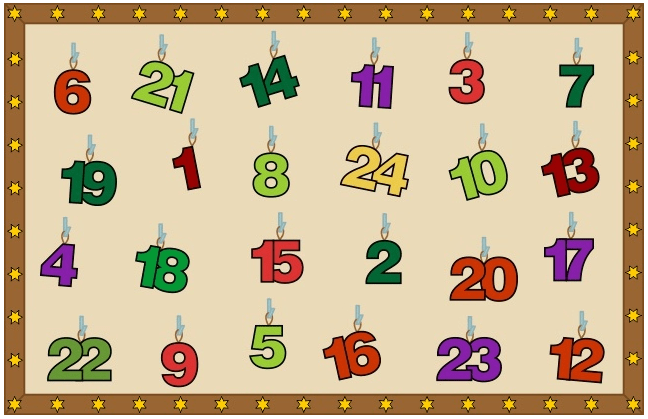
Advent Math via Nrich.Maths.org
These advent calendars feature a new math puzzle or game for each day of December until Christmas. Many of the activities are designed to be done in a group, but they work fine for home school families who play with math together. Enjoy!
For Primary Students
For Secondary Students
Understanding Algebra: How Many Roots?
In algebra 1, we spend a lot of time working with quadratic equations. Among other things, we want to know how many roots (solutions) an equation has and whether the roots are real or imaginary numbers.
One way to visualize this is by asking:
- “Which values of x will make the equation equal to zero — that is, will make the graph cross the x-axis?”
I wish my algebra teacher had explained it like James Tanton does. It makes so much sense!
What to Do with a Hundred Chart #27
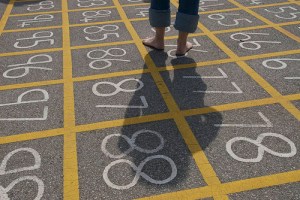 [Photo by geishaboy500.]
It began with a humble list of 7 things to do with a hundred chart in one of my out-of-print books about teaching home school math. Over the years I added a few new ideas, and online friends contributed still more, so the list grew to its current length of 26. Recently, thanks to several fans at pinterest, it has become the most popular post on my blog:
Now I am working several hours a day revising my old math books, in preparation for publishing new, much-expanded editions. And as I typed in all the new things to do with a hundred chart, I thought of one more to add to the list:
(27) How many numbers are there from 11 to 25? Are you sure? What does it mean to count from one number to another? When you count, do you include the first number, or the last one, or both, or neither? Talk about inclusive and exclusive counting, and then make up counting puzzles for each other.
Share Your Ideas
Can you think of anything else we might do with a hundred chart? Add your ideas in the Comments section below, and I’ll add the best ones to our master list.
Triangular Numbers: Sum from 1 to N
Kitten and I covered triangular numbers a couple months ago in our Competition Math for Middle School book, but I think it’s time to revisit the topic. I like the method James Tanton gives in this new video:
Easy-to-Make Counting Rope
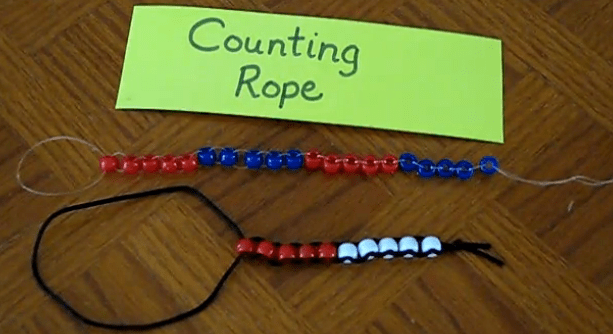
This is wonderful! I am definitely not a crafts-person, but I can’t wait to make some of these. If I can just find my daughter’s pony beads….
From Cindy at love2learn2day, who got the idea from a math conference workshop by Kim Sutton.
Krista at the LivingMathForum wrote, “We’ve used these for several years. My son even made a bunch of them a few years ago and sold them at a homeschool resource fair. We always have one in most of our board games to help younger children add up their die rolls. I find them relaxing for some reason, just moving the beads along the cord, and my son will sometimes sit and listen to me reading, etc., and just manipulate the beads.”
Playful Math Lessons
You can use these math activities to play with your counting rope:
 Denise Gaskins' Let's Play Math