Math Journals for Elementary and Middle School

This fall, my homeschool co-op math class will play with math journaling.

But my earlier dot-grid notebooks were designed for adults. Too thick, too many pages. And the half-cm dot grid made lines too narrow for young writers.

So I created a new series of paperback dot-grid journals for my elementary and middle school students.

I hope you enjoy them, too!

Click here for more information

Math Journaling Prompts

So, what can your kids do with a math journal?

Here are a few ideas: 
I’m sure we’ll use several of these activities in my homeschool co-op math class this fall.

Noticing and Wondering

Learning math requires more than mastering number facts and memorizing rules. At its heart, math is a way of thinking.

So more than anything else, we need to teach our kids to think mathematically — to make sense of math problems and persevere in figuring them out.

Help your children learn to see with mathematical eyes, noticing and wondering about math problems.

Whenever your children need to learn a new idea in math, or whenever they get stuck on a tough homework problem, that’s a good time to step back and make sense of the math.

Kids can write their noticings and wonderings in the math journal. Or you can act as the scribe, writing down (without comment) everything child says.

For more tips on teaching students to brainstorm about math, check out these online resources from The Math Forum:

Problem-solving is a habit of mind that you and your children can learn and grow in. Help your kids practice slowing down and taking the time to fully understand a problem situation.
Puzzles Are Math Experiments

Almost anything your child notices or wonders can lead to a math experiment.

For example, one day my daughter played an online math game…

a math experiment
Click the image to read about my daughter’s math experiment.

A math journal can be like a science lab book. Not the pre-digested, fill-in-the-blank lab books that some curricula provide. But the real lab books that scientists write to keep track of their data, and what they’ve tried so far, and what went wrong, and what finally worked.

Here are a few open-ended math experiments you might try:

Explore Shapes
  • Pick out a 3×3 set of dots. How many different shapes can you make by connecting those dots? Which shapes have symmetry? Which ones do you like the best?
  • What if you make shapes on isometric grid paper? How many different ways can you connect those dots?
  • Limit your investigation to a specific type of shape. How many different triangles can you make on a 3×3 set of dots? How many different quadrilaterals? What if you used a bigger set of dots?
Explore Angles
  • On your grid paper, let one dot “hold hands” with two others. How many different angles can you make? Can you figure out their degree without measuring?
  • Are there any angles you can’t make on your dot grid? If your paper extended forever, would there be any angles you couldn’t make?
  • Does it make a difference whether you try the angle experiments on square or isometric grid paper?
Explore Squares
  • How many different squares can you draw on your grid paper? (Don’t forget the squares that sit on a slant!) How can you be sure that they are perfectly square?
  • Number the rows and columns of dots. Can you find a pattern in the corner positions for your squares? If someone drew a secret square, what’s the minimum information you would need to duplicate it?
  • Does it make a difference whether you try the square experiments on square or isometric grid paper?

Or Try Some Math Doodles

Create math art. Check out my math doodling collection on Pinterest and my Dot Grid Doodling blog post. Can you draw an impossible shape?

How Would YOU Use a Math Journal?
I’d love to hear your favorite math explorations or journaling tips!

Please share in the comments section below.

 
* * *

P.S.: Do you have a blog? If you’d like to feature a math journal review and giveaway, I’ll provide the prize. Send a message through my contact form or leave a comment below, and we’ll work out the details.

This blog is reader-supported.

If you’d like to help fund the blog on an on-going basis, then please head to my Patreon page.

If you liked this post, and want to show your one-time appreciation, the place to do that is PayPal: paypal.me/DeniseGaskinsMath. If you go that route, please include your email address in the notes section, so I can say thank you.

Which I am going to say right now. Thank you!

“Math Journals for Elementary and Middle School” copyright © 2018 by Denise Gaskins. Photos of children © original artists / Pixabay.
Funville Adventures: Blake’s Story

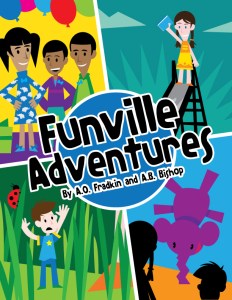
Today we have a guest post — an exclusive tale by Sasha Fradkin and Allison Bishop, authors of the new math storybook Funville Adventures. Enjoy!

Funville Adventures is a math-inspired fantasy that introduces children to the concept of functions, which are personified as magical beings with powers.

Each power corresponds to a transformation such as doubling in size, rotating, copying, or changing color. Some Funvillians have siblings with opposite powers that can reverse the effects and return an object to its original state, but other powers cannot be reversed.

In this way, kids are introduced to the mathematical concepts of invertible and non-invertible functions, domains, ranges, and even functionals, all without mathematical terminology.

We know about Funville because two siblings, Emmy and Leo, were magically transported there after they went down an abandoned slide.

When they came back, Emmy and Leo shared their adventures with their friends and also brought back the following manuscript written by their new friend Blake.

Continue reading Funville Adventures: Blake’s Story

How to Talk Math With Your Kids

A friend shared this video, and I loved it! From Kent Haines, a father who happens to also be a math teacher…

“I hope that this video helps parents find new ways of interacting with their kids on math topics.”

Kent Haines

More from Kent Haines

Advice and Examples of Talking Math with Kids

Danielson-Talking Math

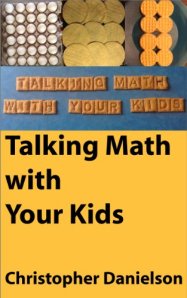
If you enjoyed Kent’s video, you’ll love Christopher Danielson’s book and blog.

It’s a short book with plenty of great stories, advice, and conversation-starters. While Danielson writes directly to parents, the book will also interest grandparents, aunts & uncles, teachers, and anyone else who wants to help children notice and think about math in daily life.

“You don’t need special skills to do this. If you can read with your kids, then you can talk math with them. You can support and encourage their developing mathematical minds.
 
“You don’t need to love math. You don’t need to have been particularly successful in school mathematics. You just need to notice when your children are being curious about math, and you need some ideas for turning that curiosity into a conversation.
 
“In nearly all circumstances, our conversations grow organically out of our everyday activity. We have not scheduled “talking math time” in our household. Instead, we talk about these things when it seems natural to do so, when the things we are doing (reading books, making lunch, riding in the car, etc) bump up against important mathematical ideas.
 
“The dialogues in this book are intended to open your eyes to these opportunities in your own family’s life.”

— Christopher Danielson
Talking Math with Your Kids

 
* * *

This blog is reader-supported.

If you’d like to help fund the blog on an on-going basis, then please join me on Patreon for mathy inspiration, tips, and an ever-growing archive of printable activities.

If you liked this post, and want to show your one-time appreciation, the place to do that is PayPal: paypal.me/DeniseGaskinsMath. If you go that route, please include your email address in the notes section, so I can say thank you.

Which I am going to say right now. Thank you!

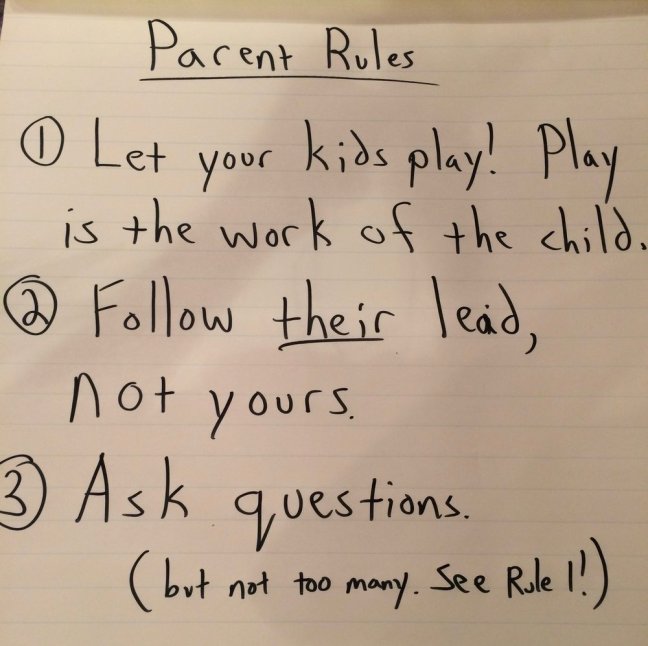
“How to Talk Math With Your Kids” copyright © 2017 by Denise Gaskins. “Kids Talk” photo (top) by Victoria Harjadi via Flickr (CC BY 2.0). “Parent Rules” by Kent Haines.

Even a Math Workbook Can Be a Game

Homeschool Memories…

My youngest daughter wanted to do Singapore math. Miquon Red was her main math text at the time, but we added a bit of Singapore Primary Math 1B whenever she was in the mood.

We turned to the lesson on subtracting with numbers in the 30-somethings.

Continue reading Even a Math Workbook Can Be a Game

FAQ: He Won’t Stop Finger-Counting

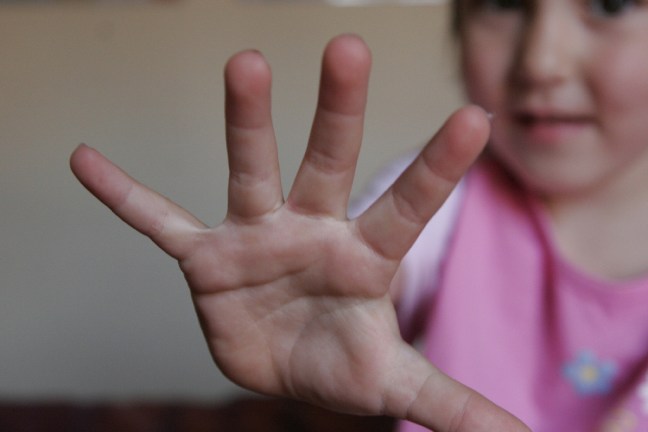
“My oldest son has somehow developed the horrid habit of counting on his fingers. We worked on the math facts all summer. He knows the answers in simple form, such as 9 + 4, but if it’s in a bigger problem like 249 + 54, he counts up to add or counts down to subtract, all using fingers. My younger children have no problem with mental math, but he can’t seem to get it. Are there any tips or tricks to stop this?”

New Crutches

Counting on fingers is not a horrid habit, it is a crutch. Please think for a moment about the purpose of crutches. The blasted things are an uncomfortable nuisance, but there are times when you can’t get anywhere without them. And if you need them, it does you no good for a friend to insist you should crawl along on your own.

That is how your son feels right now about his fingers. He is struggling with something his younger siblings find easy, and he can tell that you are frustrated. His confidence is broken, in a cast, and needs time for healing. So he falls back on what he knows he can do, counting up the answer.

Think positive: this means he still believes that math ought to make sense — that to understand what he is doing is more important than to guess at an answer. You want him to value sense-making, because otherwise he will try to memorize his way through middle school and high school math. That is the road to disaster.

Continue reading FAQ: He Won’t Stop Finger-Counting

FAQ: Trouble with Worksheets

“Worksheet problems make my daughter’s brain freeze. Even simple things such as “2 + ___ = 2″ confuse her. What can I do?”

Can your daughter do math if you put away the worksheet and ask her a real-life problem: “I have a lunch sack. I put two cookies into the sack, and then I give it to you. When you look into the sack, you see two cookies there. Can you tell me what was in the sack at the beginning, before I put my cookies in?”

Or can she solve problems when the answer isn’t zero? Could she figure out how many you started with if she saw four cookies when she looked in the sack?

The idea of having a number for “nothing” can seem strange to young children.

Continue reading FAQ: Trouble with Worksheets

Playing with Math Shapes

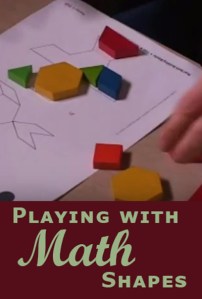
Playing-with-shapesI love it when a plan — or rather, a series of math thoughts — comes together.
On Monday, Emily Grosvenor (author of the Tessalation! picture book) asked me how parents who are insecure in math could help their children learn through play, and I responded with this quote from my Let’s Play Math book:

If you are intimidated by numbers, you can look for patterns of shape and color. Pay attention to how they grow. Talk about what your children notice.

But I wasn’t entirely satisfied with that answer. So many adults have come away from their own school experience thinking math is only numbers. Even with shapes, isn’t it the numbers about them — how many sides, what size of angles, calculate the the area or perimeter — that are important? That’s what school math tends to focus on.

Those of us who are comfortable with math know that there are many more things to notice and think about than just numbers. We know that it’s this noticing, thinking, and wondering that is at the heart of math. And that just playing with shapes can build a powerful foundation for future math learning.

And then yesterday, Malke Rosenfeld posted a beautiful article about a paper manipulative created by Paula Krieg. Which included this video:

The ability to create, and maintain, and manipulate shapes mentally — that’s the goal. Just like kids who can put numbers together in their heads, kids who can rotate, flip, and think of how shapes fit together in their heads have a powerful tool to analyze not only simple shape puzzles, but dividing up an area that’s a more complex room shape … to look at a piece of artwork … or look at a building … For these kids, all the world around becomes a playground to use mathematical ideas.

— Doug Clements
Problem Solving Development: Composing Shapes

Of course, pattern blocks are good for much more than just filling in worksheet pictures. But I love this peek into how a child’s understanding grows, in bits and spurts — without any numbers at all — until the world itself becomes a playground for mathematical ideas.

Want more?

You know what? Children like mathematics. Children see the world mathematically … When we do a puzzle, when we count things, when we see who’s got more, or who’s taller … Play and mathematics are not on opposite sides of the stage.

— Doug Clements
Why Early Childhood is the Right Time to Start Learning Math

Active Math Game: Rock

Gordon Hamilton of Math Pickle posted Rock – Low unique number game for grades K–2. If you have a set of active kids and a few minutes to spare, give it a try!

https://youtu.be/QzDCosAIuZA&rel=0

How to Play Rock

  • Everyone makes a rock shape with eyes closed.
  • Everyone chooses a number: 0, 1, 2, 3, 4, 5, 6, 7, 8 …
  • Teacher calls out numbers consecutively, starting at 0.
  • When a student hears their number being called they immediately raise a hand. When the teacher tags the hand, they stand up.
  • If more than one hand was raised, those students lose. They become your helpers, tagging raised hands.
  • If only one hand was raised, that child wins the round.

Rock-game

“Each game takes about 45 seconds,” Hamilton says. “This is part of the key to its success. Children who have not learned the art of losing are quickly thrown into another game before they have a chance to get sad.”

The experience of mathematics should be profound and beautiful. Too much of the regular K-12 mathematics experience is trite and true. Children deserve tough, beautiful puzzles.

Gordon Hamilton

What Happens When Grownups Play Rock

What are the best numbers to pick? Patrick Vennebush hosted on online version of the game at his Math Jokes 4 Mathy Folks blog a few years back, though we didn’t have to bend over into rocks‌—‌which is a good thing for some of us older folks.

Vennebush also posted a finger-game version suitable for small groups of all ages, called Low-Sham-Bo:

  • On the count of 1-2-3, each person “throws” out a hand showing any number of fingers from zero to five.
  • The winner is the person who throws the smallest unique number.

You may want to count “Ready, set, go!” for throwing out fingers, so the numbers in the count don’t influence the play.

The official name for this sort of game is Lowest Unique Bid Auction.

 
* * *

This blog is reader-supported.

If you’d like to help fund the blog on an on-going basis, then please join me on Patreon for mathy inspiration, tips, and an ever-growing archive of printable activities.

If you liked this post, and want to show your one-time appreciation, the place to do that is PayPal: paypal.me/DeniseGaskinsMath. If you go that route, please include your email address in the notes section, so I can say thank you.

Which I am going to say right now. Thank you!

“Active Math Game: Rock” copyright © 2015 by Denise Gaskins. .

Socks Are Like Pants, Cats Are Like Dogs

https://youtu.be/8cSaDlG_2f8&rel=0

Support This New Book from Natural Math

Socks Are Like Pants, Cats Are Like Dogs by Malke Rosenfeld and Gordon Hamilton is filled with a diverse collection of math games, puzzles, and activities exploring the mathematics of choosing, identifying and sorting. The activities are easy to start and require little preparation.

The publisher’s crowdfunding goal is $4,000. The book is almost ready to go to press, and I can hardly wait to see it!

Math Game: Chopsticks

Math Concepts: counting up to five, thinking ahead.
Players: two or more.
Equipment: none.

How to Play

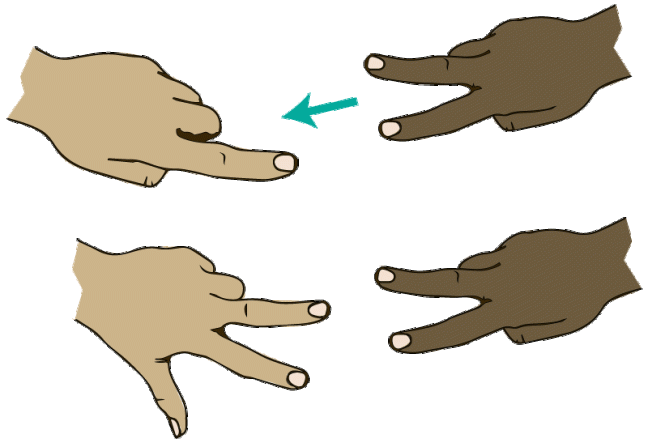
Each player starts with both hands as fists, palm down, pointer fingers extended to show one point for each hand. On your turn, use one of your fingers to tap one hand:

  • If you tap an opponent’s hand, that person must extend as many extra fingers on that hand (in addition to the points already there) as you have showing on the hand that tapped. Your own fingers don’t change.
  • If you force your opponent to extend all the fingers and thumb on one hand, that makes a “dead hand” that must be put behind the player’s back, out of the game.
  • If you tap your own hand, you can “split” fingers from one hand to the other. For instance, if you have three points on one hand and only one on the other, you may tap hands to rearrange them, putting out two fingers on each hand. Splits do not have to end up even, but each hand must end up with at least one point (and less than five, of course).
  • You may even revive a dead hand if you have enough fingers on your other hand to split. A dead hand has lost all its points, so it starts at zero. When you tap it, you can share out the points from your other hand as you wish.

The last player with a live hand wins the game.

When a two-points hand taps a one-point hand, that player must put out two more fingers.

Continue reading Math Game: Chopsticks