30+ Things to Do with a Hundred Chart

[Photo by geishaboy500 via Flickr (CC BY 2.0).]

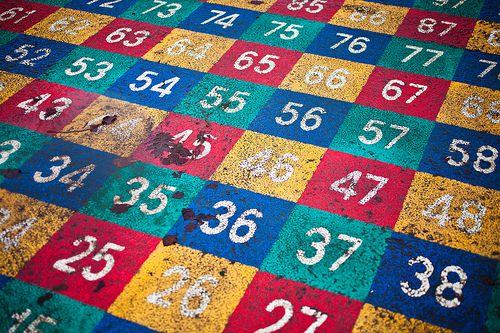
Are you looking for creative ways to help your children study math? Even without a workbook or teacher’s manual, your kids can learn a lot about numbers. Just spend an afternoon playing around with a hundred chart (also called a hundred board or hundred grid).

My free 50-page PDF Hundred Charts Galore! printables file features 1–100 charts, 0–99 charts, bottom’s-up versions, multiple-chart pages, blank charts, game boards, and more. Everything you need to play the activities below and those in my new 70+ Things to Do with a Hundred Chart book.

Download Free “Hundred Charts Galore!” Printables

Shop for “70+ Things To Do with a Hundred Chart” Book

And now, let’s play…
Continue reading 30+ Things to Do with a Hundred Chart

Free Math History: Number Stories of Long Ago

If you teach elementary children, check out this read-aloud math history resource from Homeschool Freebie of the Day:

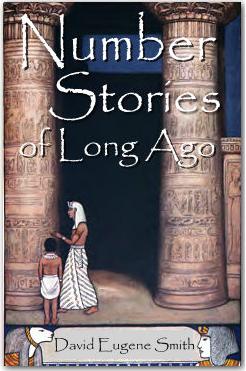
Number Stories of Long Ago
by David Eugene Smith

[This download is available for one day only. If you missed it, see the end of this post for other ways to get the book.]

From the Preface

“These are the stories that were really told in the crisp autumn evenings, the Story Teller sitting by the fire that burned in the great fireplace in the cottage by the sea. These are the stories as he told them to the Tease and the rest of the circle of friends known as the Crowd. Sitting by the fire and listening to the stories, in the lights and shadows of the dancing flames they could see the forms of Ching and Lugal and all the rest with their curious dress of long ago…”

Continue reading Free Math History: Number Stories of Long Ago

What’s Wrong with “Repeated Addition”?

[Photo by Alejandra Mavroski.]

Myrtle called it The article that launched a thousand posts…, and counting comments on this and several other blogs, that may not be too much of an exaggeration. Yet the discussion feels incomplete — I have not been able to put into words all that I want to say. Thus, at the risk of once again revealing my mathematical ignorance, I am going to try another response to Keith Devlin’s multiplication articles.

Let me state up front that I speak as a teacher, not as a mathematician. I am not qualified, nor do I intend, to argue about the implications of Peano’s Axioms. My experience lies primarily in teaching K-10, from elementary arithmetic through basic algebra and geometry. I remember only snippets of my college math classes, back in the days when we worried more about nuclear winter than global warming.

I will start with a few things we can all agree on…

Continue reading What’s Wrong with “Repeated Addition”?

Math Game: What Number Am I?

Photo by jaycoxfilm.

Math concepts: mental calculations, math vocabulary, and anything else you want to include
Number of players: any number, but I think it works best with two players who alternate asking questions
Equipment: imagination and, if necessary, scratch paper

Many years ago, I read a magazine article by mathematical music critic Edward Rothstein, wherein he described a game he invented for his daughter:

  • “What number am I? If you add me to myself, you get four.”

Rather than explaining the rules of the game, let me tell you a story…

Continue reading Math Game: What Number Am I?

Christmas Math Puzzles and Activities

by HikingArtist.com via flickr

UPDATE: Some of the links below have gone missing, as internet sites tend to do. Check out my *huge* new blog post:

We interrupt our regularly scheduled math program to bring you the following Christmas links…

First, A to Z Home’s Cool offers some fun for older students and teachers:

Also check out the annual Price of Christmas Index to see what the “12 Days of Christmas” gifts would cost you this year. Or explore the Nrich Advent Math Calendars to play with a new math activity every day until Christmas.

You can find just the song here: http://vihart.com/music/gauss12days.mp3.

Continue reading Christmas Math Puzzles and Activities

In the News: Teaching Math

Here are a couple of interesting articles about teaching math:

Good Stories, Good Math

Math Trek (Nov. 10, 2007) — Spinning a good yarn may seem to have little to do with mathematics, but a new study suggests otherwise. Preschoolers who tell stories that include many different perspectives do better in math two years later than those who stick to one simple perspective. The researchers believe that the study may highlight a deep connection between mathematical ability and narrative skills… [Hat tip: Wild About Math!]

Gesturing Helps Grade School Children Solve Math Problems

ScienceDaily (Nov. 5, 2007) — Are math problems bugging your kids? Tell them to talk back — using their hands. Psychologists at the University of Chicago report that gesturing can help kids add new and correct problem-solving strategies to their mathematical repertoires. What’s more, when given later instruction, kids who are told to gesture are more likely to succeed on math problems…

Continue reading In the News: Teaching Math

Game: Hundred Chart Nim

Photo by Håkan Dahlström via flickr.

Math concepts: addition and subtraction within 100, logical strategy
Number of players: 2 or 3
Equipment: printed hundred chart (also called a hundred board) and beans, pennies, or other tokens with which to mark numbers — or use this online hundred chart

Set Up

Place the hundred chart and a small pile of tokens where both players can reach them.

Continue reading Game: Hundred Chart Nim

Number Bonds, Number Rainbows

Basic bar diagram

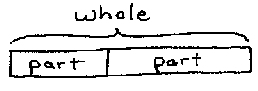
Many of us use the idea of number bonds with our young students. A number bond is a mental picture of the relationship between a number and the parts that combine to make it.

Now we have a new, colorful way to show these relationships, thanks to Maria at Homeschool Math Blog. If you teach math to young children, check this out:

Continue reading Number Bonds, Number Rainbows

Writing to Learn Math

2009 Challenge - Day 72: Pencil
Image by ☼zlady via Flickr

Have you considered experimenting with writing in your math class this year? It seems that math journals are a growing fad, and for good reason:

Writing is how we think our way into a subject and make it our own.

William Zinsser
Writing to Learn

Math journal entries can be as simple as class notes, or they can be research projects that take hours of experimentation and pondering. Students may use the journal to store their thoughts as they work several days to solve a challenge problem of the week, or they might jot down quick reflections about what they learned in today’s math class.

Continue reading Writing to Learn Math

7 Things to Do with a Hundred Chart


This post has been revised to incorporate all the suggestions in the comments below, plus many more activities. Please update your bookmarks:

Or continue reading the original article…


Continue reading 7 Things to Do with a Hundred Chart