Hat tip to Dan at mathrecreation.
One Day Only: Number Stories of Long Ago
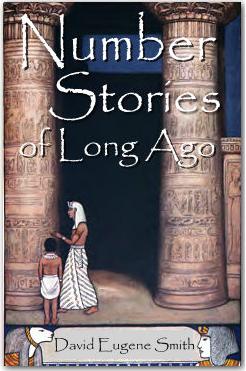
For all those who missed it last time, now is your chance: Number Stories of Long Ago will be available Tuesday, January 20, from Homeschool Freebie of the Day.
David Eugene Smith tells stories set in different historical eras, showing how different mathematical concepts were developed and became a part of civilization. Wonderful!
For Those Who Missed It
If you missed the Homeschool Freebies edition, Number Stories of Long Ago is also available as a real book or (at least in the U.S.) as a scanned library book from Google Books.
Or try downloading a copy for your Kindle (or Nook, Kobo, Sony Reader, etc.):
Math History Tidbits: Agnesi, Euler, and China
 I’ve fallen behind on my project of transcribing my Alexandria Jones stories. Finally, here are a few more tidbits from math history, along with links to relevant Internet sites and a few math puzzles for your students to try.
I hope you find them interesting.
Continue reading Math History Tidbits: Agnesi, Euler, and China
A Mathematician for President
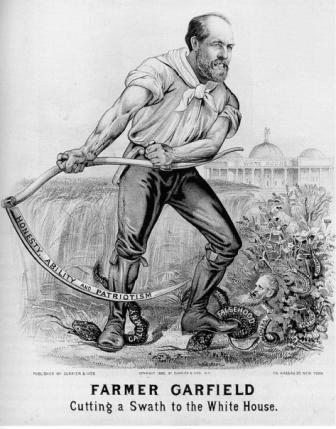
In 1876, a politician made mathematical history. James Abram Garfield, the honorable Congressman from Ohio, published a brand new proof of the Pythagorean Theorem in The New England Journal of Education. He concluded, “We think it something on which the members of both houses can unite without distinction of party.”
Free Math History: Number Stories of Long Ago
If you teach elementary children, check out this read-aloud math history resource from Homeschool Freebie of the Day:
[This download is available for one day only. If you missed it, see the end of this post for other ways to get the book.]
From the Preface
“These are the stories that were really told in the crisp autumn evenings, the Story Teller sitting by the fire that burned in the great fireplace in the cottage by the sea. These are the stories as he told them to the Tease and the rest of the circle of friends known as the Crowd. Sitting by the fire and listening to the stories, in the lights and shadows of the dancing flames they could see the forms of Ching and Lugal and all the rest with their curious dress of long ago…”
Continue reading Free Math History: Number Stories of Long Ago
Euclid’s Geometric Algebra
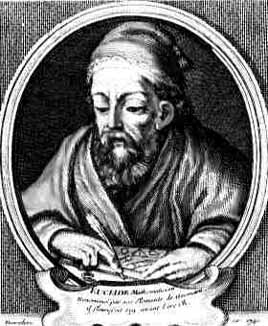
Picture from MacTutor Archives.
After the Pythagorean crisis with the square root of two, Greek mathematicians tried to avoid working with numbers. Instead, the Greeks used geometry to demonstrate mathematical concepts. A line can be drawn any length, so straight lines became a sort of non-algebraic variable.
You can see an example of this in The Pythagorean Proof, where Alexandria Jones represented the sides of her triangle by the letters a and b. These sides may be any length. The sizes of the squares will change with the triangle sides, but the relationship 
Math History on the Internet
 [Image from the MacTutor Archive.]
The story of mathematics is the story of interesting people. What a shame it is that our children see only the dry remains of these people’s passion. By learning math history, our students will see how men and women wrestled with concepts, made mistakes, argued with each other, and gradually developed the knowledge we today take for granted.
In a previous article, I recommended books that you may find at your local library or be able to order through inter-library loan. Now, let me introduce you to the wealth of math history resources on the Internet.
Hooray for (Math) History
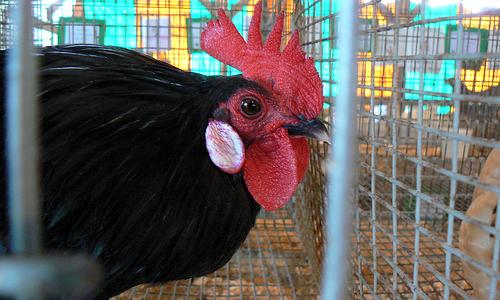
Photo by Benimoto.
John Napier foiled a thief with the aid of logic and a black rooster. For this and other acts of creative problem solving, his servants and neighbors suspected him of witchcraft.
What does this have to do with mathematics?
Math was Napier’s favorite hobby. He invented logarithms to help people handle large numbers easily, and he even created a calculator out of a chessboard. [See how it works: addition, subtraction, multiplication.]
An Ancient Mathematical Crisis

[When Alexandria Jones and her family visited an excavation in southern Italy, they learned several tidbits about the ancient school of mathematics and philosophy founded by Pythagoras. Here is Alex’s favorite story.]
It hit the Pythagorean Brotherhood like an earthquake, a crisis of faith which shook the foundations of their universe. Some say Pythagoras himself made the dread discovery, others blame Hippasus of Metapontum.
Something certainly did happen with Hippasus. The Brotherhood sent him into exile for insubordination, or for breaking the rule of secrecy — or was it for proving the unthinkable? According to legend, Hippasus drowned at sea, but was it a mere shipwreck or the wrath of the gods? Some say the irate Pythagoreans threw him overboard…
Alexandria’s Dog is Now a Teacher

Photo by alex-s.
A reader of Indian descent has been kind enough to write to me about a difference in our cultures. In the US, or at least in the parts with which I am familiar, it is common to name one’s pet after a famous person. In India, however, to name a dog after a human is a very deep insult.
I am sorry! It was not intended that way.
Therefore, I have re-named Alexandria Jones‘s dog after a Westerner. I would like to keep the tradition of naming the characters in my Alex stories after people in math history, so I am hoping this one will not offend anyone.
 Denise Gaskins' Let's Play Math