New Edition of Must-Read Math Book

I thought I knew math fairly well.

I thought arithmetic was boring.

I thought the reason other nations beat America in international math tests was that their students worked harder than ours.

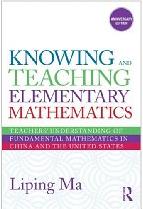
I thought all sorts of silly things before I read Liping Ma’s Knowing and Teaching Elementary Mathematics. Now this must-read book is coming out in a new edition, due in bookstores next week.

I can hardly wait!

In American elementary mathematics education, arithmetic is viewed as negligible, sometimes even with pity and disdain—like Cinderella in her stepmother’s house. Many people seem to believe that arithmetic is only composed of a multitude of “math facts” and a handful of algorithms. . . Who would expect that the intellectual demand for learning such a subject actually is challenging and exciting?

Liping Ma
Arithmetic in American Mathematics Education: An Abandoned Arena?
Continue reading New Edition of Must-Read Math Book

Math Teachers at Play #20

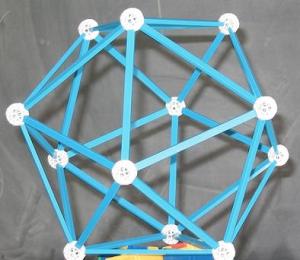
blue icosahedron, by shonk[Photo by shonk.]

Welcome to the Math Teachers At Play blog carnival — which is not just for math teachers! If you like to learn new things and play around with ideas, you are sure to find something of interest.

Let’s start the mathematical fun with a couple of puzzles in honor of our 20th edition: First, the shape to our right is an icosahedron, one of the Platonic solids. Each face is an equilateral triangle — can you count them? For more fun, make your own model.

Continue reading Math Teachers at Play #20

Do Your Students Understand Division?

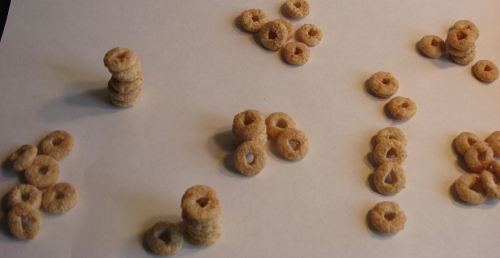
Cheerios by sixes
[I couldn’t find a good picture illustrating “division.” Niner came to my rescue and took this photo of her breakfast.]

I found an interesting question at Mathematics Education Research Blog. In the spirit of Liping Ma’s Knowing and Teaching Elementary Mathematics, Finnish researchers gave this problem to high school students and pre-service teachers:

We know that:
498 \div 6 = 83
How could you use this relationship (without using long-division) to discover the answer to:
491\div6=?
[No calculators allowed!]

The Finnish researchers concluded that “division seems not to be fully understood.” No surprise there!

Check out the pdf report for detailed analysis.

Continue reading Do Your Students Understand Division?

Math Teachers at Play #8

party-child-by-jaaron

[Photo by jaaron.]

Welcome to the Math Teachers At Play blog carnival — which is not just for math teachers! We accept entries from anyone who enjoys playing around with math, as long as the topic is relevant to students or teachers of preK-12th grade mathematics.

Some articles were submitted by their authors, other were drawn from the back-log in my blog reader, and I’ve spiced it all up with a few math jokes courtesy of the Mathematical humor collection of Andrej and Elena Cherkaev.

Let the mathematical fun begin…

Continue reading Math Teachers at Play #8

Math Teachers at Play #5

[Photo by Alex Kehr.]

Welcome to the Math Teachers At Play blog carnival — which is not just for math teachers! If you like to learn new things and play around with ideas, you are sure to find something of interest. Let the mathematical fun begin…

Continue reading Math Teachers at Play #5

Buddy-Style Math: Doing Homework Without Tears

My daughter Kitten strongly dislikes math when forced to do it on her own, so I am trying to get back into the habit of doing “Buddy-Style Math” with her. We take turns working the problems in her workbook: mine, hers, mine, hers, and so on down the page. We work each problem out loud, explaining how we got the answer and checking each other as we go.

In a way, it is like Charlotte Mason-style narration applied to math, since my daughter has to process her thoughts in order to explain how she worked the problem, which fixes the math concepts more deeply in her mind.

Continue reading Buddy-Style Math: Doing Homework Without Tears

How DO We Learn Math?

cat-learns-through-osmosis

What makes it possible to learn advanced math fairly quickly is that the human brain is capable of learning to follow a given set of rules without understanding them, and apply them in an intelligent and useful fashion. Given sufficient practice, the brain eventually discovers (or creates) meaning in what began as a meaningless game.

Keith Devlin
Should Children Learn Math by Starting with Counting?

It seems obvious that our children must have a wide range of experience with real world objects before counting, addition, or subtraction mean anything to them. But are other topics, such as calculus, better learned as abstract rules — as a game that we play with symbols? And what about the topics in the middle? For instance, how best can we break our algebra students of common errors such as distributing the square or canceling out addition terms?

To teach effectively, I need to understand how students learn. Do different approaches work best with different concepts? Or at different ages or stages of development? I can think of at least 3 ways that I have learned math — what about you? How do you and your children learn?

Continue reading How DO We Learn Math?

Math Teachers at Play #2

[Photo by Sister72.]

Welcome to the second Math Teachers At Play blog carnival! Some articles were submitted by their authors, other were drawn from the back-log in my blog reader, and I’ve spiced it all up with a few of my favorite quotations.

Let the mathematical fun begin…

Continue reading Math Teachers at Play #2

Math Teachers at Play #1

[Photo by StuSeeger.]

Welcome to the inaugural edition of the Math Teachers At Play blog carnival! I hope you enjoy this collection of tips, tidbits, games, and activities for students and teachers of preschool-12th grade mathematics.

For this first carnival, I’ve drawn several recent posts from my blog reader as examples of the types of posts I’d love to include in future editions of Math Teachers at Play. I tried to find something for everyone, from multiplication drill for elementary students to advice for understanding high school math equations.

Let the mathematical fun begin…

Continue reading Math Teachers at Play #1

Writing to Learn Math II

[Photo by Andy Hay.]

In addition to all the funny Google searches, I get plenty of normal inquiries about math topics. People come here looking for help with fractions, word problems, and math club activities — no surprise, those — but I would never have predicted the popularity of the search topic “writing in math class.”

Last year, I compiled a variety of math journal resources, but I’ve found many more since then, especially for older (high school and college) students. So if you’re looking for new ways to get your math students writing…

Continue reading Writing to Learn Math II