From Visually.
From Visually.
Due to an apparent glitch with the submissions, it’s a frustratingly short carnival this month. But you will still find plenty of fun, from elementary kitchen math to algebra 2 and fractions to fractals:

The number sixty happens to be the smallest number divisible by the numbers 1 to 6. Also, it has the honour being a unitary perfect number, i.e. it can be interpreted as being the overall sum of its unitary divisors (excluding itself). Give this a try to convince yourself: 1 + 3 + 4 + 5 + 12 + 15 + 20 indeed equals 60.
…
Click here to read the math carnival post.
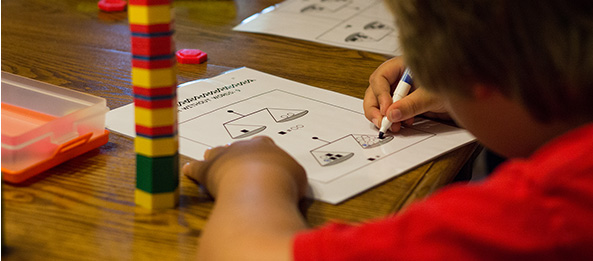

After teaching co-op math classes for several years, I’ve become known as the local math maven. Upon meeting one of my children, fellow homeschoolers often say, “Oh, you’re Denise’s son/daughter? You must be really good at math.”
The kids do their best to smile politely — and not to roll their eyes until the other person has turned away.
I hear similar comments after teaching a math workshop: “Wow, your kids must love math!” But my children are individuals, each with his or her own interests. A couple of them enjoy an occasional geometry or logic puzzle, but they never voluntarily sit down to slog through a math workbook page.
In fact, one daughter expressed the depth of her youthful perfectionist angst by scribbling all over the cover of her Miquon math workbook:
Translation: “If I can’t do it flawlessly the first time, then I don’t want to do it at all.”

Continue reading How to Recognize a Successful Homeschool Math Program
What do you think math is all about? What do your children think? Here is the start of a promising new video series:

Math is beautiful when it communicates an abstract idea clearly and provides new insight. Yelena’s hundred chart poster does just that:
[From the Moebius Noodles blog]
Check out my newest home decor item, a hundred chart. The amount of work I put into it, I consider getting it framed to be proudly displayed in the living room. The thing is monumental in several ways:
1. It is monumentally different from my usual approach to choosing math aids. My rule is if it takes me more than 5 minutes to prepare a math manipulative, I skip it and find another way.
2. It is monumentally time-consuming to create from scratch all by yourself.
3. It is monumentally fun to show to a child.
— Yelena McManaman
Moebius Noodles
Now she’s provided a fantastic set of free hundred chart printables:
Thanks, Yelena!
It began with a humble list of seven things in the first (now out of print) edition of my book about teaching home school math. Over the years I added new ideas, and online friends contributed, too, so the list grew to become one of the most popular posts on my blog:
Can you think of anything else we might do with a hundred chart? Add your ideas in the Comments section below, and I’ll add the best ones to our master list.
Math Teachers at Play is a monthly Blog Carnival showcasing math activities and puzzles from teachers, parents, and homeschoolers all around the blogosphere.
It is organized by Denise Gaskins at Let’s Play Math, and I’m very excited to be hosting the 59th carnival on Learners in Bloom.
Here’s a little puzzle for you:
59 is the smallest prime that can be expressed using the digits 1 through 9 in order with only the addition and multiplication symbols between them. Can you find a way to express it with these rules? (one solution is at the end of this post).
And now on to the great ideas that were submitted this month…

 [Feature photo (above) by Alex Kehr. Photo (right) by kirstyhall via flickr.]
Welcome to the Math Teachers At Play blog carnival — a smorgasbord of ideas for learning, teaching, and playing around with math from preschool to pre-college. If you like to learn new things and play around with ideas, you are sure to find something of interest.
Let the mathematical fun begin…
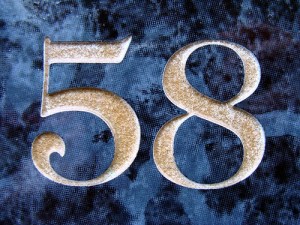
By tradition, we start the carnival with a pair of puzzles in honor of our 58th edition. Click to download the pdf:

Continue reading Math Teachers at Play #58: Crazy, Funny Math

feature photo above by Alan Klim via flickr
New Year’s Day
Now is the accepted time to make your regular annual good resolutions. Next week you can begin paving hell with them as usual.
Yesterday, everybody smoked his last cigar, took his last drink, and swore his last oath. Today, we are a pious and exemplary community. Thirty days from now, we shall have cast our reformation to the winds and gone to cutting our ancient shortcomings considerably shorter than ever. We shall also reflect pleasantly upon how we did the same old thing last year about this time.
However, go in, community. New Year’s is a harmless annual institution, of no particular use to anybody save as a scapegoat for promiscuous drunks, and friendly calls, and humbug resolutions, and we wish you to enjoy it with a looseness suited to the greatness of the occasion.
— Mark Twain
Letter to Virginia City Territorial Enterprise, Jan. 1863
For many homeschoolers, January is the time to assess our progress and make a few New Semester’s Resolutions. This year, we resolve to challenge ourselves to more math puzzles. Would you like to join us? Pump up your mental muscles with the 2013 Mathematics Game!
Vi Hart is back with some wintery fun!
From preschool through high school, mathematics offers a wide range of puzzles, games, and interesting ideas to explore. The Math Teachers at Play blog carnival brings you a variety of mathy treats every month. Check it out!
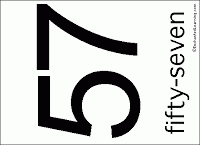
Welcome to the 57th Edition of Math Teachers at Play the Blog Carnival!
The number 57 has often been used in entertainment. As in Agent 57 from the Hit TV Show Danger Mouse, Bruce Springsteen once sang about 57 channels (and nothin’ on), and I can’t forget one of my favorite movies Passenger 57 staring Wesley Snipes.