Holiday Math and More: Playful Math Education Carnival 114

Do you enjoy math? I hope so! If not, the links in this post just may change your mind.

Welcome to the 114th edition of the Math Teachers At Play math education blog carnival — a smorgasbord of articles by bloggers all around the internet who have great ideas for learning, teaching, and playing around with math from preschool to pre-college.

If you would like to jump straight to our featured blog posts, click here to see the Table of Contents.

By the way, I found a cool, semi-self-referential trivia tidbit about our carnival number: 27 − 14 = 114. And if you put 114 dots into a 1←7 Exploding Dots machine, you’ll get the code 222. Pretty neat!

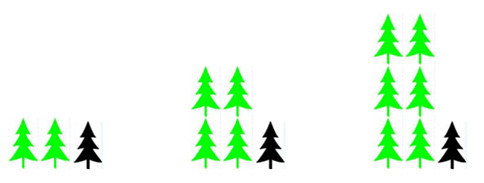
As you scroll through the links below, you find several puzzle graphics from the wonderful Visual Patterns website. Use them as conversation-starters with your kids: What do you notice? How does each pattern grow? For older students: Can you write a formula to describe how each pattern? What will it look at stage 43?

Pattern #7, Trees

A BIT OF FUN

Setting the mood: Enjoy this bit of seasonal fidgeting from Vi Hart (@vihartvihart).

If you don’t understand some of the references, that’s normal! Pick a phrase, Google it, and enjoy the fun of learning something new.


TABLE OF CONTENTS

And now, on to the main attraction: the blog posts. Some articles were submitted by their authors; others were drawn from the immense backlog in my rss reader. If you’d like to skip directly to your area of interest, click one of these links.

Let the mathematical fun begin!

Continue reading Holiday Math and More: Playful Math Education Carnival 114

Check Out These Cool Math Sales

I’ve been following Sonya’s Arithmophobia No More blog for a couple of years, and I love the work she is doing. But this month, she’s teamed up with Lacy at Play, Discover, Learn (another great blog to follow!) to offer a humongous bundle of playful math.

You get math journaling pages, games, creative task cards, thought-provoking worksheets, and video training resources to help you build your child’s understanding of math from arithmetic to early algebra. Wow!

These activities are perfect for homeschooling families or anyone looking to supplement their child’s current math curriculum with effective discovery-based activities. If you’ve ever wondered what to do with those Cuisenaire rods you picked up on sale way back when, this bundle is for you.

I’m so looking forward to using some of these ideas with my elementary homeschool co-op kids next year!

Sale price is $30 from December 2-15.

Cuisenaire Rod Activities Blowout Bundle

But Wait, There’s More

If you’ve been reading my blog for very long, you’ve probably seen how much I love the blog, books, and classes available from the Natural Math folks.

Their newest book is just off the presses — Funville Adventures, a math adventure chapter book.

And until December 20, they’re having a holiday sale. Make your own bundle of any Natural Math books. Playful algebra, calculus for 5-year-olds, inquiry problems and more: Great deal!

Natural Math Book Sale

Stock Up on My Playful Math Books

Finally, if you’ve been wanting to pick up a paperback copy of Let’s Play Math or some of my game books, or maybe a set of dot-grid math journals, I’m currently offering a discount on bulk orders.

Bundle ANY assortment of titles. Stock up on books for your family, friends, or homeschool group.

  • 2–4 books: 15% discount off retail prices
  • 5–9 books: 25% discount
  • 10–19 books: 35% discount
  • 20+ books: 35% discount, and free Continental U.S. standard shipping or the equivalent discount off other shipping options

Bulk Order Playful Math Paperbacks

(US customers only: We’re sorry we can’t offer bulk discounts for our international readers, but the complexities of international duties and tax laws are too much for this very small family business.)

Do You Know of Any Math Deals?

Apollonian greetings from my homeschool co-op kids, and best wishes for a grace-filled holiday season.

If you’ve seen a great deal or holiday price on a math resource you love, please share!

Add your deal to the comment section below, so we can all take advantage of the math joy this season.

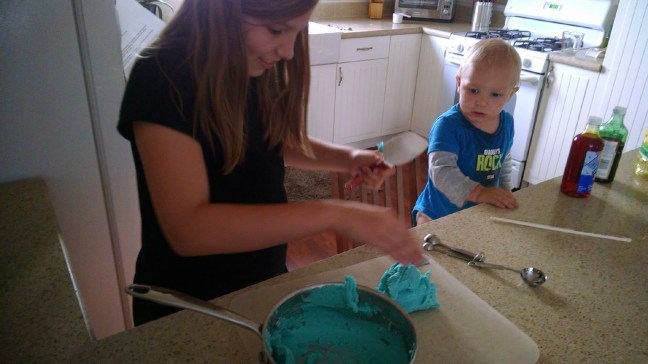
10 Ways to Play Math with Play-Doh

Today we have a guest post from Lucy Ravitch, author of the new Kickstarter picture book Trouble with Monkeys: A math concept story of place value. She’s sharing a few ideas from her Math Activity Thursday (M.a.Th.) video series. Enjoy!


Hello, math fans and enthusiasts! Each week I try to give you and your family a fun math activity to try. Two months ago I posted this video with ten ways to turn play dough into an engaging activity for lower and upper elementary math.

If you want to make your own dough from scratch here are a few simple recipes. I encourage you to let your children play freely at first, before trying these activities.

Below I have identified some of the math concepts that your kids will experience as they play.

1. Toss It

Practice counting. With older children, record your results and make a graph of the data.

  • How many times can you catch it in a row? What’s your average number of tosses?
  • Talk about attributes. Does the size or color of the play dough balls make a difference?
  • How high are you tossing it? Talk about measuring systems. Do you use feet and inches, or meters and centimeters?
  • If you know how to juggle, time how long you can keep the balls going.

2. Smash It

Make several small balls or pieces. Then play as you smash them.

  • Play a NIM game: Make 10-15 small play dough balls. Take turns. On your turn, you can smash one ball or two. Whoever smashes the last ball wins the game.
  • Or smash your math facts: Choose several equations for your children to practice. Write each answer on a 3×5 card. Lay out each card next to a play dough piece. As you call out the equations, kids smash the play dough next to the correct card.

3. Shape It

Have fun molding your play dough. Roll it out to cut shapes.

  • Try making 3D shapes while practicing your math vocabulary. MathisFun.com has a great section about solid geometry. Can you find three math terms that are new for you?
  • Roll out the dough and cut 2D shapes. Discuss their attributes. Can you cut your shape in half to be symmetrical?

4. Hide Things in It

Find small objects around the house and enclose them inside play dough.

  • Take turns hiding small objects in play dough. Optional: Give a one-minute time limit to guess before opening it. This gives you and your kids a chance to talk about size, shape, or other attributes.
  • Have challenges to use the least amount of dough to hide identical objects. Two players have two minutes to hide an object in as little play dough as possible. The object must be completely concealed within the dough. What methods will you use?

5. Make Imprints on It

Show off your design skills and observe textures.

  • You can practice counting as you poke and press your fingers or objects into the dough. Older children can discuss the distance between impressions and/or the pressure applied.
  • As you and your kids make designs, talk about what you notice: Is your design symmetrical? What tools did you use (toothpicks, pencils, marbles, fingers, toy cars)? Which objects make interesting textures?

6. Cut It

Use a butter knife or the edge of a ruler to cut your play dough. Discuss findings as you play and explore.

  • In the video, I posed the question: how many sections do you get if you make only three cuts? Try it and see.
  • Does the number of pieces change if you use a shape other than a flat circle?
  • Discuss making straight cuts that will intersect or be parallel. Bring in more geometry terms.
  • Experiment with a different number of cuts.

7. Weigh It

Pull out a kitchen scale or balancing scales to use with dough.

  • Older children can make conversions between ounces to grams. They can make calculations about doubling or multiplying the measured weight. With younger kids, try using balancing scales. Compare the weights between pieces.
  • Try making two pieces that weigh exactly the same. This is harder than it sounds! For small children, this gives them the opportunity to see that the mass (weight) of an object can come in different shapes.

8. Measure It

Use a ruler or measuring tape while you play. There are several ways you can measure your dough — height, width, and length.

  • How long can you extend one ounce of dough? Pick your own size/weight of play dough and see who can get the longest. What fraction of a yard or meter is it?
  • Discuss height and what it takes to make dough stand vertically. How tall can you get three ounces to stand? Can anything help make it taller?

9. Roll It

Make sure you have plenty of room for this activity. Playing outside or on smooth floors works best.

  • With one push how far does your play dough roll? Is there an ideal size for a piece? Is there an ideal weight for rolling?
  • Is the ground sloped? What effects does the rolling surface have?
  • Why do some shapes roll easily while others don’t? Can you create a not-round shape that will roll?

10. Compare It

Compare similarities and differences between dough colors and types. Consider comparing the previously listed activities

  • If you made your own dough, compare consistency between batches. Is homemade dough denser or lighter than store-bought dough?
  • What are differences between the dough you played with and the dough that has not been touched?
  • Which of these activities do you think will take the shortest amount of time? The longest? Or put the activities in order based on how much dough you will need — least to greatest.

May you and your students have fun as you play with dough!


About the Author

Lucy blogs at kidsmathteacher.com and is the author/creator of Kids Menu Books. The first book in that series is The Pancake Menu, an interactive book that lets kids practice math as they play restaurant.

And be sure to visit Lucy’s Kickstarter project! She’s teamed up with artist Trav Hanson to create the delightful picture book Trouble with Monkeys: A math concept story of place value.

Rabbit Trails and Fibonacci Poetry

Homeschool Memories…

Well, I hadn’t planned on spending my day that way. But one of the great things about homeschooling is the freedom to follow rabbit trails.

While browsing the Carnival of Homeschooling, I found a link to Farm School blog’s article Fib Foolery, which sent me to Gotta Book for his articles The Fib and More Fibbery (read the comments on both threads, but be warned that some are crude) and several other posts, all of which set me off on a morning of poetic fun.

A “Fib” is a Fibonacci poem. It’s based on syllable count, like a haiku, but the lines follow the Fibonacci counting series: 1, 1, 2, 3, 5, 8… Each number is the sum of the previous two numbers.

I knew what I was going to share at our Tuesday Teatime and Poetry Reading that afternoon.

Continue reading Rabbit Trails and Fibonacci Poetry

Playful Math Education Carnival 106 with Math Art

Do you enjoy math? I hope so! If not, browsing this post just may change your mind.

Welcome to the 106th edition of the Math Teachers At Play math education blog carnival — a smorgasbord of links to bloggers all around the internet who have great ideas for learning, teaching, and playing around with math from preschool to pre-college. Let the mathematical fun begin!

By tradition, we start the carnival with a puzzle in honor of our 106th edition. But if you would like to jump straight to our featured blog posts, click here to see the Table of Contents.

Try This Puzzle

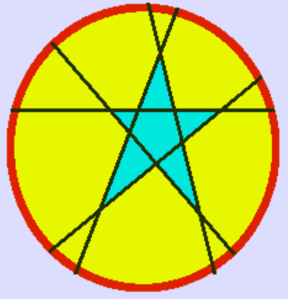
If you slice a pizza with a lightsaber, you’ll make straight cuts all the way across. Slice it once, and you get two pieces.

If you slice it five times, you’ll get a maximum of sixteen pieces. (And if you’re lucky you might get a star!)

  • How many times would you have to slice the pizza to get 106 pieces?

Click here for all the mathy goodness!

Dot Grid Doodling

What can you DO with a page full of dots?

Yesterday, I mentioned my new series of paperback dot grid notebooks, and I promised to share a few ideas for mathematical doodling.

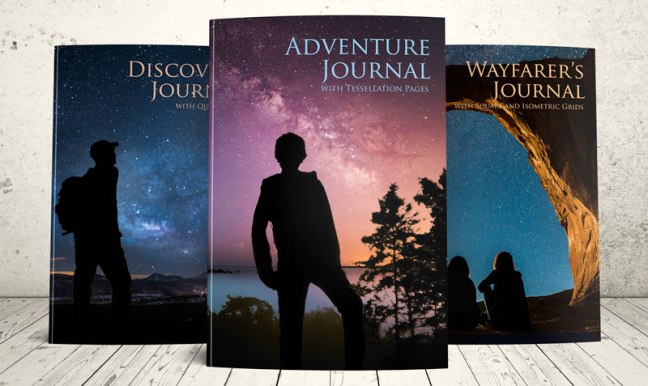
But first, let me share my new dot-grid journals for kids. Aren’t they pretty?

Click Here for More Information

Doodling gives our minds a chance to relax, wander, and come back to our work refreshed. And though it goes against intuition, doodling can help us remember more of what we learn.

Math doodles let us experiment with geometric shapes and symmetries. We can feel our way into math ideas gradually, through informal play. Through doodles, our students will explore a wide range of mathematical structures and relationships.

Our own school experiences can make it hard for us to teach. What we never learned in school was the concept of playing around with math, allowing ideas to “percolate,” so to speak, before mastery occurs, and that process may take time.

—Julie Brennan

I like to doodle on dotty grid paper, like the pages in my math journals, but there’s No Purchase Necessary! You can design your own printable dot page at Incompetech’s PDF generator.

Patterns in Shape and Angle

To make a faceted mathematical gemstone, start with any shape you like. Then build other shapes around it. What do you notice? Does your pattern grow outward from its center? Or flow around the corner of your page? How is each layer similar, and how is it different?

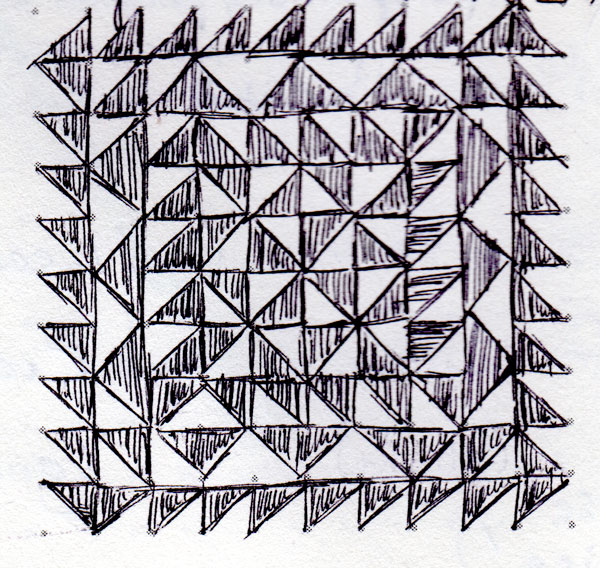
Arbitrary constraints can lead to mathematically interesting doodles. For instance, create a design out of 45-45-90 triangles by coloring exactly half of every grid square. How many variations can you find?

Symmetry Challenge

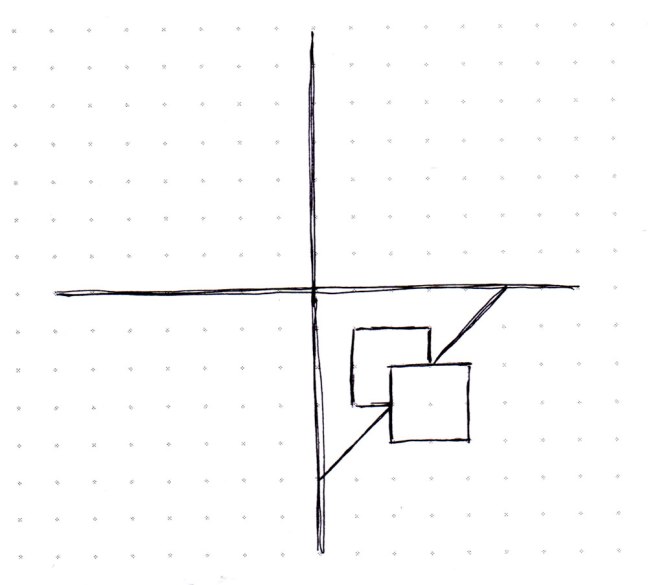
Play a symmetry puzzle game. Draw a line of symmetry and fill in part of the design. Then trade with a partner to finish each other’s doodles.

Make more complex symmetry puzzles with additional reflection lines.

Math Doodle Links

  • Who can talk about mathematical doodling without mentioning Vi Hart? If you’ve never seen her “Doodling in Math Class” video series, you’re in for a treat!
  • See if you can draw a rotational-symmetry design, like Don’s “Order 4” graphs.
  • Or experiment with the more flexible rules in John’s “Knot Fun” lesson.
  • And my latest obsession: the “ultimate” tutorial series on Celtic Knotwork, which explores the link between knots and their underlying graphs.
My favorite knot doodle so far.
Inspirations: A Recreational Mathematics Journal
Reflections: A Math Teacher’s Journal
Explorations: A Math Student’s Journal
Contemplations: A Homeschooler’s Journal

Before you start doodling: How to Break In Your New Math Journal.

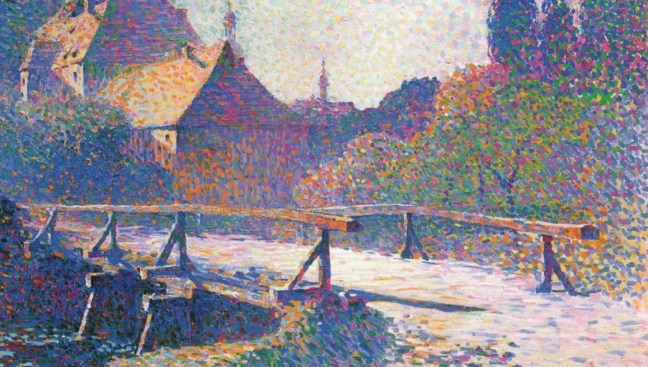
Feature photo (top): Sommermorgen (Alte Holzbrücke in Pretzfeld) by Curt Herrmann, via Wikimedia Commons. [Public domain]

Join the Fun: Math & Magic Virtual Book Club

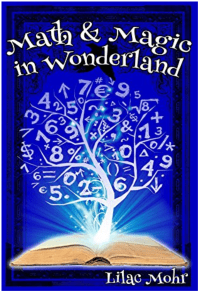
Math-Magic-WonderlandEleven weeks of mathematical playtime kicks off this week over at Learners in Bloom blog.

Each week, we’ll be playing with the math, language, and logic topics found in a single chapter. I’ll be posting ideas for extension activities, videos demonstrating the concepts for the week, and additional resources. I’m really excited for the opportunity to share all the extra ideas that have been floating around my brain which I didn’t have room to include in the book (as in Marco Polo’s famous words: “I did not tell half of what I saw.”)

— Lilac Mohr

Here’s a Quick Taste of Week One

This Week’s Activities

Lilac’s blog post includes a full schedule for the eleven-week book club, featuring plenty of classic math puzzlers to play with. Here are the topics for this week.

  • Read Chapter 1: Mrs. Magpie’s Manual
  • Alliteration
  • Memorizing digits of Pi
  • Palindromes
  • Calculating your age on other planets

It looks like a lot of fun. I highly recommend the book (read my review), and I’m sure you and your children will enjoy discovering math and magic with Lulu and Elizabeth.

Check it out: Math & Magic in Wonderland Virtual Book Club, Week One.

 
* * *

This blog is reader-supported.

If you’d like to help fund the blog on an on-going basis, then please join me on Patreon for mathy inspiration, tips, and an ever-growing archive of printable activities.

If you liked this post, and want to show your one-time appreciation, the place to do that is PayPal: paypal.me/DeniseGaskinsMath. If you go that route, please include your email address in the notes section, so I can say thank you.

Which I am going to say right now. Thank you!

“Join the Fun: Math & Magic Virtual Book Club” copyright © 2016 by Denise Gaskins.

10 Ways to Celebrate World Tessellation Day

Guest post by Emily Grosvenor.

June 17 marks World Tessellation Day, a holiday I created to bring awareness to the fun of finding and making tessellations.

Will you celebrate with us?

Here are 10 great ways to play with tessellations, learn about them, and introduce your children to a math concept that opens a variety of creative learning opportunities.

1) Learn about tessellations with your kids.

A tessellation is a tiled mosaic pattern of the same shape laid out over and over again, repeating into infinity. Tessellations can be found in nature, or they can be created by people. Learn more at these websites:

1WorldTessellationDayExcept where otherwise noted, graphics and photos copyright ©2016 Emily Grosvenor. All rights reserved.

Continue reading 10 Ways to Celebrate World Tessellation Day

Playful Math Education Carnival 97

Did you know 97 is an emirp?
Did you know 97 is an emirp? It’s prime both forward and backward! What other emirps can you find?

Welcome to the 97th edition of the Math Teachers At Play math education blog carnival: a monthly smorgasbord of links to bloggers all around the internet who have great ideas for learning, teaching, and playing around with math from preschool to pre-college.
A few articles were submitted by their authors, but most were drawn from the immense backlog in my rss reader. If you’d like to see your blog post featured next month, be sure to send it in yourself. Our hosts are busy parents and teachers who have limited time to scour the Internet for goodies.

To add a bit of color, I’ve thrown in several favorites from my newly updated Math with Living Books pages. Some (affiliate) links go to Amazon.com, where you can read descriptions and reviews — but there’s no need to buy. Most of these books should be available through your local library.

Table of Contents

If you’d like to skip directly to your area of interest, click here:

Please: If you enjoy the carnival, would you consider volunteering to host sometime this year? Classroom teachers, homeschoolers, unschoolers, or anyone who likes to play around with math (even if the only person you “teach” is yourself) — if you would like to take a turn, please speak up!

And now, let the mathematical fun begin!


Pinczes-A Remainder of One

When the queen of her bugs demands that her army march in even lines, Private Joe divides the marchers into more and more lines so that he will not be left out of the parade.

Talking Math with Kids

  • Crystal Wagner (@Tri_Learning) shares several Math Games to Play in the Car: “Or maybe you are waiting in line at the grocery store or doctor’s appointment. Turn these times of waiting into learning opportunities.”
  • Christopher Danielson (@Trianglemancsd) shows how The sequence machine can launch math conversations with older students: “Now you can generate number sequences, without being distracted by the multiplication facts.”

richman-bykids

Help inspire your kids to try writing their own unique problems. Includes a wide range of math topics and concepts: money and time, fractions, percentages, geometry, logic, and multi-step problem solving.

[Back to top.]
[Back to Table of Contents.]

Continue reading Playful Math Education Carnival 97

New Picture Book: Tessalation!

When I run a math circle or co-op class, I love starting with a picture book. This new beauty from Emily Grosvenor will be perfect.

You could say that Tessalation is a book about tessellations (repeating tiled patterns), but it is really a children’s picture book about discovering order in a chaotic world.

— Emily Grosvenor

Seeing Math in the World

In taking a playful approach to mathematics, I hope to open children’s eyes to math in their world. Schooly math lessons have led many of my math group kids to think a “pattern” has to be a strictly repeating (and rather boring) series of shapes or colors.

But in the real world, patterns are so important that American mathematician Lynn Arthur Steen defined mathematics as the science of patterns.

“As biology is the science of life and physics the science of energy and matter, so mathematics is the science of patterns,” Steen wrote. “We live in an environment steeped in patterns — patterns of numbers and space, of science and art, of computation and imagination. Patterns permeate the learning of mathematics, beginning when children learn the rhythm of counting and continuing through times tables all the way to fractals and binomial coefficients.”

Tessa Truman-Ling’s delight in patterns is contagious. And it will provide a wonderful jumping-off point for a variety of math activities.

Visit Grosvenor’s Kickstarter page to find out more about her lovely book:

Further Exploration