Contig Game: Master Your Math Facts

[Photo by Photo Mojo via Flickr (CC BY 2.0).]

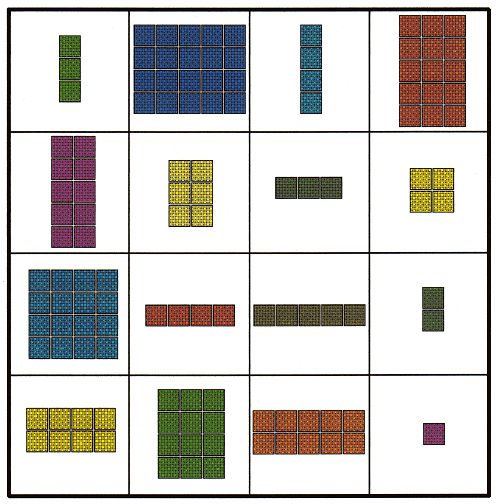
Yahtzee and other board games provide a modicum of math fact practice. But for intensive, thought-provoking math drill, I can’t think of any game that would beat Contig.

Math concepts: addition, subtraction, multiplication, division, order of operations, mental math
Number of players: 2 – 4
Equipment: Contig game board, three 6-sided dice, pencil and scratch paper for keeping score, and bingo chips or wide-tip markers to mark game squares

Set Up

Place the game board and dice between players, and give each player a marker or pile of chips. (Markers do not need to be different colors.) Write the players’ names at the top of the scratch paper to make a score sheet.

Continue reading Contig Game: Master Your Math Facts

30+ Things to Do with a Hundred Chart

[Photo by geishaboy500 via Flickr (CC BY 2.0).]

Are you looking for creative ways to help your children study math? Even without a workbook or teacher’s manual, your kids can learn a lot about numbers. Just spend an afternoon playing around with a hundred chart (also called a hundred board or hundred grid).

My free 50-page PDF Hundred Charts Galore! printables file features 1–100 charts, 0–99 charts, bottom’s-up versions, multiple-chart pages, blank charts, game boards, and more. Everything you need to play the activities below and those in my new 70+ Things to Do with a Hundred Chart book.

Download Free “Hundred Charts Galore!” Printables

Shop for “70+ Things To Do with a Hundred Chart” Book

And now, let’s play…

Continue reading 30+ Things to Do with a Hundred Chart

More Backwards Math

[Photo by *clairity*.]

Have you ever noticed how very different little girls are from little boys, in the way they play and in the way they think about things? Princess Kitten has been playing around with Backwards Math again, and my first thought was, “None of my boys would ever have done this with numbers.”

Continue reading More Backwards Math

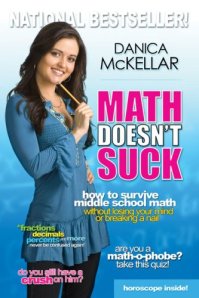
Review: Math Doesn’t Suck

We’ve all heard the saying, Don’t judge a book by its cover, but I did it anyway. Well, not by the cover, exactly — I also flipped through the table of contents and read the short introduction. And I said to myself, “I don’t talk like this. I don’t let my kids talk like this. Why should I want to read a book that talks like this? I’ll leave it to the public school kids, who are surely used to worse.”

Okay, I admit it: I’m a bit of a prude. And it caused me to miss out on a good book. But now Danica McKellar‘s second book is out, and the first one has been released in paperback. A friendly PR lady emailed to offer me a couple of review copies, so I gave Math Doesn’t Suck a second chance.

I’m so glad I did.

Continue reading Review: Math Doesn’t Suck

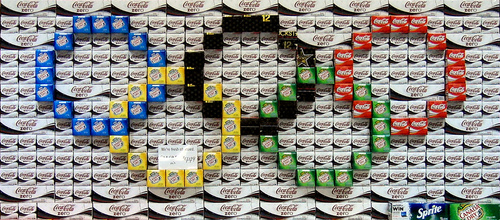
The Olympics: Math Puzzles and a Game


[Photo by striatic.]

Maybe it’s because school is out for the summer, but there don’t seem to be all that many Olympics-related math resources on the Web. I did find one cool game, however, and a nice stack of word problems. I hope you enjoy them!

Update: Be sure to see my blog post Olympic Logic for more links and puzzles!

Continue reading The Olympics: Math Puzzles and a Game

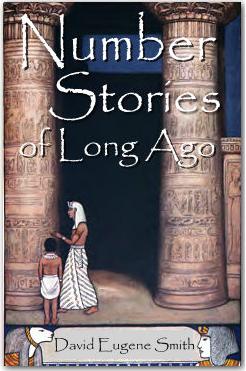
Free Math History: Number Stories of Long Ago

If you teach elementary children, check out this read-aloud math history resource from Homeschool Freebie of the Day:

Number Stories of Long Ago
by David Eugene Smith

[This download is available for one day only. If you missed it, see the end of this post for other ways to get the book.]

From the Preface

“These are the stories that were really told in the crisp autumn evenings, the Story Teller sitting by the fire that burned in the great fireplace in the cottage by the sea. These are the stories as he told them to the Tease and the rest of the circle of friends known as the Crowd. Sitting by the fire and listening to the stories, in the lights and shadows of the dancing flames they could see the forms of Ching and Lugal and all the rest with their curious dress of long ago…”

Continue reading Free Math History: Number Stories of Long Ago

What’s Wrong with “Repeated Addition”?

[Photo by Alejandra Mavroski.]

Myrtle called it The article that launched a thousand posts…, and counting comments on this and several other blogs, that may not be too much of an exaggeration. Yet the discussion feels incomplete — I have not been able to put into words all that I want to say. Thus, at the risk of once again revealing my mathematical ignorance, I am going to try another response to Keith Devlin’s multiplication articles.

Let me state up front that I speak as a teacher, not as a mathematician. I am not qualified, nor do I intend, to argue about the implications of Peano’s Axioms. My experience lies primarily in teaching K-10, from elementary arithmetic through basic algebra and geometry. I remember only snippets of my college math classes, back in the days when we worried more about nuclear winter than global warming.

I will start with a few things we can all agree on…

Continue reading What’s Wrong with “Repeated Addition”?

If It Ain’t Repeated Addition, What Is It?

[Photo by SuperFantastic.]

Keith Devlin’s latest article, It Ain’t No Repeated Addition, brought me up short. I have used the “multiplication is repeated addition” formula many times in the past — for instance, in explaining order of operations. But according to Devlin:

Multiplication simply is not repeated addition, and telling young pupils it is inevitably leads to problems when they subsequently learn that it is not.

I found myself arguing with the article as I read it. (Does anybody else do that?) If multiplication is not repeated addition, then what in the world is it?

Continue reading If It Ain’t Repeated Addition, What Is It?

Summer: Time to Sharpen Math Skills

[Photo by Vox Efx.]

School’s out — and what could be more fun in the lazy, hazy days of summer than to study math? Check out these articles from Maria Miller of Homeschool Math Blog:

How to Help a Student Who is Behind in Math

Keeping Your Math Skills Sharp Over The Summer

Continue reading Summer: Time to Sharpen Math Skills