If Not Methods: Multi-Digit Multiplication

Mother helping her daughter with math homework

As we’ve seen in earlier posts, there are more ways to solve any math problem than most people realize. Teaching children to follow memorized steps and procedures actually cripples their understanding of number relationships and patterns.

But what if our children get stumped on a multi-digit multiplication calculation like 36 × 15?

Continue reading If Not Methods: Multi-Digit Multiplication

If Not Methods: Dividing Fractions

Mother and daughter working together on math homewrok

As I said in an earlier post, we don’t want to give our children a method because that acts as a crutch to keep them from making sense of math.

But what if our children get stumped on a tough fraction calculation like 1 1/2 ÷ 3/8?

Continue reading If Not Methods: Dividing Fractions

Musings: If Not Methods, Then What?

Last week, I quoted Pam Harris calling out a foundational myth of math education, the idea that we need to teach kids the methods that work on even the most difficult math problems.

“We have a misconception in math education that we think we need to teach methods so that kids can answer the craziest kind of a particular problem.

    “We would be far better served to teach kids to think about the most common kinds of questions WELL, and let technology handle the crankiest.”

    —Pam Harris

    Since many of us grew up in schools that taught these methods, they may feel like the only sensible approach to math. Without the standard procedures, how will our kids learn to do math?

    If we don’t teach subtraction with borrowing/renaming, how can students figure out calculations like 431 − 86? If we don’t teach fraction rules, how will they handle problems like 1 1/2 ÷ 3/8?

    Continue reading Musings: If Not Methods, Then What?

    Middle School Math Proof

    Homeschool Memories…

    Kitten (my daughter) and I sat on the couch sharing a whiteboard, passing it back and forth as we took turns working through our prealgebra book together.

    The chapter on number theory began with some puzzles about multiples and divisibility rules.

    Continue reading Middle School Math Proof

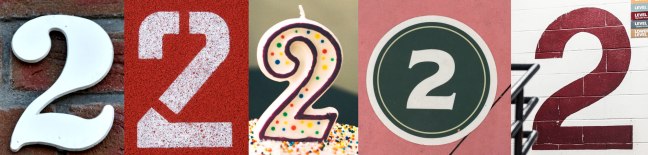
    How Will You Celebrate this Epic Twosday?

    Tomorrow is Tuesday 2/22/22 (or 22/2/22, if you prefer). What a wonderfully epic Twosday!

    Here’s a puzzle your family or class may enjoy…

    The “All 2s” Challenge

    Use only the digit 2, and try to use as few of them as you can for each calculation. You may use any math operations you know.

    For example:
    0 = 2 − 2
    8 = 2 + 2 + 2 + 2

    • Can you find a way to make 8 using fewer than four 2s?
    • What other numbers can you make?
    • Can you calculate all the numbers from 1–20? 1–100?

    Putting 2 in Perspective

    You might enjoy practicing your math art skills with this 2-digit challenge from Steve Wyborney.

    How many blocks make the digit 2? How did you count them?

    Prime Factor Art on a Hundred Chart

    The best way to practice math is to play with it — to use the patterns and connections between math concepts in your pursuit of something fun or beautiful.

    So this art project is a great way to practice multiplication. Use the prime factors of numbers from one to one hundred to create a colorful design.

    Start with a Hundred Chart

    First, download this printable file of hundred charts in non-photo blue (or light gray, if you’re printing in grayscale). The file includes:

    • Line-by-line traditional chart, counting from top to bottom.
    • Line-by-line bottom’s-up chart, counting from bottom to top.
    • Ulam’s Spiral chart, spiraling out from the center.
    • Blank grids for making your own patterns.

    Download the Printable Charts

    Continue reading Prime Factor Art on a Hundred Chart

    Kenken is Mathematical Play

    It’s back-to-school time here in the States. And that means it’s time for the Kenken Classroom Newsletter. Yay for math puzzles!

    KenKen arithmetic puzzles build mental math skills, logical reasoning, persistence, and mathematical confidence.

    Free via email every Friday during the school year.

    What a great way to prepare your children for success in math!

    Sign up anytime:

    Click Here for KenKen Classroom Newsletter

    Continue reading Kenken is Mathematical Play

    Math Game: Place Value Fish

    Math Concepts: addition, subtraction, place value to six or seven digits.
    Players: two or more.
    Equipment: pencil and paper.

    Set-Up

    Each player needs a sheet of blank or lined paper, and a pencil.

    At the top of your page, write a 6-digit number. All the digits must be different, and none of them can be zero.

    How to Play

    On your turn, you go fishing for points. Ask one other player, “Give me your _____’s.” The blank is for the single-digit number of your choice.

    The other player answers, “You get _____.” This blank is for the value of that digit in the other player’s number.

    For example, suppose you asked for 5’s. If the other player has a 5 in the tens place of his number, you get 50 points. But if 5 was in the ten-thousands place, you would get 50,000. And if there is no 5 at all, you get zero.

    You add those points to your number. The other player subtracts the points from his number.

    Then it’s the next player’s turn to go fishing.

    Notice These Rules

    Your number may change with each turn (except when you get zero). Always use your most recent number to add or subtract the fishing points.

    If you have more than one of the digit asked for (like the player on the left above, who has two 7’s), you may choose which one to give away. That is, you can give the other player 70 points and not even mention the 7,000.

    Endgame

    Keep taking turns until every player gets five chances to fish for points. After five rounds, whoever has the highest score wins the game.

    UNLESS the winner made an arithmetic error.

    Be sure to check each other’s math, because any player who makes a mistake automatically loses the game.

    Share the Fun

    If you try this math game with your kids, I’d love to hear how it goes. Please drop a comment below.

    And tell us about your favorite math game, so we can all play that, too. 😀

     
    * * *

    This game comes from Michael Schiro’s book Mega-Fun Math Games: 70 Quick-and-Easy Games to Build Math Skills.

    This blog is reader-supported.

    If you’d like to help fund the blog on an on-going basis, then please join me on Patreon for mathy inspiration, tips, and an ever-growing archive of printable activities.

    If you liked this post, and want to show your one-time appreciation, the place to do that is PayPal: paypal.me/DeniseGaskinsMath. If you go that route, please include your email address in the notes section, so I can say thank you.

    Which I am going to say right now. Thank you!

    “Math Game: Place Value Fish” copyright © 2019 by Denise Gaskins. Image at the top of the post copyright © Ruben Ortega via Unsplash.

    A Puzzle for Palindromes

    If you haven’t seen the meme going around, this is a palindrome week because the dates (written American style and with the year shortened to ’19) are the same when reversed.

    Here’s a math puzzle for palindrome week — or any time you want to play with math:

    • Print a 100 chart.
    • Choose a color code.
    • Play!

    What do you think: Will all numbers eventually turn into palindromes?

    Links

    You can find all sorts of hundred charts on my Free Math Printable Files page.

    Read about the history of palindromes on Nrich Math’s Palindromes page.

    Find out more about the Palindromic Number Conjecture in Mark Chubb’s article An Unsolved Problem your Students Should Attempt.

    Or play with Manan Shah’s advanced palindromic number questions.

    Get Your Weekly KenKen Puzzles for Kids

    KenKen6x6

    KenKen arithmetic puzzles build mental math skills, logical reasoning, persistence, and mathematical confidence.

    Free via email every Friday during the school year.

    What a great way to prepare your children for success in math!

    Sign up anytime:

    Click Here for KenKen Classroom Newsletter

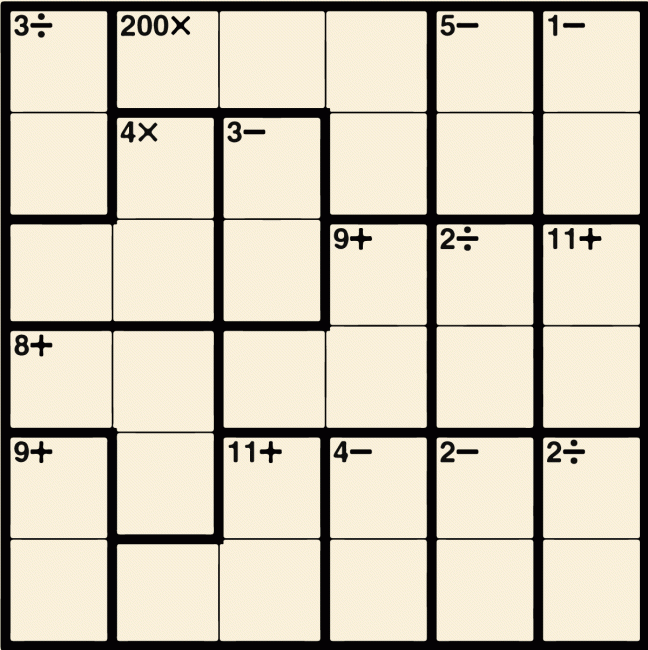
    How to Play

    For easy printing, right-click to open the image above in a new tab.

    Place the numbers from 1 to 6 into each row and column. None of the numbers may repeat in any row or column. Within the black “cages,” the numbers must add, subtract, multiply, or divide to give the answer shown.