I have a new podcast interview, and I think you’ll enjoy it!
Check out Cindy Rollins’s The New Mason Jar on your favorite podcast app, or listen on the website:
Here’s an excerpt…

I have a new podcast interview, and I think you’ll enjoy it!
Check out Cindy Rollins’s The New Mason Jar on your favorite podcast app, or listen on the website:
Here’s an excerpt…

 Here are three quick math games you can fit in whenever you have a few minutes’ free time. Have fun playing math with your kids!
And if you enjoy these games, check out my Math Journaling Adventures project to discover how similar playful writing activities can help your students learn mathematics. Preorder your books today!
Welcome to the sweet-16 birthday edition of the Playful Math Carnival. Originally called Math Teachers at Play, our first carnival was published in February 2009.
Each Playful Math Carnival offers a smorgasbord of delectable tidbits of mathy fun. It’s like a free online magazine devoted to learning, teaching, and playing around with math from preschool to high school.
There’s so much playful math to enjoy!
By tradition, we start the carnival with a math activity in honor of our 179th edition. But if you’d rather jump straight to our featured blog posts, click here to see the Table of Contents.
Continue reading Playful Math 179: Our Sweet Sixteen Carnival

English mathematician and puzzle-meister Henry Ernest Dudeney once wrote:
“It may be said generally that a game is a contest of skill for two or more persons, into which we enter either for amusement or to win a prize. A puzzle is something to be done or solved by the individual.
“The example that I give here is apparently a game, but, as in every case one player may win if he only play correctly, it is in reality a puzzle. The interest, therefore, lies in attempting to discover the leading method of play.”
Below is the puzzle game as Dudeney explained it.
Play it for fun at first, then see if you can solve the puzzle.

Are you looking for fun ways to keep your children busy (and learning!) through the holidays? Here are two printable activity guides you might enjoy…
Teach them to play.
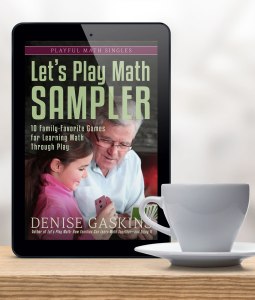
Grab a free copy of my Let’s Play Math Sampler: 10 Family-Favorite Games for Learning Math Through Play, which contains short excerpts from my most popular titles. It’s a great way to get started with playful math. 😍
As a bonus, I’ll add you to my Playful Math News email subscription and send you monthly tips and activity ideas for playing math with your kids.
From time to time, I’ll even throw in a free sample of whatever I’ve been working on — an early draft of something that will eventually show up in one of my books or printable activity guides.
For example, check out this fun freebie I sent last April:
Don’t miss out on all this mathy goodness. Sign up today!
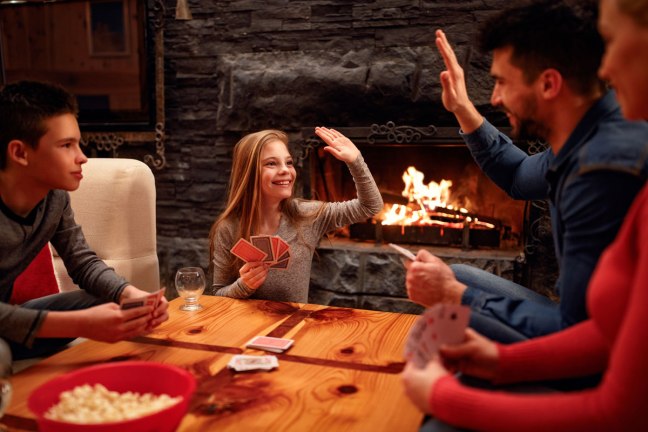
The art of homeschooling math begins with the rhythm of puzzle play. It continues with games, which are social puzzles.
Games are fun, building a positive attitude toward math. They give students a refreshing break from textbook work and make kids willing to practice their math.
But more important than the fun, math games push children to think about what numbers mean and how they work. A good math game reinforces the idea that math is about reasoning, using the things you know to figure out what you need.
For more about homeschooling with math games, check out my post Gameschooling Math.

There’s just one short week left to go on Gordon Hamilton’s new Kickstarter project, Wiki Histories: Snapshots of world history in mini-games.
Sign up now so you don’t miss out!
Wiki Histories are two-player snapshots of world history and prehistory. They are pencil-and-paper games. Each has a pair of maps, a simple set of standard rules, some unique rules, and a historical paragraph.
Time: 15 minutes. Age: 9+.
Welcome to the 172nd edition of the Playful Math Blog Carnival, a buffet of delectable tidbits of mathy fun. It’s like a free online magazine devoted to learning, teaching, and playing around with math from preschool to high school.
The carnival went on hiatus for a couple of months due to unexpected life issues facing our volunteer hosts. But we’re back now, and ready to celebrate!
By tradition, we start the carnival with a puzzle in honor of our 172nd edition. But if you’d rather jump straight to our featured blog posts, click here for the Table of Contents.

Did you know that, with our recent stretch goals, the Tabletop Math Games Kickstarter now features more than 90 amazing ways to play math with your kids?
And every pledge pushes us closer to the next new bonus, which means more new games and playful math goodies for every backer.
Don’t miss out on the excitement. Order your copy today:
Visit the Math Games Kickstarter ❱
I love how the challenge of a well-fought math game pushes players of all ages to think more creatively and build fluency.
So my Tabletop Math Games Collection is designed to make it easier than ever for busy families and over-stressed teachers to play with math.
All you need are common household supplies like cards, dice, and scratch paper. Children can open a Tabletop Math Games Collection book to any page and start playing right away, and the digital files make great classroom handouts or learning center games.
Continue reading Math Games Kickstarter: It Keeps Getting Better

