A Map of Mathematics

Pure mathematics, applied math, and more — all summarized in a single map! Watch the video by physicist and award-winning science writer Dominic Walliman:

Walliman says, “To err is to human, and I human a lot. I always try my best to be as correct as possible, but unfortunately I make mistakes…”

  • Can you find three mistakes in the map?

Check your answers in the description on Walliman’s YouTube page.

If you enjoy this video, you can purchase the poster (or T-shirt, coffee mug, tote bag, etc.) at Red Bubble.

 
* * *

CREDITS: Map of Mathematics poster by Dominic Walliman via Flickr (CC BY-NC-ND 2.0).

This blog is reader-supported.

If you’d like to help fund the blog on an on-going basis, then please head to my Patreon page.

If you liked this post, and want to show your one-time appreciation, the place to do that is PayPal: paypal.me/DeniseGaskinsMath. If you go that route, please include your email address in the notes section, so I can say thank you.

Which I am going to say right now. Thank you!

“A Map of Mathematics” copyright © 2017 by Denise Gaskins.
Hidden Figures Teaching Resources

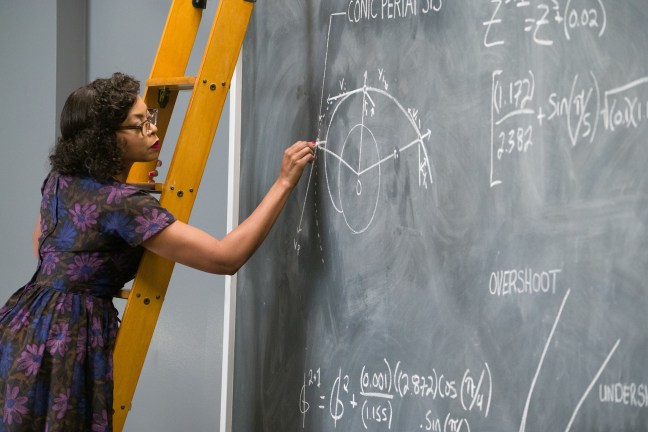
Are you taking your kids to see the movie Hidden Figures? Check out Raymond Johnson’s blog post for references and teaching ideas:

If you know of any other resources, please share in the comments below. And as I find new goodies, I’ll add them to the list below.

Teachers and Students in Action

Lesson Plan Resources

Background Information

Before computers were machines, computers were people who computed things. This complicated task often fell to women because it was considered basically clerical. That’s right: computing triple integrals all day long qualified as clerical.

— Samantha Schumacher
Hidden Figures Movie Review

Math Teachers at Play #70

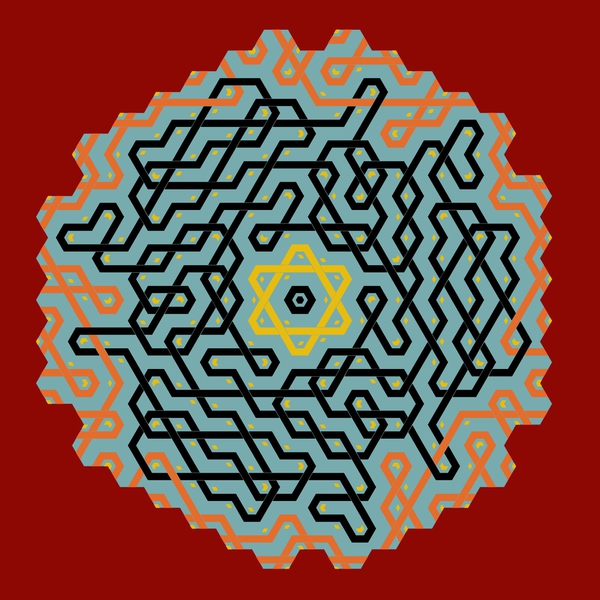
800px-Brauchtum_gesteck_70_1[Feature photo above by David Reimann via Bridges 2013 Gallery. Number 70 (right) from Wikimedia Commons (CC-BY-SA-3.0-2.5-2.0-1.0).]

Do you enjoy math? I hope so! If not, browsing this post just may change your mind.

Welcome to the 70th edition of the Math Teachers At Play math education blog carnival — a smorgasbord of 42+ links to bloggers all around the internet who have great ideas for learning, teaching, and playing around with math from preschool to pre-college. Let the mathematical fun begin!

By tradition, we start the carnival with a puzzle in honor of our 70th edition. But if you would like to jump straight to our featured blog posts, click here to see the Table of Contents.

Click here to continue reading.

Math That Is Fun: Infinite Primes

Oh, my! Ben Orlin over at Math with Bad Drawings just published my new favorite math proof ever:

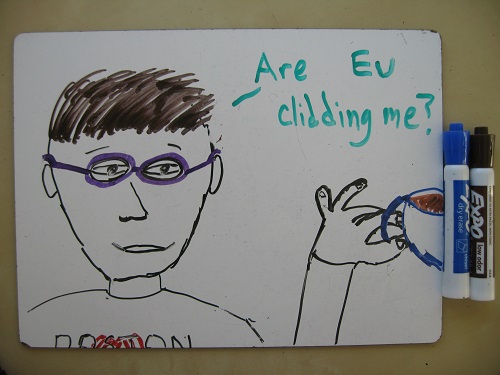
I had a fight with Euclid on the nature of the primes.
It got a little heated – you know how the tension climbs.

It started out most civil, with a honeyed cup of tea;
we traded tales of scholars, like Descartes and Ptolemy.
But as the tea began to cool, our chatter did as well.
We’d had our fill of gossip. We sat silent for a spell.
That’s when Euclid turned to me, and said, “Hear this, my friend:
did you know the primes go on forever, with no end?” …

15-eu-must-be-clidding

Click here to read the whole post at Math with Bad Drawings.

HexaFlexaParty This Weekend!

Sunday, October 21, is the worldwide hexaflexagon party in honor of Martin Gardner’s birthday. Gardner’s article about hexaflexagons launched his career as a recreational math guru who inspired people all around the world to love math.

Here’s how to join in the fun:

Hexaflexagon History

Continue reading HexaFlexaParty This Weekend!

What Is a Proof?

I’ve been enjoying the Introduction to Mathematical Thinking course by Keith Devlin. For the first few weeks, we mostly talked about language, especially the language of logical thinking. This week, we started working on proofs.

For a bit of fun, the professor emailed a link to this video. My daughter Kitten enjoyed it, and I hope you do, too.

Full lesson available at Ted-Ed.

Who Killed Professor X?

What a Fun Book!

professorX

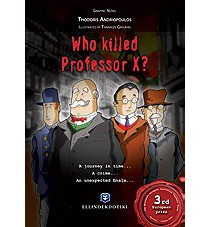
Who Killed Professor X? is a work of fiction based on actual incidents, and its heroes are real people who left their mark on the history of mathematics. The murder takes place in Paris in 1900, and the suspects are the greatest mathematicians of all time. Each suspect’s statement to the police leads to a mathematical problem, the solution of which requires some knowledge of secondary-school mathematics. But you don’t have to solve the puzzles in order to enjoy the book.

Fourteen pages of endnote biographies explain which parts of the mystery are true, which details are fictional, and which are both (true incidents slightly modified for the sake of the story).

My daughter Kitten, voracious as always, devoured it in one sitting — and even though she hasn’t studied high school geometry yet, she was able to work a couple of the problems.