New! Your Student Can Be a Math Maker

When children create their own math, they build a deep understanding of mathematical concepts and relationships.

And it’s fun!

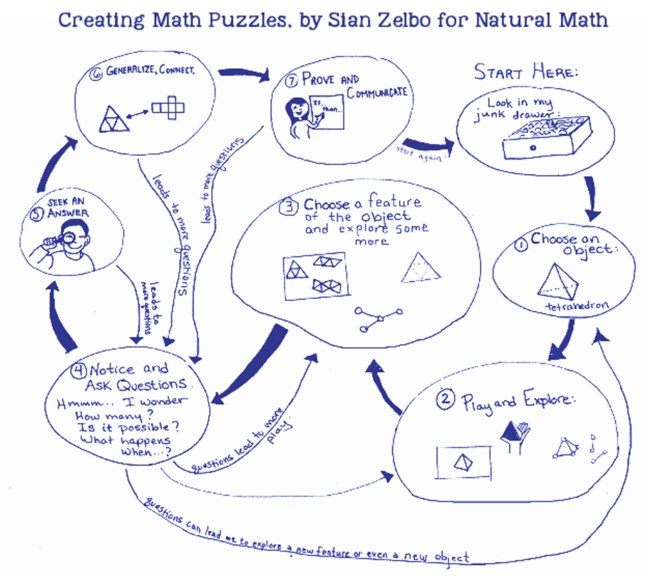
So take a break from your normal math program to play with creative math. Students can:

Check Out the Gallery

We have a few entries already in the Student Math Makers Gallery.

Click Here To Visit the Gallery

Join the Student Math Makers

We’d love to add your students’ math to our collection and share it with viewers all around the world!

To submit a math creation, download a Math Makers Invitation and Submission Form below:

 
* * *

This blog is reader-supported.

If you’d like to help fund the blog on an on-going basis, then please head to my Patreon page.

If you liked this post, and want to show your one-time appreciation, the place to do that is PayPal: paypal.me/DeniseGaskinsMath. If you go that route, please include your email address in the notes section, so I can say thank you.

Which I am going to say right now. Thank you!

“New! Your Student Can Be a Math Maker” copyright © 2021 by Denise Gaskins. “Creating Math Puzzles by Sian Zelbo, the author of Camp Logic, via NaturalMath.com.

Prealgebra & Geometry Games Now Available

Publication Day!

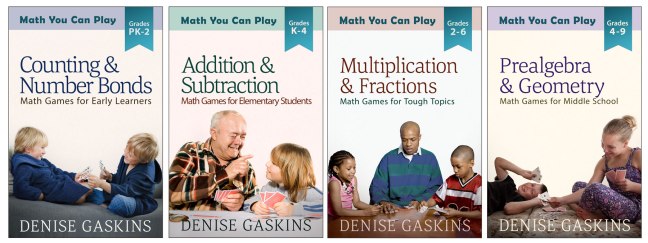
Prealgebra & Geometry: Math Games for Middle School hits the online bookstores today.

Check Your Favorite Store

You can prepare your children for high school math by playing with positive and negative integers, number properties, mixed operations, algebraic functions, coordinate geometry, and more. Prealgebra & Geometry features 41 kid-tested games, offering a variety of challenges for students in 4–9th grades and beyond.

A true understanding of mathematics requires more than the ability to memorize procedures. This book helps your children learn to think mathematically, giving them a strong foundation for future learning.

And don’t worry if you’ve forgotten all the math you learned in school. I’ve included plenty of definitions and explanations throughout the book. It’s like having a painless math refresher course as you play.

Continue reading Prealgebra & Geometry Games Now Available

Math Journals and Creative Reasoning

Learning math requires more than mastering number facts and memorizing rules. At its heart, math is a way of thinking.

So more than anything else, we need to teach our kids to think mathematically. To make sense of math concepts and persevere in figuring things out. To notice the numbers, shapes, and patterns all around. To wonder about big ideas.

Journaling is a great way to help children learn to see with mathematical eyes. Not just to remember what we tell them, but to create their own math.

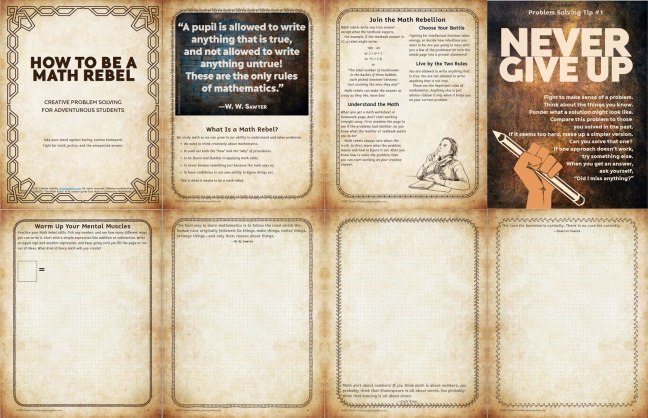
Get started with creative math journaling today. Visit the Make 100 Math Rebels Kickstarter page to download the free “How To Be a Math Rebel” sampler pictured above, which contains one of my all-time favorite math prompts.

Make 100 Math Rebels

It doesn’t matter whether your students are homeschooled or in a classroom, distance learning or in person. Everyone can enjoy the experience of playing around with math.

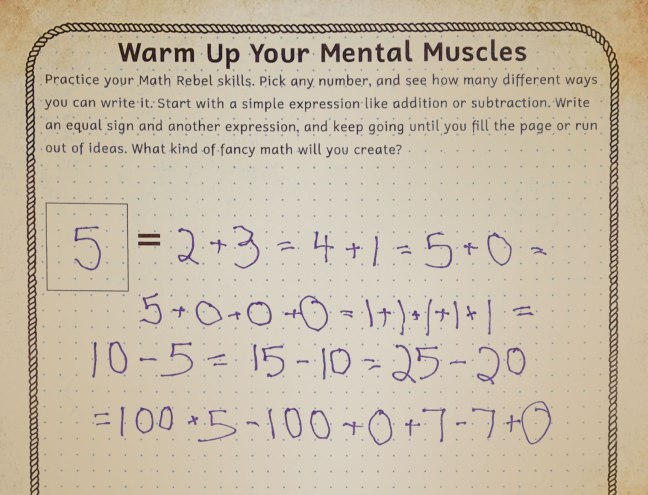
Puzzle from the free Math Rebel Sampler.

Continue reading Math Journals and Creative Reasoning

A New Resource for Playful Math

Check out the Make 100 Math Rebels Kickstarter project, which just might transform your child’s experience of math.

What Is a Math Rebel?

Math rebels believe in Truth. We refuse to accept something just because the teacher or textbook says it. We want to see the connections between math concepts and to understand why things work.

Math rebels care about Justice. We resist society’s push for speed and conformity. We reject the cultural narrative that math has only One Right Answer.

Math rebels celebrate Creative Reasoning. We delight in finding new ways to look at math topics. We want to think deeply about ideas, and we are confident in our ability to figure things out.

Launch your family’s math rebellion today with my free printable PDF booklet, “How To Be a Math Rebel,” available only on the Make 100 Math Rebels Kickstarter page.

Here’s the link again:

Make 100 Math Rebels on Kickstarter

What Are Mixed Numbers?

I just discovered a fascinating fact: In some places in the world, mixed numbers apparently don’t exist.

So that made me curious about my blog readers:

  • Did you learn about mixed numbers in school?
  • Do you ever use mixed numbers in daily life?
  • Are your children learning to work with them?

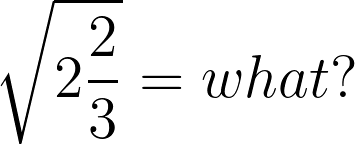
And if you DO know mixed numbers, can you simplify this mess:

[If you enjoy dry math humor, the answer is worth the work.]

Continue reading What Are Mixed Numbers?

Printable Activity Guides

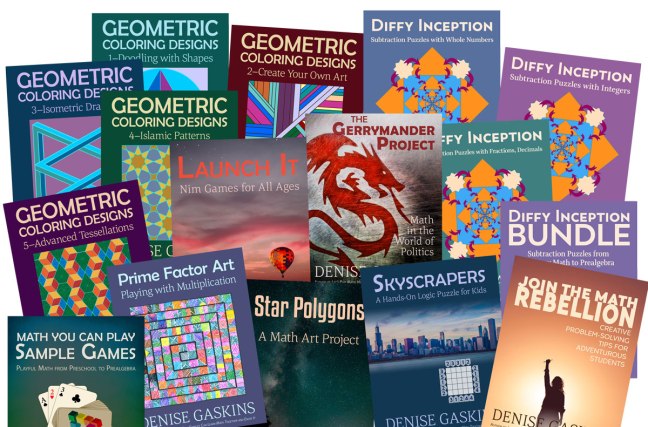
Since my publishing house opened its online store last month, I’ve been busy stocking the shelves with printable math activities for all ages.

It’s a fun collection of low- or no-prep ideas for playing math with your kids.

And it’s still growing. I’m pouring through old notes of my favorite projects from years of playing math with the kids in our math clubs and homeschool co-op enrichment classes, looking for ideas.

Which One Will You Try?

We’ve kept our prices as low as possible to fit struggling family budgets — less than a cup of coffee at my favorite cafe, back when we could still go out for a sweet, creamy cuppa.

Just go to our online store and click the “Printable Activity Guides” button to check out all the mathy fun.

Someday, I hope to combine these books into a creative math “uncurriculum” for homeschoolers. Stay tuned to this blog for more news about that. Eventually…
Make Sense of Math

So, I decided to rewrite the Standards for Mathematical Practice into student-friendly language.

Here’s the final installment…

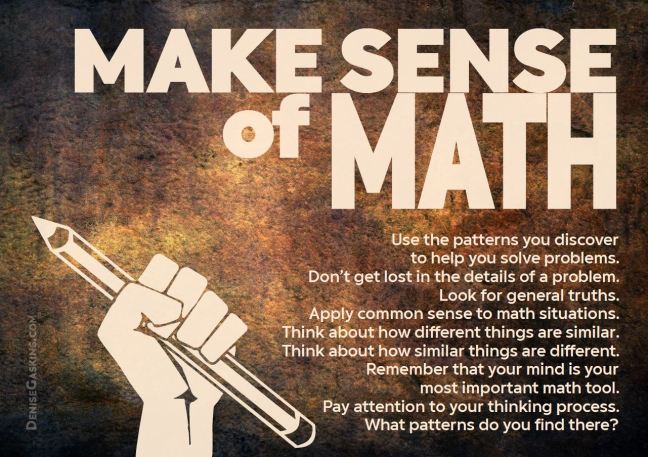
Math Tip # 8: Make Sense of Math.

  • Use the patterns you discover to help you solve problems.
  • Don’t get lost in the details of a problem. Look for general truths.
  • Apply common sense to math situations.
  • Think about how different things are similar.
  • Think about how similar things are different.
  • Remember that your mind is your most important math tool.
  • Pay attention to your thinking process. What patterns do you find there?

Continue reading Make Sense of Math

Discern Patterns

I’m almost done rewriting the Standards for Mathematical Practice into student-friendly language.

They say mathematics is the science of patterns. So here’s…

Math Tip # 7: Discern Patterns.

  • Look for patterns in numbers, shapes, and algebra equations.
  • Notice how numbers can break apart to make a calculation easier.
  • Number patterns morph into algebra rules.
  • Adapt math situations to make the structure clear. (For example, by adding new lines to a geometry diagram.)
  • Step back from a situation to see it from a new perspective.
  • Try to find simpler patterns within complex equations or diagrams.
  • Not all patterns continue forever. Test your patterns. Can you trust them?

Continue reading Discern Patterns

Exciting New Homeschool Math Program

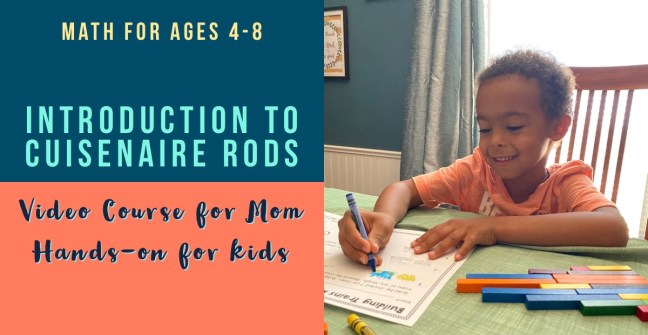
Homeschooling friends, check out this new homeschool math program that’s fun, rigorous, and engaging — a delightful, hands-on course that helps parents (and their children) understand math.

Introduction to Cuisenaire Rod Structures Course

I had the privilege of previewing this class as Sonya and Lacy put it together. I highly recommend it to anyone who struggles with math, or who wants to take a non-traditional approach.

By focusing on making sense of number relationships, and by teaching algebra before arithmetic, this course provides a stress-free path to rich mathematical mastery.

And for all they provide, including weekly live workshops and a slew of printable math journal pages that prompt deep thinking, the price is a steal!

Continue reading Exciting New Homeschool Math Program

Say What You Mean

Continuing my project of rewriting the Standards for Mathematical Practice into student-friendly language.

Here’s my version of SMP6…

Math Tip # 6: Say What You Mean.

  • Words can be tricky, so watch your language.
  • Label drawings and graphs to make them clear.
  • If you use a variable, tell what it means.
  • Care about definitions and units.
  • Pay attention to rules (like the order of operations).
  • Use symbols properly (like the equal sign).
  • Understand precision. Never copy down all the digits on a calculator.

Continue reading Say What You Mean