6th Grade Minimalist Math Curriculum

For details on using a Minimalist Math Curriculum, see my earlier post How To Make Time for Exploration.

If you’re teaching or homeschooling students in 6th grade, here’s the new minimalist curriculum link:

As I mentioned in my earlier post, a minimalist curriculum can be a great way to free up time for playing math games and exploring enrichment activities (like these).

How To Make Time for Exploration

Perhaps the most common objection I hear to using math games and enrichment activities is, “I don’t have the time. I can’t even get through our regular math book!”

Well, here’s one possible solution: Use a “Minimalist Math” outline to guide your instruction, turning your regular textbook into a backup resource, teaching only the topics your children don’t already know, leaving more time free for exploration and playful discovery.

Minimalist Math: Getting Down to Basics

Michelle at ResearchParent.com condensed the elementary math curriculum down to 360 problems per year, just 10 per week.

Take just a few puzzles each day, and talk math with your kids:

  • What do they notice in the problem?
  • Does it remind them of anything?
  • How might they try to figure it out?
  • Does it make them wonder about numbers, shapes, or patterns?

Use colorful markers on a whiteboard for low-stress exploration. If your children can solve a problem and explain their reasoning, you don’t need to study that topic. When they get stuck, follow the Notice-Wonder-Create method described in this blog post series.

If you’re both stymied, that’s when you pull out your regular textbook (or look the topic up online).

Practice with Games

Of course, children still need plenty of practice to master the math facts and solidify their knowledge.

Since you’re not spending as much time on lessons and homework, you can plan on playing lots of math games. Games are a fun, low-stress way to firm up math skills.

Check out My Best (Free) Math Games for All Ages, and follow the Math Game Monday posts on my blog.
Read Library Books

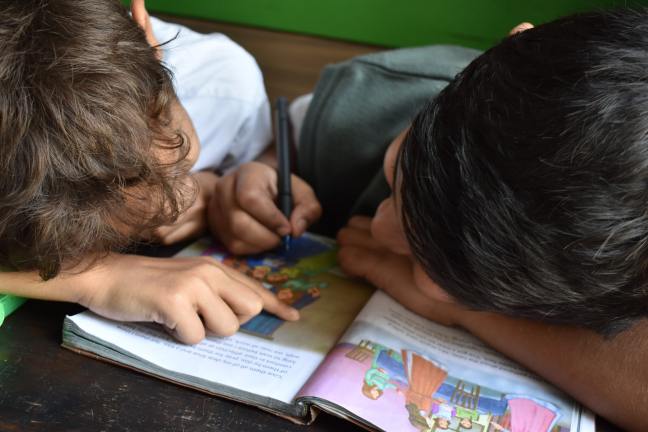
To enrich your child’s mind with the great ideas of mathematics and whet their appetite for learning, nothing beats a “living” math book.

A living book is one that brings our minds into direct contact with the great ideas of life.

Check out my Math with Living Books lists to get started, and ask your librarian for more suggestions.

For Older Students

Michelle’s Minimalist Math Curriculum goes through 6th grade (so far). But you could use the Corbettmaths 5-a-Day problems in the same way for older students.

And for enrichment activities to fill up your free math time, I can’t think of a better resource for all ages than the NrichMaths website.

“When I first started homeschooling, math became the most overwhelming, unpleasant part of our day. As someone who loves math, I didn’t want to continue on a path that was leading to such bad attitudes.

“My Minimalist Math Curriculum covers the same breadth of topics as a traditional curriculum without all the repetition. You are welcome to use what I created in whatever way serves your family.”

Michelle, Research Parent
Mathematics Activities for Kids

 
* * *

This blog is reader-supported.

If you’d like to help fund the blog on an on-going basis, then please join me on Patreon for mathy inspiration, tips, and an ever-growing archive of printable activities.

If you liked this post, and want to show your one-time appreciation, the place to do that is PayPal: paypal.me/DeniseGaskinsMath. If you go that route, please include your email address in the notes section, so I can say thank you.

Which I am going to say right now. Thank you!

“How To Make Time for Exploration” copyright © 2022 by Denise Gaskins. Image at the top of the post copyright © Aron Visuals, Andrew Ebrahim, and Melissa Askew via Unsplash.com.

New to Playful Math? Start Here

Do you want your children to enjoy learning math? Teach them how to play!

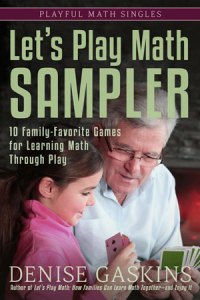
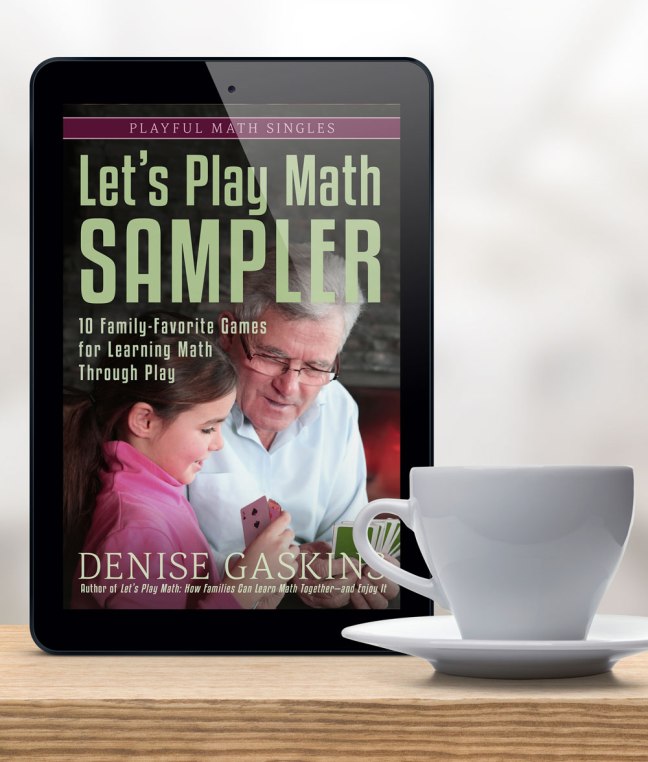
After the troubles of recent years, it’s even more important for families to play together. So I’ve made the ebook version of Let’s Play Math Sampler: 10 Family-Favorite Games for Learning Math Through Play permanently free.

What a great way to introduce your child to the joy of learning!

With excerpts taken from my most popular books, the Let’s Play Math Sampler features ten kid-tested games covering math concepts from counting to prealgebra.

Pick up a copy today, and make math a playful family adventure.

Download Your FREE Copy

Or Shop Your Favorite Online Store
… or request a copy from your library or local bookshop.

“Math is so many things — beauty, structure, problem solving, communication, language, creativity — but here’s what I’ve learned as I’ve tried to help my children develop positive relationships with math: It All Begins With Play. Anything by Denise Gaskins is a fantastic place to start. These books are filled with the perfect combination of perspective and practicality.”

—Michele Johnson, Instagram post

 
* * *

This blog is reader-supported.

If you’d like to help fund the blog on an on-going basis, then please join me on Patreon for mathy inspiration, tips, and an ever-growing archive of printable activities.

If you liked this post, and want to show your one-time appreciation, the place to do that is PayPal: paypal.me/DeniseGaskinsMath. If you go that route, please include your email address in the notes section, so I can say thank you.

Which I am going to say right now. Thank you!

“New to Playful Math? Start Here” copyright © 2022 by Denise Gaskins.

A Spring Tradition

Homeschool Memories…

Back when my kids were young, it was a yearly tradition. The big discount catalog came every spring, full of exciting new ideas for homeschooling.

By that time, we would be tired of whatever books we were using and eager for something new.

I sent the children outside to enjoy the spring sunshine, which gave me time to dream over the tiny-print wishbook. Coffee in one hand, pencil in the other, making lists and dog-earing catalog pages.

So many exciting books and curriculum options, it seemed almost impossible to resist going wild beyond our budget.

Continue reading A Spring Tradition

How To Respond to Your Child’s Math Writing

In previous posts, I encouraged parents, homeschoolers, and teachers to explore the world of math and introduced one of my favorite learning tools, the math journal. Then I shared several of my favorite types of journaling prompts to get your kids started writing about math.

Math journal prompts offer a wide range of options for students to explore. Most of the prompts do not have a “right” or “wrong” answer. Our goal is to root around in some small corner of the world of math, to lift a stone and peek underneath it, just to see what we can find.

The idea that being good at math means finding the right answers is a huge myth. Of course, many problems in math do have a single right answer. But even for those problems, the answer is not the real math of the problem.

Math is all about thinking.

It’s like taking a road trip. You may have a destination, but there are many paths you could take to get there. Different students may take different paths — they may think about the problem in different ways.

It’s this reasoning that is the real math, and the right answer is just a side effect of reasoning well.

Continue reading How To Respond to Your Child’s Math Writing

5 Ways To Enrich Your Student’s Experience of Math

In previous posts, I encouraged parents, homeschoolers, and teachers to explore the world of math and introduced one of my favorite learning tools, the math journal.

But you may be wondering, what can my students do with their journal? How do I find good math prompts?

Here are five different ways your children can explore math through writing, classified by the type of reasoning involved.

#1: Game Prompts

Ask your children to play a number or strategy game and then write about it.

Game prompts break through the idea that math is dull and boring. They help students develop a positive attitude toward math while practicing their number skills or strategic thinking.

Continue reading 5 Ways To Enrich Your Student’s Experience of Math

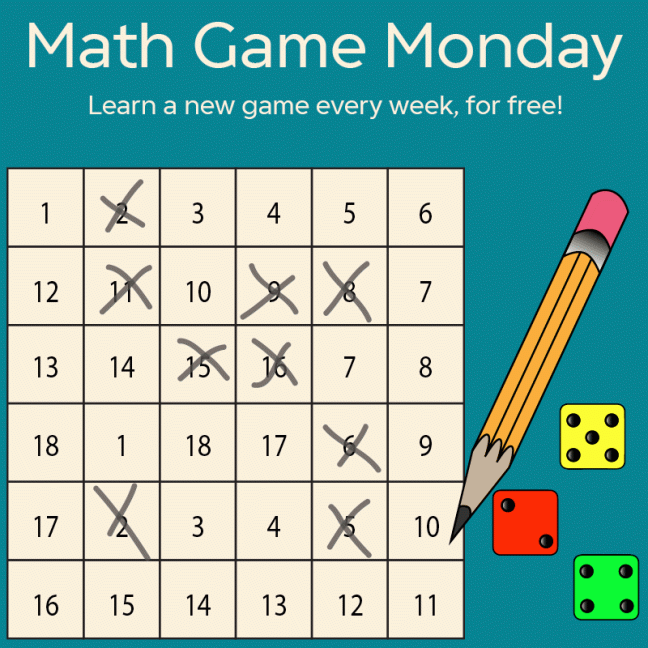
Why Math Game Monday?

Learn a new game with Math Game Monday

There’s a new Math Game Monday this week.

Have your kids tried it yet?

This week’s game is one of my favorites for early elementary grades, a logic game that makes children think about numbers and strategy.

Or, if you’re reading this post later and missed that one, there’s another great new game this week for you to play.

Check it out:

Visit Math Game Monday

Continue reading Why Math Game Monday?

What Is a Math Journal?

In my previous post, I encouraged parents, homeschoolers, and teachers to think of math as a nature walk through an infinite world of wonder.

A math journal is a record of your child’s journey through this world of mathematics.

In a math journal, children explore their own concepts about numbers, shapes, and patterns through drawing or writing in response to a question. Journaling teaches them to see with mathematical eyes — not just to remember what we adults tell them, but to create their own math.

Journaling brings math back into the liberal arts. It makes abstract ideas accessible and stretches children’s understanding, building math fluency and creating a solid foundation for future learning.

Continue reading What Is a Math Journal?

The Creative Way To Help Your Kids Learn Math

Are you a parent, homeschooler, or teacher? Do your children struggle to learn math? Are you worried about them falling behind?

So many parents (and teachers, too!) feel like they are “not a math person,” yet they know how important math is for their children to learn. How can we teach something we don’t really understand ourselves?

Others feel comfortable with math themselves — and may even love it — yet still struggle to pass on their knowledge to their kids. How can we share the joy we see in numbers, shapes, and patterns with youngsters who think they hate math?

Continue reading The Creative Way To Help Your Kids Learn Math

How Will You Celebrate this Epic Twosday?

Tomorrow is Tuesday 2/22/22 (or 22/2/22, if you prefer). What a wonderfully epic Twosday!

Here’s a puzzle your family or class may enjoy…

The “All 2s” Challenge

Use only the digit 2, and try to use as few of them as you can for each calculation. You may use any math operations you know.

For example:
0 = 2 − 2
8 = 2 + 2 + 2 + 2

  • Can you find a way to make 8 using fewer than four 2s?
  • What other numbers can you make?
  • Can you calculate all the numbers from 1–20? 1–100?

Putting 2 in Perspective

You might enjoy practicing your math art skills with this 2-digit challenge from Steve Wyborney.

How many blocks make the digit 2? How did you count them?