A Poet Completes the Square

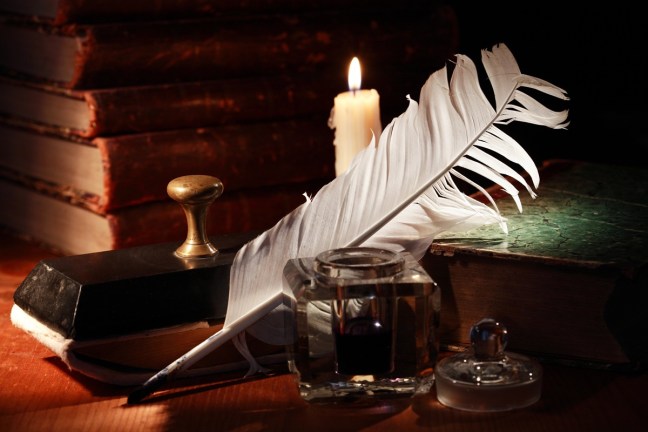
photo of quill pen and books for a math poet

Sue VanHattum and I were chatting about her young adult math books.

[Sue would love to get your help with beta-reading her books. Scroll down to the bottom of this post for details.]

In the first book of the series, Althea and the Mystery of the Imaginary Numbers, Althea learns that Tartaglia came up with a formula to solve cubic equations and wrote about it in a poem.

Sue had discovered an English translation of that poem and shared it with me. (You can read it on JoAnne Growney’s blog.) Then we wondered whether we could come up with a simpler poem, something an algebra student might be able to follow.

Perhaps you and your kids would enjoy making up poems, too. An algebra proof-poem might be too difficult for now, but check out my blog for math poetry ideas.
Continue reading A Poet Completes the Square

Celebrate Fibonacci Day with Playful Math Carnival 176

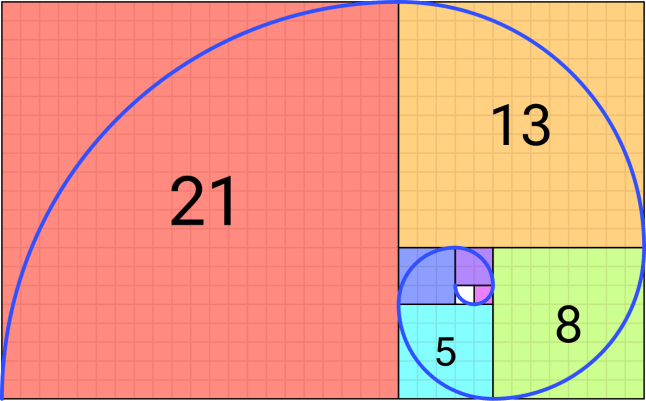
Fibonacci Spiral

Fibonacci Day is November 23rd (11/23 in the American date style), and this year it falls on a Saturday.

But that’s no excuse not to celebrate!

We can do math on the weekend, you know. Or we can just play in advance of the day itself. In fact, we could take a whole Fibonacci Week and not run out of interesting math to play with.

Sonya Post has our back with lots of great ideas:

One Way to Play: Fib Poetry

Long-time readers know I like to get students thinking creatively about math, and I’ve written before about the value of math poetry.

So when Sonya included the Fib in her carnival post, I couldn’t help myself…

Fib:
A strange
Way to count,
Adding syllables
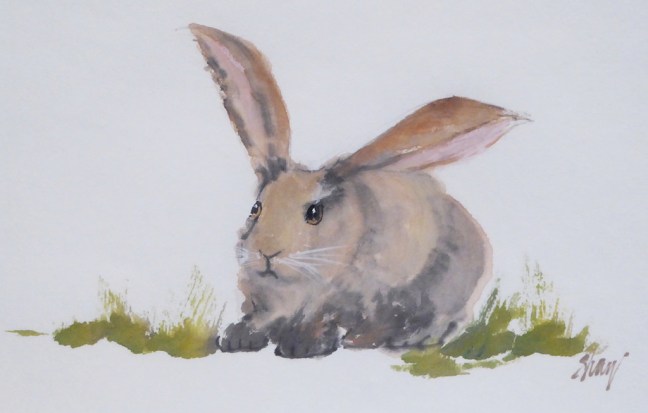
Until the words breed like rabbits.

For the rules of Fib poetry, and lots of other mathy fun, don’t miss this carnival!

Go to the Fibonacci Carnival post –>

And Here’s My Monthly Bleg

The Playful Math Blog Carnival wants you!

The carnival is a joint effort. We depend on our volunteer hosts to collect blog posts and write the carnival each month.

Classroom teachers, homeschoolers, college professors, unschoolers, or anyone who likes to play around with math — if you would like to take a turn hosting the carnival, please speak up!

Email Denise to Volunteer

 
* * *

Image at the top of the post copyright © Romain (CC BY-SA 4.0) via Wikimedia Commons.

Math Makers: Write a Poem

Last week, I mentioned my new project, the Student Math Makers Gallery where children and teens can share their original math creations with the world.

So this week, I’m offering inspiration to get your children’s creative juices flowing.

Let’s Write Math Poetry

April is National Poetry Month, and it’s also Mathematics and Statistics Awareness Month.

What better way to celebrate than writing math poetry?

  • Write a poem about a math concept or idea, using your favorite style of verse.
  • Or write a poem about any subject, using a mathematical constraint.
  • Or both: write a poem about math, constrained by math.

Here are some examples…

Continue reading Math Makers: Write a Poem

Mathematics: An Acrostic

What Is Your Child’s Experience of Math?

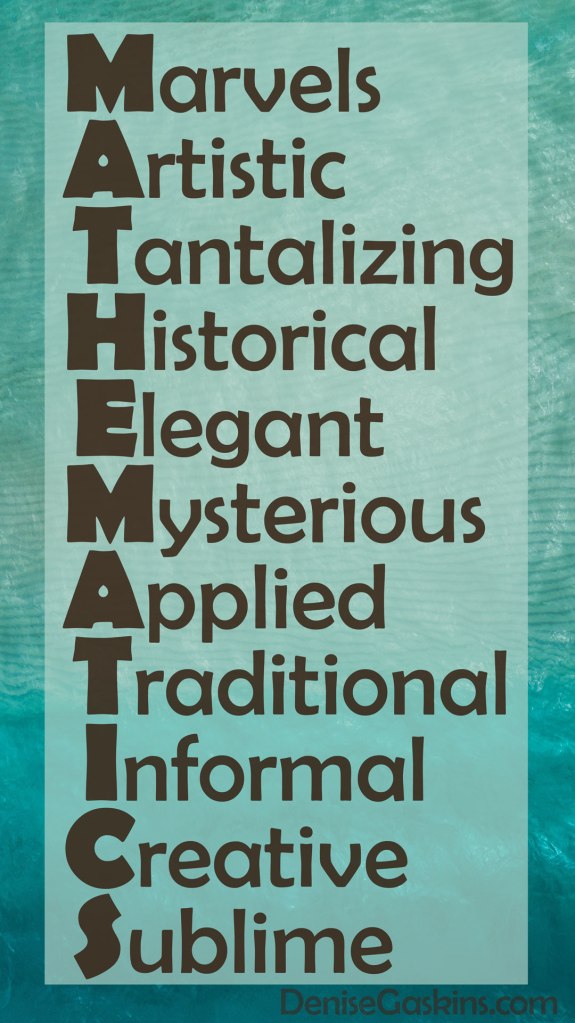
If your children made an acrostic for the word “Mathematics,” what would they include?

Would they think of adjectives like artistic, mysterious, or sublime?

Or would they focus on words like answers, maddening, and stress?

I love taking a playful approach to mathematics. Puzzles, games and art projects lay down a foundation of wonder and enjoyment. This creates a strong, positive base to support our kids through the inevitable difficulties of learning an abstract subject like math.

There are many rich math resources these days! So different from back when I started homeschooling. If you need ideas to help you transform your child’s experience of math, check out my Free Math on the Internet pages.

Internet Math Resources

In fact, I have a huge folder of even more bookmarks and links that I hope to add to my resource pages, whenever I find the time…

Does your family have a favorite way to play with math?

 
* * *

This blog is reader-supported.

If you’d like to help fund the blog on an on-going basis, then please join me on Patreon for mathy inspiration, tips, and an ever-growing archive of printable activities.

If you liked this post, and want to show your one-time appreciation, the place to do that is PayPal: paypal.me/DeniseGaskinsMath. If you go that route, please include your email address in the notes section, so I can say thank you.

Which I am going to say right now. Thank you!

“Mathematics: An Acrostic” copyright © 2019 by Denise Gaskins. Image at the top of the post copyright © Ishan via Unsplash.

Public Domain Day

In honor of Public Domain Day

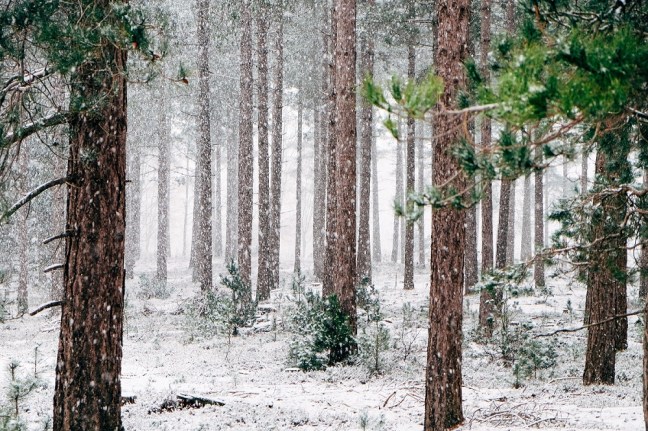
Stopping By Woods On A Snowy Evening

Whose woods these are I think I know.
His house is in the village, though;
He will not see me stopping here
To watch his woods fill up with snow.

My little horse must think it queer
To stop without a farmhouse near
Between the woods and frozen lake
The darkest evening of the year.

He gives his harness bells a shake
To ask if there is some mistake.
The only other sound’s the sweep
Of easy wind and downy flake.

The woods are lovely, dark and deep,
But I have promises to keep,
And miles to go before I sleep,
And miles to go before I sleep.

—Robert Frost

[And Why the Public Domain Matters.]

CREDITS: “Snow falling in a forest” photo (top) by Photo by Annie Spratt on Unsplash.

Rabbit Trails and Fibonacci Poetry

Homeschool Memories…

Well, I hadn’t planned on spending my day that way. But one of the great things about homeschooling is the freedom to follow rabbit trails.

While browsing the Carnival of Homeschooling, I found a link to Farm School blog’s article Fib Foolery, which sent me to Gotta Book for his articles The Fib and More Fibbery (read the comments on both threads, but be warned that some are crude) and several other posts, all of which set me off on a morning of poetic fun.

A “Fib” is a Fibonacci poem. It’s based on syllable count, like a haiku, but the lines follow the Fibonacci counting series: 1, 1, 2, 3, 5, 8… Each number is the sum of the previous two numbers.

I knew what I was going to share at our Tuesday Teatime and Poetry Reading that afternoon.

Continue reading Rabbit Trails and Fibonacci Poetry

Unending Digits… Why Not Keep It Simple?

Unending-digits

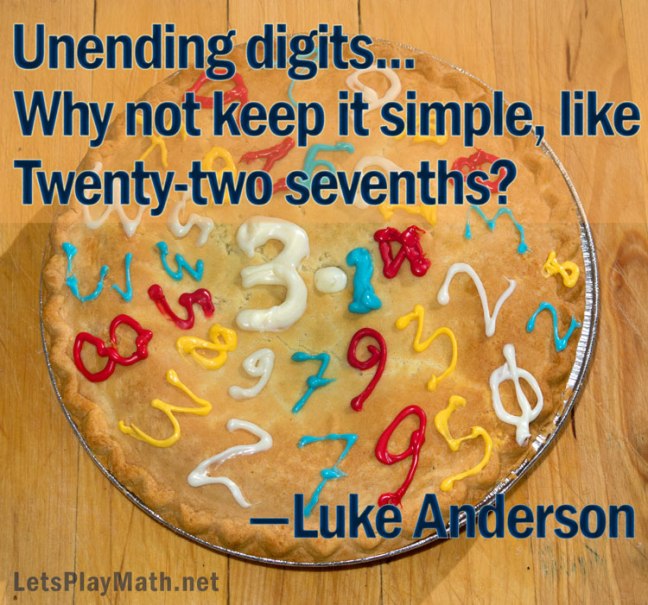
Unending digits …
Why not keep it simple, like
Twenty-two sevenths?

—Luke Anderson

Math Poetry Activity

Encourage your students to make their own Pi Day haiku with these tips from Mr. L’s Math:

And remember, Pi Day is also Albert Einstein’s birthday! Check out this series of short videos about his life and work: Happy Birthday, Einstein.

CREDITS: Today’s quote is from Luke Anderson, via TeachPi.org. Background photo courtesy of Robert Couse-Baker via Flickr, text added (CC BY 2.0).

Math Teachers at Play #35

35 is a tetrahedral number

Welcome to the Math Teachers At Play blog carnival — which is not just for math teachers.

Do you enjoy math? I hope so! If not, browsing these links just may change your mind. Most of these posts were submitted by the bloggers themselves; others are drawn from my overflowing Google Reader. From preschool to high school, there are plenty of interesting things to learn.

Let the mathematical fun begin…

Continue reading Math Teachers at Play #35