April Math Calendar

april-math-calendar

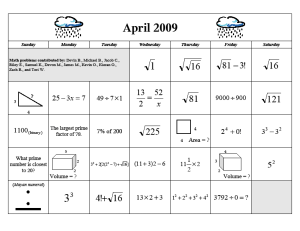
My homeschool co-op classes had a lot of fun creating this April calendar to hand out at our end-of-semester party on Friday. It’s not as easy to read as a traditional calendar — it is more like a puzzle. The expression in each square simplifies to that day’s date, so families can treat each day like a mini-review quiz: “Do you remember how to calculate this?”

Download your own copy:

If you’ve been wanting to start your own math club, you will find plenty of helpful ideas here:

Update

Check out my May Math Calendar post for more ideas about how to use these puzzles.

 
* * *

This blog is reader-supported.

If you’d like to help fund the blog on an on-going basis, then please join me on Patreon for mathy inspiration, tips, and an ever-growing archive of printable activities.

If you liked this post, and want to show your one-time appreciation, the place to do that is PayPal: paypal.me/DeniseGaskinsMath. If you go that route, please include your email address in the notes section, so I can say thank you.

Which I am going to say right now. Thank you!

“April Math Calendar” copyright © 2009 by Denise Gaskins.

Math Teachers at Play #2

[Photo by Sister72.]

Welcome to the second Math Teachers At Play blog carnival! Some articles were submitted by their authors, other were drawn from the back-log in my blog reader, and I’ve spiced it all up with a few of my favorite quotations.

Let the mathematical fun begin…

Continue reading Math Teachers at Play #2

Math Teachers at Play #1

[Photo by StuSeeger.]

Welcome to the inaugural edition of the Math Teachers At Play blog carnival! I hope you enjoy this collection of tips, tidbits, games, and activities for students and teachers of preschool-12th grade mathematics.

For this first carnival, I’ve drawn several recent posts from my blog reader as examples of the types of posts I’d love to include in future editions of Math Teachers at Play. I tried to find something for everyone, from multiplication drill for elementary students to advice for understanding high school math equations.

Let the mathematical fun begin…

Continue reading Math Teachers at Play #1

Review: Kiss My Math

Pre-algebra students stand at the threshold of adventure. Behind them lie the rocky plains of school arithmetic. Ahead, the trail winds into a murky, tangled woods and disappears in the shadows. Who knows what monsters might live in a place like that?

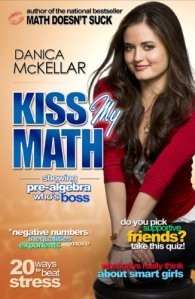
Actress and math maven Danica McKellar has traveled through the pre-algebra jungle and beyond, up the slopes to higher math. She survived the journey, and now, on the heels of her bestselling book for math-phobic middle schoolers, she has written Kiss My Math to guide uncertain students along their way.

Unlike the case with most Hollywood movies, this sequel is an improvement.

Continue reading Review: Kiss My Math

Online Game: Math Caching

In the treasure-hunting game of Geocaching (pronounced “geo-cashing”), players use GPS systems to locate boxes hidden at different geographical locations across the country.

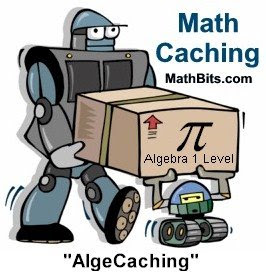
Now, the creative people at Mathbits.com have come up with an online treasure-hunting activity for junior high and high school students, called MathCaching. Students solve mathematical problems to find hidden “boxes” on the Internet. Each box reveals clues to the location of the next one.

The MathCaching game covers pre-algebra through trigonometry topics, with calculus levels under development. For more information, visit the MathCaching site, or read the post on my Frugal Homeschooling blog.

Hit Me! (A Math Game)

Photo by paparutzi.

Math concepts: addition, subtraction, negative numbers, mental math, absolute value
Number of players: any number
Equipment: math cards (two decks may be needed for a large group)

Set Up

One player (the dealer) shuffles the math cards and deals one card face down for each player, beginning with the player on his left and proceeding in turn around the table. Then he deals one card face up beside each face down card.

Continue reading Hit Me! (A Math Game)

The Function Machine Game

Math concepts: odd numbers, even numbers, greater-than/less-than, rounding off, addition, subtraction, multiplication, division, fractions, negative numbers, prime numbers, square numbers, problem solving, mental math
Number of players: two or more
Equipment: pencil (or pen) and paper for every player

Continue reading The Function Machine Game

The Game of Algebra

NFL football
Photo by velo_city.

My pre-algebra class hit the topic of equations just as the NFL season moved into the playoffs. The result was this series of class notes called “The Game of Algebra.”

We used the Singapore Math NEM 1 textbook, which is full of example problems and quality exercises. These notes simply introduce or review the main concepts and vocabulary in a less-textbooky way.

I hope you find them useful.

Continue reading The Game of Algebra

Pre-Algebra Picture Puzzles

Balance problem

Maria at Homeschool Math Blog has posted a fun set of worksheets:
Pan balance problems to teach algebraic reasoning.

Princess Kitten, at nearly 9yo, keeps telling me, “I hate math, but I like algebra.” So I printed all four pages for her to try. These get pretty complicated, and the 2-variable problems had her flummoxed for awhile. But after an explanation and bit of pouting (I think she hates math because she’s such a perfectionist that she can’t bear to get something wrong, even the first time), she came back and conquered the toughest ones.

Elementary Problem Solving: The Tools

[This article begins a series rescued from my old blog. Moving has been a long process, but I’m finally unpacking the last cardboard box! To read the entire series, click here: elementary problem solving series.]

Most young students solve story problems by the flash of insight method: When they read the problem, they know almost instinctively how to solve it. This is fine for problems like:

There are 7 children. 2 of them are girls. How many boys are there?

As problems get more difficult, however, that flash of insight becomes less reliable, so we find our students staring blankly at their paper or out the window. They complain, “I don’t know what to do. It’s too hard!”

We need to give our students a tool that will help them when insight fails.

Continue reading Elementary Problem Solving: The Tools