Welcome to the 97th edition of the Math Teachers At Play math education blog carnival: a monthly smorgasbord of links to bloggers all around the internet who have great ideas for learning, teaching, and playing around with math from preschool to pre-college.
A few articles were submitted by their authors, but most were drawn from the immense backlog in my rss reader. If you’d like to see your blog post featured next month, be sure to send it in yourself. Our hosts are busy parents and teachers who have limited time to scour the Internet for goodies.
To add a bit of color, I’ve thrown in several favorites from my newly updated Math with Living Books pages. Some (affiliate) links go to Amazon.com, where you can read descriptions and reviews — but there’s no need to buy. Most of these books should be available through your local library.
Table of Contents
If you’d like to skip directly to your area of interest, click here:
- Talking Math with Kids
- Elementary Exploration and Middle School Mastery
- Adventures in Basic Algebra and Geometry
- Advanced Mathematical Endeavors
- Puzzling Recreations
- Teaching Tips
Please: If you enjoy the carnival, would you consider volunteering to host sometime this year? Classroom teachers, homeschoolers, unschoolers, or anyone who likes to play around with math (even if the only person you “teach” is yourself) — if you would like to take a turn, please speak up!
And now, let the mathematical fun begin!
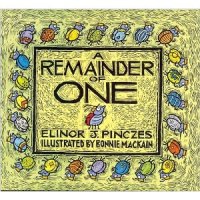
When the queen of her bugs demands that her army march in even lines, Private Joe divides the marchers into more and more lines so that he will not be left out of the parade.
Talking Math with Kids
- Tracy Zager (@TracyZager) and her daughter are Talking Math in Ghirardelli Square: “Wait! It’s the same thing again! It’s going to go on forever!”
- David Wees (@DavidWees) and his son explore Inductive Reasoning: “You know, Dad. There are an infinite number of solutions…”
- Joshua Greene (@JoshuaGreene19) writes Ode to a bead string (a non-poem poem): “One of the cool things about open play with math manipulatives is that it provides a lot of easy entry points into short math chats.”
- Dan Finkel (@MathforLove) explains How to help your kids fall in love with math: a guide for grown-ups: “Think out loud. Your child is imitating everything you do, and the more you can narrate your thoughts, the better a model of thinking you can be.”
- Crystal Wagner (@Tri_Learning) shares several Math Games to Play in the Car: “Or maybe you are waiting in line at the grocery store or doctor’s appointment. Turn these times of waiting into learning opportunities.”
- Caroline Mukisa (@MathsInsider) lists 11 Award Winning Math Books to Share With Your Child: “Whether you want to introduce a young child to their very first math concepts or supplement an older child’s math curriculum, this list is for you.”
- Christopher Danielson (@Trianglemancsd) shows how The sequence machine can launch math conversations with older students: “Now you can generate number sequences, without being distracted by the multiplication facts.”
Help inspire your kids to try writing their own unique problems. Includes a wide range of math topics and concepts: money and time, fractions, percentages, geometry, logic, and multi-step problem solving.


We know that there is more to learning history than winning a game of Trivial Pursuit. But when it comes to math, too many parents (and far too many politicians) act as though the goal of our children’s education is to produce high scores on a standardized test.

We’ve examined how our vision of mathematical success shapes our children’s learning. Do we think math is primarily a tool for solving problems? Or do we see math as a web of interrelated concepts?


Fractions confuse almost everybody. In fact, fractions probably cause more math phobia among children (and adults) than any other topic before algebra. 


Every mathematical procedure we learn is an instrument or tool for solving a certain kind of problem. To understand math means to know which tool we are supposed to use for each type of problem and how to use that tool — how to categorize the problem, remember the formula, plug in the numbers, and do the calculation. To be fluent in math means we can produce correct answers with minimal effort.