Math Teachers at Play #76

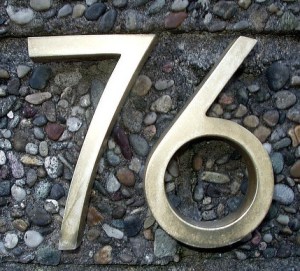
76[Feature photo (above) by U.S. Army RDECOM. Photo (right) by Stephan Mosel. (CC BY 2.0)]

On your mark… Get set… Go play some math!

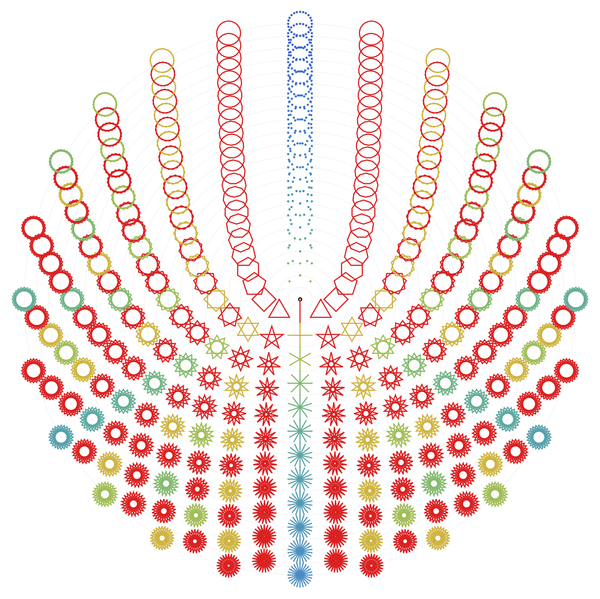
Welcome to the 76th edition of the Math Teachers At Play math education blog carnival — a smorgasbord of links to bloggers all around the internet who have great ideas for learning, teaching, and playing around with math from preschool to pre-college.

By tradition, we start the carnival with a puzzle in honor of our 76th edition. But if you would like to jump straight to our featured blog posts, click here to see the Table of Contents.

Continue reading Math Teachers at Play #76

Playing With Math — the Book

body_Book_cover_for_upload

Update: The crowdfunding campaign is now closed and the book is in the final stages. It should be headed to the printer soon. Check the Playing With Math homepage for publication and ordering information.


There are only a few days left to reserve your copy of Playing With Math: Stories from Math Circles, Homeschoolers, and Passionate Teachers. I don’t have time to finish the review I hoped to write, so instead I’ll share some of my favorite quotes from the book:

What do mathematicians do? We play with math. What are little kids doing when they’re thinking about numbers, shapes, and patterns? They’re playing with math. You may not believe it yet, but you can have fun playing with math, too.

— Sue VanHattum, editor

We had a discussion at the end of the club on how we are all confused now, but pleasantly so, and how important it is to rejoice in confusion and to be comfortable with it. Adults often strive very hard to get rid of any and all possible traces of confusion for kids, making things dreadfully boring.

— Maria Droujkova, after a math circle exploration of infinity

All it talkes to do mathematics is opportunity, a frustrating problem, and a bit of stubbornness.

— Ellen Kaplan, math circle leader

Our own school experiences can make it hard for us to teach without being tempted to “help them master” a concept that they may or may not be ready to master. What we never learned in school was the concept of playing around with math, allowing ideas to “percolate,” so to speak, before mastery occurs, and that process may take time.

— Julie Brennan, homeschooler

Continue reading Playing With Math — the Book

Quotable: Math Connections

ConnectedGearsJoBoaler

It turns out that the people who do well in math are those who make connections and see math as a connected subject. The people who don’t do well are people who see math as a lot of isolated methods.

— Jo Boaler
Math Connections

If you or your children struggle with math, Boaler’s non-profit YouCubed.org may help you recover your joy in learning.

Math(s) Teachers At Play #75 via CavMaths

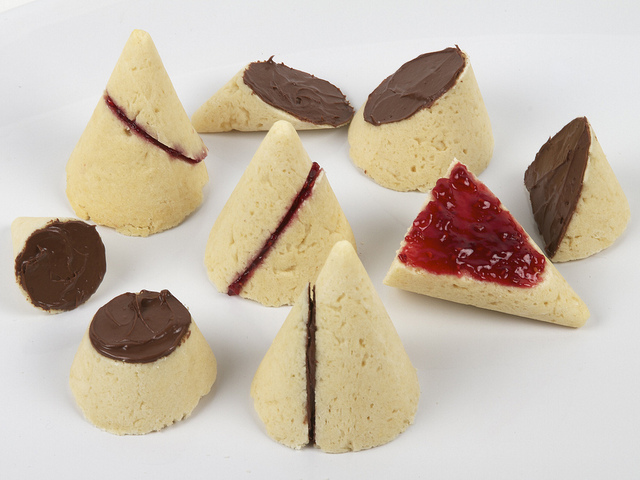
[Feature photo above “Sconic Sections” by Lenore Edman and “75” by R/DV/RS via Flickr (CC BY 2.0).]
75

The monthly math education blog carnival Math Teachers at Play features games, lessons, puzzles, activities, and teaching tips from classroom teachers, homeschoolers, and self-educated learners around the Internet world. Check out the 20 posts of mathematical fun in the June edition:

Math(s) Teachers At Play #75 via CavMaths

Hello, and welcome to the 75th issue of the Math(s) Teachers at Play Blog Carvinal! For those of you who are unaware, a “blog carnival” is a periodic post that travels from blog to blog and has a collection of posts on a certain topic.

This is the first time I’ve hosted a carnival and there were some excellent submissions. I enjoyed reading them all and have discovered some new blogs. I have also input some posts I’ve seen this month which I thought were excellent too…

Click here to go read Math(s) Teachers At Play #75 via CavMaths.

Playing With Math: Stories from Math Circles, Homeschoolers, and Passionate Teachers

body_Book_cover_for_upload

Update: The crowdfunding campaign is now closed and the book is in the final stages. It should be headed to the printer soon. Check the Playing With Math homepage for publication and ordering information.


There’s a problem: Most people don’t like math. Why is that? Perhaps it has something to do with the way math is taught in school. As a teacher to my own kids and mentor to homeschooling parents, I’ve been fighting math anxiety for decades.

This book is one part of the solution.

Playing With Math: Stories from Math Circles, Homeschoolers, and Passionate Teachers features more than thirty authors who tell delightful stories of learning to appreciate math and of sharing their enthusiasm with their communities, families, or students. After every chapter is a puzzle, game, or activity to get you and your kids playing with math, too.

You can read a couple of excerpts at PlayingWithMath.org:

Continue reading Playing With Math: Stories from Math Circles, Homeschoolers, and Passionate Teachers

Reblog: Calculus Tidbits

[Feature photo above by Olga Lednichenko via Flickr (CC BY 2.0).]

This week I have a series of quotes about calculus from my first two years of blogging. The posts were so short that I won’t bother to link you back to them, but math humor keeps well over the years, and W. W. Sawyer is (as always) insightful.

I hope you enjoy this “Throw-back Thursday” blast from the Let’s Play Math! blog archives:


Finding the Limit

Eldest daughter had her first calculus lesson last night: finding the limit as delta-t approached zero. The teacher found the speed of a car at a given point by using the distance function, calculating the average speed over shorter and shorter time intervals. Dd summarized the lesson for me:

“If you want to divide by zero, you have to sneak up on it from behind.”


Harmonic Series Quotation
This kicked off my week with a laugh:

Today I said to the calculus students, “I know, you’re looking at this series and you don’t see what I’m warning you about. You look and it and you think, ‘I trust this series. I would take candy from this series. I would get in a car with this series.’ But I’m going to warn you, this series is out to get you. Always remember: The harmonic series diverges. Never forget it.”

—Rudbeckia Hirta
Learning Curves Blog: The Harmonic Series
quoting Alexandre Borovik


So You Think You Know Calculus?

Rudbeckia Hirta has a great idea for a new TV blockbuster:


Common Sense and Calculus
Sawyer-MathDelight

And here’s a quick quote from W. W. Sawyer’s Mathematician’s Delight:

If you cannot see what the exact speed is, begin to ask questions. Silly ones are the best to begin with. Is the speed a million miles an hour? Or one inch a century? Somewhere between these limits. Good. We now know something about the speed. Begin to bring the limits in, and see how close together they can be brought.

Study your own methods of thought. How do you know that the speed is less than a million miles an hour? What method, in fact, are you unconsciously using to estimate speed? Can this method be applied to get closer estimates?

You know what speed is. You would not believe a man who claimed to walk at 5 miles an hour, but took 3 hours to walk 6 miles. You have only to apply the same common sense to stones rolling down hillsides, and the calculus is at your command.
Reblog: Patty Paper Trisection

[Feature photo above by Michael Cory via Flickr (CC BY 2.0).]

trisection2

I hear so many people say they hated geometry because of the proofs, but I’ve always loved a challenging puzzle. I found the following puzzle at a blog carnival during my first year of blogging. Don’t worry about the arbitrary two-column format you learned in high school — just think about what is true and how you know it must be so.

I hope you enjoy this “Throw-back Thursday” blast from the Let’s Play Math! blog archives:


trisection

One of the great unsolved problems of antiquity was to trisect any angle using only the basic tools of Euclidean geometry: an unmarked straight-edge and a compass. Like the alchemist’s dream of turning lead into gold, this proved to be an impossible task. If you want to trisect an angle, you have to “cheat.” A straight-edge and compass can’t do it. You have to use some sort of crutch, just as an alchemist would have to use a particle accelerator or something.

One “cheat” that works is to fold your paper. I will show you how it works, and your job is to show why …

[Click here to go read Puzzle: Patty Paper Trisection.]

Reblog: Solving Complex Story Problems

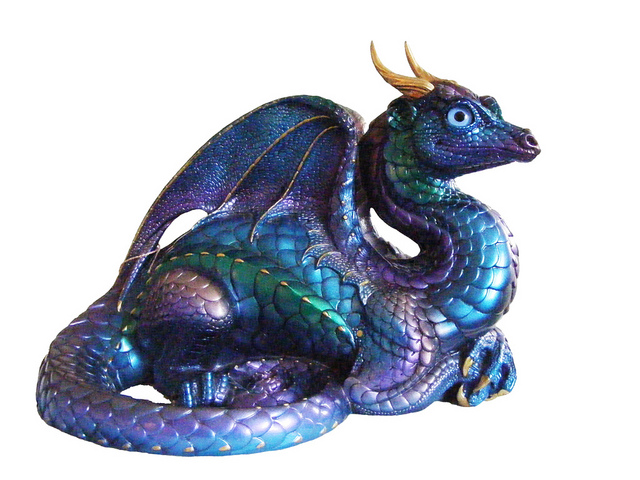
[Dragon photo above by monkeywingand treasure chest by Tom Praison via flickr.]

Dealing with Dragons

Over the years, some of my favorite blog posts have been the Word Problems from Literature, where I make up a story problem set in the world of one of our family’s favorite books and then show how to solve it with bar model diagrams. The following was my first bar diagram post, and I spent an inordinate amount of time trying to decide whether “one fourth was” or “one fourth were.” I’m still not sure I chose right.

I hope you enjoy this “Throw-back Thursday” blast from the Let’s Play Math! blog archives:


Solving-Complex-Story-Problems

Cimorene spent an afternoon cleaning and organizing the dragon’s treasure. One fourth of the items she sorted was jewelry. 60% of the remainder were potions, and the rest were magic swords. If there were 48 magic swords, how many pieces of treasure did she sort in all?

[Problem set in the world of Patricia Wrede’s Enchanted Forest Chronicles. Modified from a story problem in Singapore Primary Math 6B. Think about how you would solve it before reading further.]

How can we teach our students to solve complex, multi-step story problems? Depending on how one counts, the above problem would take four or five steps to solve, and it is relatively easy for a Singapore math word problem. One might approach it with algebra, writing an equation like:

x - \left[\frac{1}{4}x + 0.6\left(\frac{3}{4} \right)x  \right]  = 48

… or something of that sort. But this problem is for students who have not learned algebra yet. Instead, Singapore math teaches students to draw pictures (called bar models or math models or bar diagrams) that make the solution appear almost like magic. It is a trick well worth learning, no matter what math program you use …

[Click here to go read Solving Complex Story Problems.]

Update: My New Book

You can help prevent math anxiety by giving your children the mental tools they need to conquer the toughest story problems.

Read Cimorene’s story and many more in Word Problems from Literature: An Introduction to Bar Model Diagrams—now available at all your favorite online bookstores!

And there’s a Student Workbook, too.

Math Teachers at Play #74 via Triumphant Learning

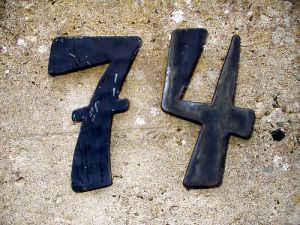
74 by Stephan Mosel
photo by Stephan Mosel (CC BY 2.0)

The new Math Teachers at Play math education blog carnival is up for your browsing pleasure. Each month, we feature activities, lessons, and games about math topics from preschool through high school. Check it out!

Here’s a peek at a few of the entries:

Origami
Learn how to make Origami Stars, Tessellation Stars, and Chaotic Stars at Math Munch. I think once your students or children see this, you will find Transforming Ninja Stars littering your house and classroom!

Pi
Here’s a fun activity to explore other ways to get the number Pi on the calculator from William Wu at Singapore Maths Tuition.

Math Games
Math Hombre shares a coordinate grid game that also calculates area of rectangles. And all you need is some grid paper and dice.

…And much more!

Click here to go read the entire blog carnival.

Would You Like to Host the Carnival?

Hosting the blog carnival can be a lot of work, but it’s fun to “meet” new bloggers through their submissions. And there’s a side-benefit: The carnival usually brings a nice little spike in traffic to your blog. If you think you’d like to join in the fun, read the instructions on our Math Teachers at Play page. Then leave a comment or email me to let me know which month you’d like to take.

More Than One Way To Find the Center of a Circle

[Feature photo above by hom26 via Flickr.]

My free time lately has gone to local events and to book editing. I hope to put up a series of blog posts sometime soon, based on the Homeschool Math FAQs chapter I’m adding to the paperback version of Let’s Play Math. [And of course, I’ll update the ebook whenever I finally publish the paperback, so those of you who already bought a copy should be able to get the new version without paying extra.]

But in the meantime, as I was browsing my blog archives for an interesting “Throw-Back Thursday” post, I stumbled across this old geometry puzzle from Dave Marain over at MathNotations blog:

Is it possible that AB is a chord but NOT a diameter? That is, could circle ABC have a center that is NOT point O?

Jake shows Jack a piece of wood he cut out in the machine shop: a circular arc bounded by a chord. Jake claimed that the arc was not a semicircle. In fact, he claimed it was shorter than a semicircle, i.e., segment AB was not a diameter and arc ACB was less than 180 degrees.

Jack knew this was impossible and argued: “Don’t you see, Jake, that O must be the center of the circle and that OA, OB and OC are radii.”

Jake wasn’t buying this, since he had measured everything precisely. He argued that just because they could be radii didn’t prove they had to be.

Which boy do you agree with?

  • Pick one side of the debate, and try to find at least three different ways to prove your point.

If you have a student in geometry or higher math, print out the original post (but not the comments — it’s no fun when someone gives you the answer!) and see what he or she can do with it.

Dave offers many other puzzles to challenge your math students. While you are at his blog, do take some time to browse past articles.