Probability Puzzles with Obsolete Coins

jar of coins

I love math puzzles, and Henry Ernest Dudeney is the foremost puzzlemeister of all time.

Whenever I need a diversion from the pressing day-to-day busyness of life, I like to crack open one of his books. And get humbled. He stumps me as often as not, but I enjoy the challenge.

Today, I’ve got two of his somewhat-easier puzzles from Amusements in Mathematics, dealing with the probability of obsolete coins tossed or pulled from a bag.

Okay, so the penny isn’t obsolete quite yet, even though the US government quit making them. But the “penny” in these puzzles is the old British pence, which went out of date seemingly ages ago, along with all the other non-decimal coins that made old math puzzles so confusing.

Probability puzzles are great for middle school students because the arithmetic itself is simple. The challenge is in figuring out exactly what calculation to do.

Have fun playing math with your kids!
Continue reading Probability Puzzles with Obsolete Coins

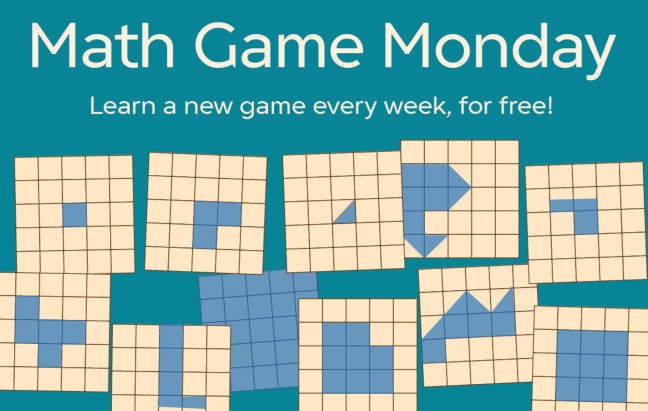
Math Game Monday: Area Battle

Learn a new math game every week, for free

This game pushes students to consider area and perimeter beyond the basic shapes.

Many parents remember struggling to learn math. We hope to provide a better experience for our children. And one of the best ways for children to enjoy learning is through hands-on play.

So what are you waiting for? Let’s play some math!

Area Battle

Math Concepts: area, square units, perimeter, regular and irregular polygons.

Players: two to four.

Equipment: homemade game cards, pencils or markers.

Continue reading Math Game Monday: Area Battle

Thinking Thursday: Number Race

Thinking Thursday math journal prompt

Writing to Learn Math: Measurement is our way of connecting numbers to the things we find in the world, in daily life.

Do you want your children to develop the ability to reason creatively and figure out things on their own?

Help kids practice slowing down and taking the time to fully comprehend a math topic or problem-solving situation with these classic tools of learning: Notice. Wonder. Create.

Continue reading Thinking Thursday: Number Race

Thinking Thursday: Success

Thinking Thursday math journal prompt

Writing to Learn Math: You can spark creative thought by removing any need to worry about spelling or punctuation rules.

Do you want your children to develop the ability to reason creatively and figure out things on their own?

Help kids practice slowing down and taking the time to fully comprehend a math topic or problem-solving situation with these classic tools of learning: Notice. Wonder. Create.

Continue reading Thinking Thursday: Success

Conversion Factors: How Old Are You in Nanoseconds?

birthday cupcake with sparkler

Homeschool Memories

[Based on a problem I made up for my co-op students, once upon a time…]

Conversion factors are special fractions that contain problem-solving information. Why are they called conversion factors?

  • “Conversion” means change, and conversion factors help you change the numbers and units in your problem.
  • “Factors” are things you multiply with. So to use a conversion factor, you will multiply it by something.

Continue reading Conversion Factors: How Old Are You in Nanoseconds?

Column Jumping: An Investigation

man jumping on rock columns

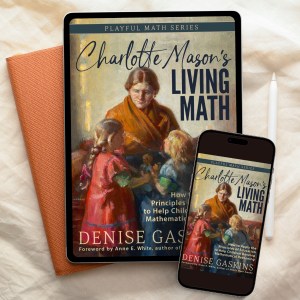
Charlotte Mason's Living Math ebook editionIn my new book, Charlotte Mason’s Living Math, I encourage families to explore the world of math by asking big, open-ended questions.

[Now available exclusively in my Playful Math Store! Ebook only at the moment, but print editions are coming soon.]

Here’s an example of such a question, an excerpt from my earlier book, 70+ Things To Do with a Hundred Chart: Number, Shape, and Logic Activities from Preschool to Middle School.

Have fun exploring math with your kids!

Continue reading Column Jumping: An Investigation

Make Your Own Nim Games

tower of rocks on a beach

Nim is a pure strategy game for two players. On each turn, players remove an option until finally no choice remains.

Game options might include:

  • How many stones to take from a pile.
  • Which position to claim on a gameboard.
  • How far to count in a given sequence.

The rules can vary at the players’ whim (as long as both players agree). How many possibilities do you start with, what are the rules for removing options, and how do you win or lose the game? Everything is open to change. And with every tweak, players must reanalyze their strategy.

Continue reading Make Your Own Nim Games

This Puzzle Is Murder

cartoon detective

Do you sometimes mourn (in a small way) the loss of a favorite website? I still miss the Daily Set puzzle, which was part of my morning routine for years.

But lately, I’ve added a new teaser to wake up my brain for the day.

While Set was a visual-logic puzzle, this one is straightforward (though not simple) deduction. I think you’ll enjoy it.

Continue reading This Puzzle Is Murder

Tasty Treats from the Moscow Puzzles

basket of apples

“Problems stressing deduction rather than calculation have a special appeal and value. They teach you to analyze, and to seek unorthodox ways of solving a problem.”

—Boris Kordemsky

Today I’m sharing a few treats from The Moscow Puzzles by Boris Kordemsky, which mixes classic brainteasers and original stumpers.

Recreational math expert Martin Gardner called Kordemsky’s book “the outstanding puzzle collection in the history of Russian mathematics.”

Have fun playing logic with your kids!

Continue reading Tasty Treats from the Moscow Puzzles

Rescuing Cool Math for Older Kids

mother and teen daughter do homework together

Do you have math dreams for your children?

Here are some dreams shared the authors of Avoid Hard Work!

For our children, we dream that mathematics…

  • … makes sense.
  • … is more than just arithmetic.
  • … is joyous.
  • … makes them strong.
  • … is meaningful.
  • … is creative.
  • … is full of fascinating questions.
  • … opens up many paths to solutions.
  • … is friendly.
  • … solves big problems and makes the world better.
  • … is a powerful tool they can master.
  • … is beautiful.
  • … lets them learn in their own ways.
  • … is connected to their lives.
  • … asks “why” and not just “how.”
  • … opens the world.

Continue reading Rescuing Cool Math for Older Kids