Puzzles for the New Year

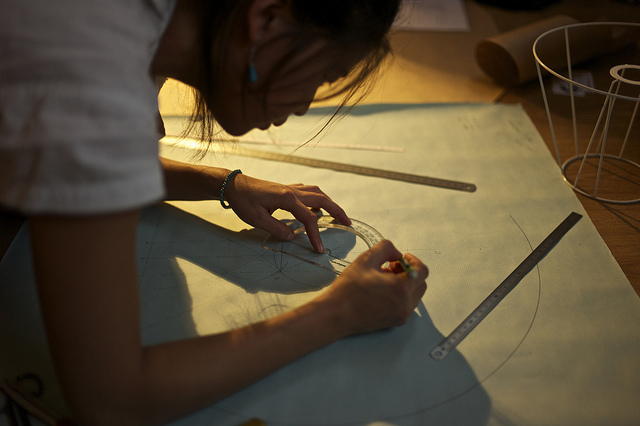
by Koshyk via flickr

As we all head back to school, here are some interesting calendar puzzles:

  • 2008 is a leap year. Why do leap years happen? If we didn’t add a leap day every so often, would January eventually come in the summer?
  • Today is Thursday. What day of the week will it be exactly one year from today?
  • January 1, 2008, came on a Tuesday. When will be the next year that begins on Tuesday?
  • My birthday (in March) lands on a Monday this year. When is the next year my birthday will come on a Monday? How about YOUR birthday — when is the next time it will happen on the same day of the week as this year?
  • Can you find a pattern in the way dates move from one day of the week to another, year after year?
Continue reading Puzzles for the New Year

Leon’s Christmas Gift

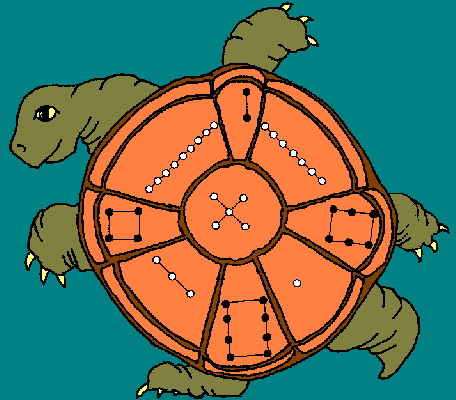
Lo-shu turtle

Here is the simplest puzzle from the November/December 1998 issue of Alexandria Jones stories. The answer (and more puzzles) will follow.

Christmas gift for Leon (pdf, 68KB)

Edited to Add

More puzzles are now here:

Magic square puzzles

Answers are also posted:

Christmas puzzle answers

To Be Continued…

Read all the posts from the November/December 1998 issue of my Mathematical Adventures of Alexandria Jones newsletter.

Pre-Algebra Picture Puzzles

Balance problem

Maria at Homeschool Math Blog has posted a fun set of worksheets:
Pan balance problems to teach algebraic reasoning.

Princess Kitten, at nearly 9yo, keeps telling me, “I hate math, but I like algebra.” So I printed all four pages for her to try. These get pretty complicated, and the 2-variable problems had her flummoxed for awhile. But after an explanation and bit of pouting (I think she hates math because she’s such a perfectionist that she can’t bear to get something wrong, even the first time), she came back and conquered the toughest ones.

Egyptian Math: The Answers

Remember the Math Adventurer’s Rule: Figure it out for yourself! Whenever I give a problem in an Alexandria Jones story, I will try to post the answer soon afterward. But don’t peek! If I tell you the answer, you miss out on the fun of solving the puzzle. So if you haven’t worked these problems yet, go back to the original posts. Figure them out for yourself—and then check the answers just to prove that you got them right.

Continue reading Egyptian Math: The Answers

Puzzle: Random Blocks

Red block puzzle

In the first section of George Lenchner’s Creative Problem Solving in School Mathematics, right after his obligatory obeisance to George Polya (see the third quote here), Lechner poses this problem. If you have seen it before, be patient — his point was much more than simply counting blocks.

A wooden cube that measures 3 cm along each edge is painted red. The painted cube is then cut into 1-cm cubes as shown above. How many of the 1-cm cubes do not have red paint on any face?

And then he challenges us as teachers:

Do you have any ideas for extending the problem?
If so, then jot them down.

This is strategically placed at the end of a right-hand page, and I was able to resist turning to read on. I came up with a list of 15 other questions that could have been asked — some of which will be used in future Alexandria Jones stories. Lechner wrote only seven elementary-level problems, and yet his list had at least two questions that I had not considered. How many can you come up with?

Continue reading Puzzle: Random Blocks

Solution: The Cat’s Lasagna

The puzzle (from The mysterious temporal freeze) was:

A certain famous cat snarfs down an 11″x13″ pan of lasagna in 3 seconds flat. Assuming the fat feline has a bottomless pit for a stomach and continues to eat at the same rate, how long will it take him to devour a pasta the size of the state of Illinois?

Remember the Math Adventurer’s Rule: Figure it out for yourself! Whenever I give a problem in an Alexandria Jones story, I will try to post the answer soon afterwards. But don’t peek! If I tell you the answer, you miss out on the fun of solving the puzzle. Figure it out for yourself — and then check the answer just to prove that you got it right.

Continue reading Solution: The Cat’s Lasagna

The Mysterious Temporal Freeze

Pyramids clip artAlexandria Jones stepped into the huge tent that protected her father’s excavation site from the desert winds. She laughed to herself. It was like walking into a circus.

She knelt down to whisper in the ear of her faithful dog Ramus. “In this ring, grad students carefully brush away another layer of sand. In the next ring, the artist sketches every piece as it is found.” She waved her arm. “And over there, our flashiest attraction — drum roll, please — the photographers shoot each shard of pottery from every possible angle. But where is the Master of Ceremonies?”

Alex and Rammy found Professor Jones near the back of the tent, talking to another student. While she waited for her dad, she looked through an assortment of numbered artifacts that were ready to be packed and sent to the museum.

Continue reading The Mysterious Temporal Freeze

Hints and Solutions: Patty Paper Trisection

No peeking! This post is for those of you who have given the trisection proof a good workout on your own. If you have a question about the proof or a solution you would like to share, please post a comment here.

But if you haven’t yet worked at the puzzle, go back and give it a try. When someone just tells you the answer, you miss out on the fun. Figure it out for yourself — and then check the answer just to prove that you got it right.

Continue reading Hints and Solutions: Patty Paper Trisection

Puzzle: Patty Paper Trisection

[Feature photo above by Michael Cory via Flickr (CC BY 2.0).]

trisection

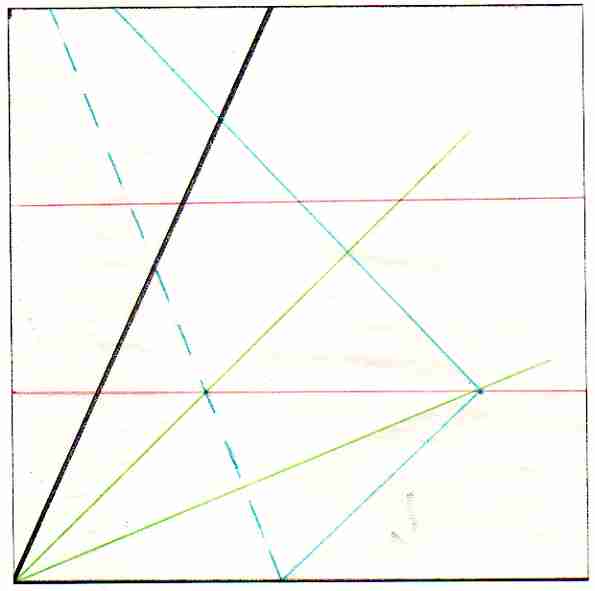
One of the great unsolved problems of antiquity was to trisect any angle using only the basic tools of Euclidean geometry: an unmarked straight-edge and a compass. Like the alchemist’s dream of turning lead into gold, this proved to be an impossible task. If you want to trisect an angle, you have to “cheat.” A straight-edge and compass can’t do it. You have to use some sort of crutch, just as an alchemist would have to use a particle accelerator or something.

One “cheat” that works is to fold your paper. I will show you how it works, and your job is to show why.

Continue reading Puzzle: Patty Paper Trisection