Review: Math & Magic in Wonderland

Are you looking for a fun book to read over the summer? I just finished Lilac Mohr’s delightful Math & Magic in Wonderland, and I loved it.

Highly recommended, for kids or adults!

About the Book

Math-Magic-WonderlandA Jubjub bird disguised as a lark,
Borogroves concealing a snark,
When you’re in Tulgey Wood, you must
Be careful whom it is you trust…

With the discovery of Mrs. Magpie’s Manual of Magic for Mathematical Minds, Lulu and Elizabeth embark on an exciting journey to a realm inspired by Lewis Carroll’s poetry. The twins must use ingenuity and sagacity to solve classic logic puzzles that promise to uncover the book’s secrets and earn them The Vorpal Blade. In this interactive novel, the reader is invited to play along with the two heroines on their grand mathematical adventure.

Do you have the smarts to help Lulu and Elizabeth outwit the frumious Bandersnatch?

It’s time to enter Wonderland and find out!

–from the back cover of Math & Magic in Wonderland by Lilac Mohr

What I Liked

Puns, poetry, and plenty of puzzles. Tangrams, tessellations, truth-tellers and liars. History tidbits and many classics of recreational mathematics.

The sisters Lulu and Elizabeth seem real — though perhaps more widely read than most of us. They are different from each other. They make mistakes and have disagreements. But they never deteriorate into the clichรฉ of sibling rivalry that passes for characterization in too many children’s books.

In each chapter, the girls must solve a language, math, or logic puzzle to proceed along their journey. Then a “Play Along” section offers related puzzles for the reader to try.

No matter how challenging the topic, the book never talks down to the reader.

What I Didn’t Like

… Um … Honestly, I can’t think of anything.

Since it’s traditional to criticize the editing of self-published books, I will say this: There was at least one place where the wording seemed a bit awkward. I would have phrased the sentence differently. But don’t ask me to identify the page — I was too caught up in the story to bother jotting down such a quibble. And I tried flipping through the book as I wrote this post, but I can’t find it again.

Buy, or Don’t Buy?

Buy. Definitely buy.

Unless you hate logic puzzles and despise Lewis Carroll’s poetry.

But for everyone else, this book is truly a gem. If you like The Cat in Numberland or The Man Who Counted, then I’m sure you’ll enjoy Math & Magic in Wonderland.

Useful Links

Disclaimer: Like almost all book links on my blog, the links in this post take you to Amazon.com, where you can read descriptions and reviews. I make a few cent’s worth of affiliate commission if you make a purchase — but nowhere near enough to influence my opinion about the book.

And Now for the Giveaway

Math-Magic-WonderlandLilac offered a paperback copy of Math & Magic in Wonderland for one lucky reader of Let’s Play Math blog.

The giveaway is done. Congratulations, Keshua!

But the comments section below remains open, and I’d still love to hear your answers:

  • Tell us about your favorite language, math, or logic puzzle book! Or share a book you’ve been wanting to read.

Noticing Fractions in a Sidewalk

fraction-circle

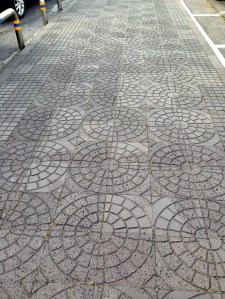
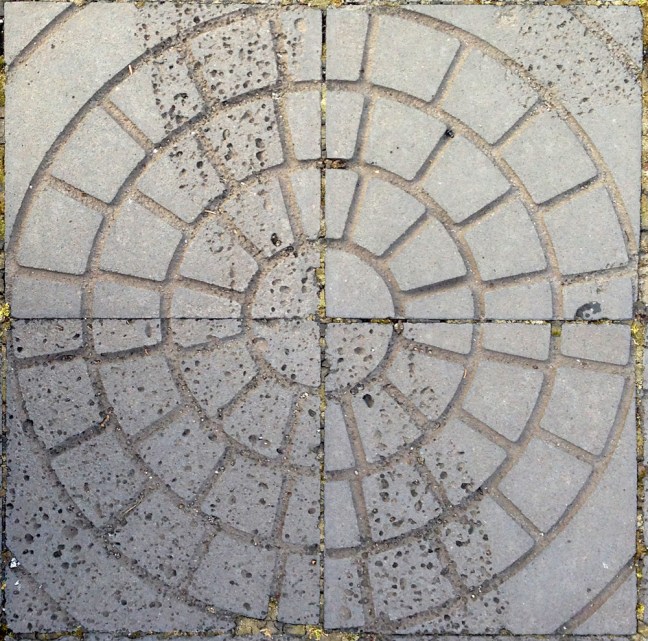
My daughters didn’t want to admit to knowing me, when I stopped to take a picture of the sidewalk along a back street during our trip to Jeju. But aren’t those some wonderful fractions?

What do you see? What do you wonder?

Here is one of the relationships I noticed in the outer ring:

\frac{4 \frac {2}{2}}{20} = \frac {1}{4}

sidewalk

And this one’s a little trickier:

\frac{1 \frac {1}{2}}{12} = \frac {1}{8}

Can you find it in the picture?

Each square of the sidewalk is made from four smaller tiles, about 25 cm square, cut from lava rock. Some of the sidewalk tiles are cut from mostly-smooth rock, some bubbly, and some half-n-half.

I wonder how far we could go before we had to repeat a circle pattern?

Continue reading Noticing Fractions in a Sidewalk

Math Games with Factors, Multiples, and Prime Numbers

Students can explore prime and non-prime numbers with these free favorite classroom games:

For $15-20 you can buy a downloadable file of the beautiful, colorful, mathematical board game Prime Climb. Or pick up the full Prime Climb game box at Amazon.

Or you can try the following game by retired Canadian education professor Jerry Ameis:

Factor Finding Game

FactorFindingGame

Math Concepts: multiples, factors, composite numbers, and primes.
Players: only two.
Equipment: pair of 6-sided dice, 10 squares each of two different colors construction paper, and the game board (click the image to print it, or copy by hand).

On your turn, roll the dice and make a 2-digit number. Use one of your colored squares to mark a position on the game board. You can only mark one square per turn.

  • If your 2-digit number is prime, cover a PRIME square.
  • If any of the numbers showing are factors of your 2-digit number, cover one of them.
  • BUT if there’s no square available that matches your number, you lose your turn.

The first player to get three squares in a row (horizontal, vertical, or diagonal) wins. Or for a harder challenge, try for four in a row.

 
* * *

This game was featured in the Math Teachers At Play (MTaP) math education blog carnival: MTaP #79. Hat tip: Jimmie Lanley.

This blog is reader-supported.

If you’d like to help fund the blog on an on-going basis, then please join me on Patreon for mathy inspiration, tips, and an ever-growing archive of printable activities.

If you liked this post, and want to show your one-time appreciation, the place to do that is PayPal: paypal.me/DeniseGaskinsMath. If you go that route, please include your email address in the notes section, so I can say thank you.

Which I am going to say right now. Thank you!

โ€œMath Games with Factors, Multiples, and Prime Numbersโ€ copyright ยฉ 2015 by Denise Gaskins. Image at the top of the post copyright ยฉ Jimmie via flickr (CC BY 2.0).

April 2015 Math Calendar

AprilMathCalendar

Six years ago, my homeschool co-op classes had fun creating this April calendar to hand out at our end-of-semester party. Looking at my regular calendar today, I noticed that April this year starts on Wednesday, just like it did back then. I wonder when’s the next time that will happen?

A math calendar is not as easy to read as a traditional calendar — it is more like a puzzle. The expression in each square simplifies to that day’s date, so your family can treat each day like a mini-review quiz: “Do you remember how to calculate this?”

The calendar my students made is appropriate for middle school and beyond, but you can make a math calendar with puzzles for any age or skill level. Better yet, encourage the kids to make puzzles of their own.

How to Use the Math Calendar

At home:
Post the calendar on your refrigerator. Use each math puzzle as a daily review “mini-quiz” for your children (or yourself).

In the classroom:
Post today’s calculation on the board as a warm-up puzzle. Encourage your students to make up “Today is…” puzzles of their own.

As a puzzle:
Cut the calendar squares apart, then challenge your students to arrange them in ascending (or descending) order.

Help Us Make the Next Math Calendar

If you like, you may use the following worksheet:

Submission details here: Kidsโ€™ Project — More Math Calendars?

Pi: Who Needs That Many Digits?

From Numberphile: Pi is famously calculated to trillions of digits – but Dr. James Grime says 39 is enough.

How you round it off makes a difference:

An extra note from Dr. Grime: “Since pi39 ends in 0, you may think we could use pi38 instead, which has even fewer digits. Unfortunately, the rounding errors of pi38 are ten times larger than the rounding errors of pi39 — more than a hydrogen atom. So that extra decimal place makes a difference, even if it’s 0.”

Pi Makes a River Bend

From Numberphile: “Sinuosity is a measure of how ‘bendy’ a river is. It is the length of the river divided by the direct route. Featuring Dr. James Grime.”

Update

After posting this video, Dr. Grimes and Lawrence Roberts began collecting and analyzing data about real-world rivers. It turns out the pi theory of sinuosity is too simple. Read about their results:

The Math Studentโ€™s Manifesto

[Feature photo above by Texas A&M University (CC BY 2.0) via Flickr.]

Note to Readers: Please help me improve this list! Add your suggestions or additions in the comment section below…

What does it mean to think like a mathematician? From the very beginning of my education, I can do these things to some degree. And I am always learning to do them better.

(1) I can make sense of problems, and I never give up.

  • I always think about what a math problem means. I consider how the numbers are related, and I imagine what the answer might look like.
  • I remember similar problems Iโ€™ve done before. Or I make up similar problems with smaller numbers or simpler shapes, to see how they work.
  • I often use a drawing or sketch to help me think about a problem. Sometimes I even build a physical model of the situation.
  • I like to compare my approach to the problem with other people and hear how they did it differently.

Continue reading The Math Studentโ€™s Manifesto

2015 Mathematics Game

[Feature photo above by Scott Lewis and title background (right) by Carol VanHook, both via Flickr (CC BY 2.0, text added).]

2015YearGame

Did you know that playing games is one of the Top 10 Ways To Improve Your Brain Fitness? So slip into your workout clothes and pump up those mental muscles with the Annual Mathematics Year Game Extravaganza!

For many years mathematicians, scientists, engineers and others interested in math have played “year games” via e-mail. We don’t always know whether it’s possible to write all the numbers from 1 to 100 using only the digits in the current year, but it’s fun to see how many you can find.

— Math Forum Year Game Site

Rules of the Game

Use the digits in the year 2015 to write mathematical expressions for the counting numbers 1 through 100. The goal is adjustable: Young children can start with looking for 1-10, middle grades with 1-25.

  • You must use all four digits. You may not use any other numbers.
  • Solutions that keep the year digits in 2-0-1-5 order are preferred, but not required.
  • You may use +, -, x, รท, sqrt (square root), ^ (raise to a power), ! (factorial), and parentheses, brackets, or other grouping symbols.
  • You may use a decimal point to create numbers such as .2, .02, etc., but you cannot write 0.02 because we only have one zero in this year’s number.
  • You may create multi-digit numbers such as 10 or 201 or .01, but we prefer solutions that avoid them.

My Special Variations on the Rules

  • You MAY use the overhead-bar (vinculum), dots, or brackets to mark a repeating decimal. But students and teachers beware: you can’t submit answers with repeating decimals to Math Forum.
  • You MAY NOT use a double factorial, n!! = the product of all integers from 1 to n that have the same parity (odd or even) as n. Math Forum allows these, but I’ve decided I prefer my arithmetic straight.

Click here to continue reading.