These advent calendars feature a new math puzzle or game for each day of December until Christmas. Many of the activities are designed to be done in a group, but they work fine for home school families who play with math together. Enjoy!
We continue with our counting lessons — and once again, Kitten proves that she doesn’t think the same way I do. In fact, her solution is so elegant that I think she could have a future as a mathematician. After all, every aspiring novelist needs a day job, right?
If only I could get her to give up the idea that she hates math…
Permutations with Complications
How many of the possible distinct arrangements of 1-6 have 1 to the left of 2?
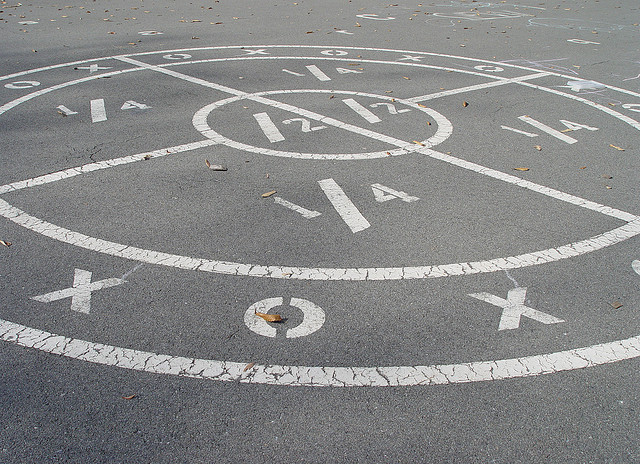
Incidentally, this reminds me of a scene from a Japanese anime, where a young girl gets her elder sister to explain why 1/2 divided by 1/4 equals 2. The elder girl replies without skipping a heartbeat: you simply invert the 1/4 to become 4/1 and hence 1/2 times 4 equals 2.
The young one isn’t convinced, and asks how on earth it is possible to divide something by a quarter — she reasons you can cut a pie into 4 pieces, but how do you cut a pie into one quarter pieces? The elder one was at a loss, and simply told her to “accept it” and move on.
How would you explain the above in a manner which makes sense?
The MathCounts Club Program provides enrichment activities and puzzles for 6th-8th grade math clubs within schools — and homeschool groups may join, too! Participants receive a free Club in a Box Resource Kit, which includes the Club Resource Guide, two game boards to accompany one of the meeting plans, 12 MathCounts pencils, and a MathCounts tote bag for the coach. (Apparently they had good intentions, but they didn’t follow through. My box had no tote.)
A school (or homeschool group) may choose to participate in the Club Program, the competition or both programs. Since these programs can complement each other, any school that registers for the MathCounts competition automatically gets the Club in a Box Resource Kit, too.
In a lazy, I-don’t-want-to-do-school mood, Princess Kitten was ready to stop after three math problems. We had gotten two of them correct, but the last one was counting the ways to paint a cube in black and white, and we forgot to count the solid-color options.
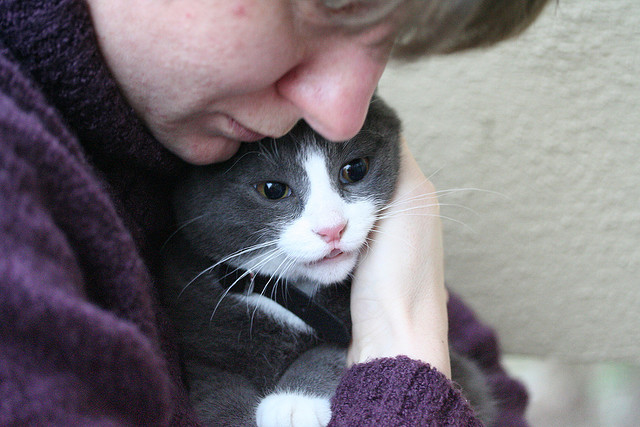
For my perfectionist daughter, one mistake was excuse enough to quit. She leaned her head against me as we sat together on the couch and said, “We’re done. Done, done, done.” If she could, she would have started purring — one of the most manipulative noises known to humankind. I’m a soft touch. Who can work on math when there’s a kitten to cuddle?
by tanjila ahmed via flickr
Still, I managed to squeeze in one more puzzle. I picked up my whiteboard marker and started writing:
Kitten complained that some math programs keep repeating the same kind of problems over and over, with bigger numbers: “They don’t get any harder, they just get longer. It’s boring!”
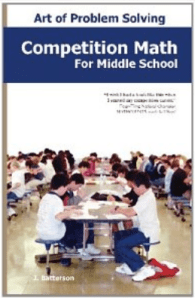
So we pulled out the Counting lessons in Competition Math for Middle School. [Highly recommended book!] Kitten doesn’t like to compete, but she enjoys learning new ideas, and Batterson’s book gives her plenty of those, well organized and clearly explained.
Pizzas at Mario’s come in three sizes, and you have your choice of 10 toppings to add to the pizza. You may order a pizza with any number of toppings (up to 10), including zero. How many choices of pizza are there at Mario’s?
[The book said 9 toppings, but I was skimming/paraphrasing aloud and misread.]


 Denise Gaskins' Let's Play Math