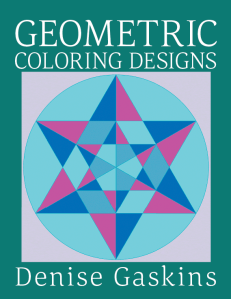
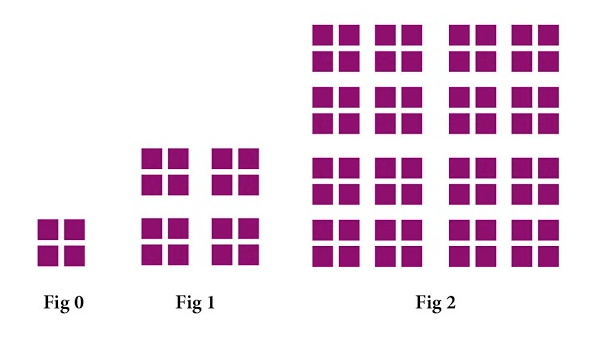
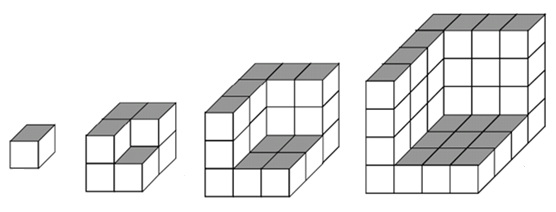
I created these coloring pages for my homeschool co-op math kids, and then collected them into a downloadable 42-page PDF coloring book for your family to enjoy.
The booklet includes several ready-to-color designs, a wide assortment of graph paper, advanced create-your-own tessellation pages, and links to all sorts of online math art resources.
But when I posted the link to Twitter, a friend noticed that several of the resource links were broken. (Thanks, Mark!)
While I was fixing those, I added some new links (to the wonderful School of Islamic Geometric Design pattern templates and classroom resources).
So even if you’ve downloaded the file before, you may want to pick up this new-and-improved edition.
For easy printing, right-click to open the image above in a new tab.
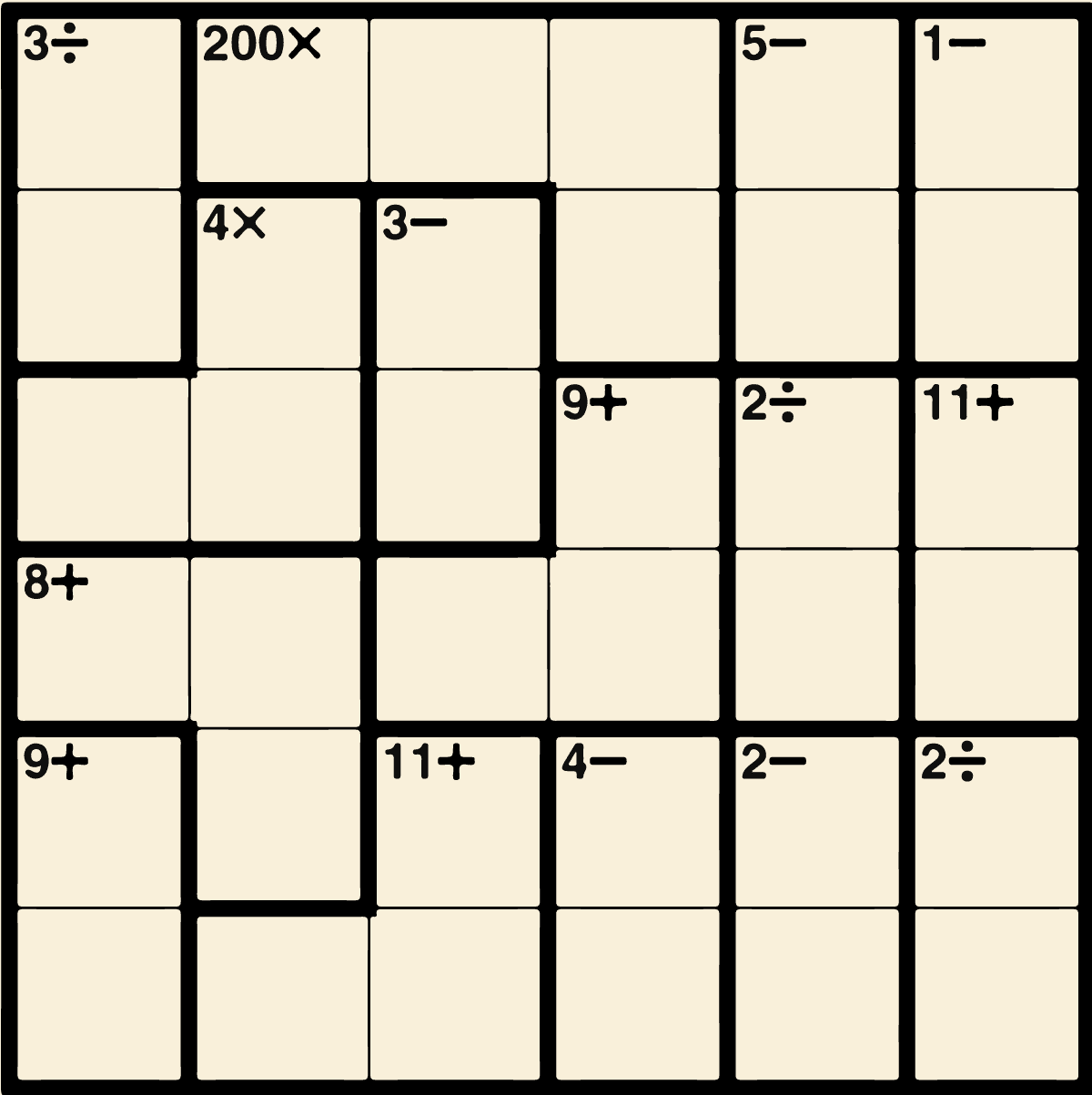
Place the numbers from 1 to 6 into each row and column. None of the numbers may repeat in any row or column. Within the black “cages,” the numbers must add, subtract, multiply, or divide to give the answer shown.
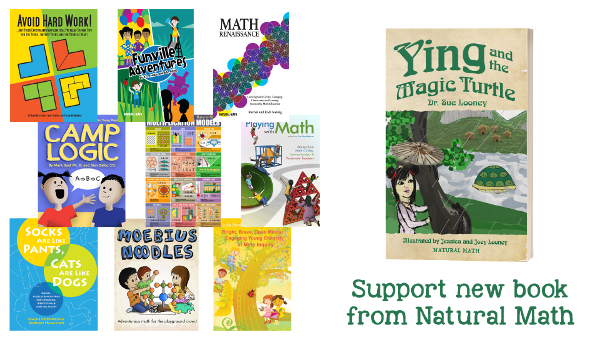
And there’s a new one coming soon, from the wonderful people at Natural Math.
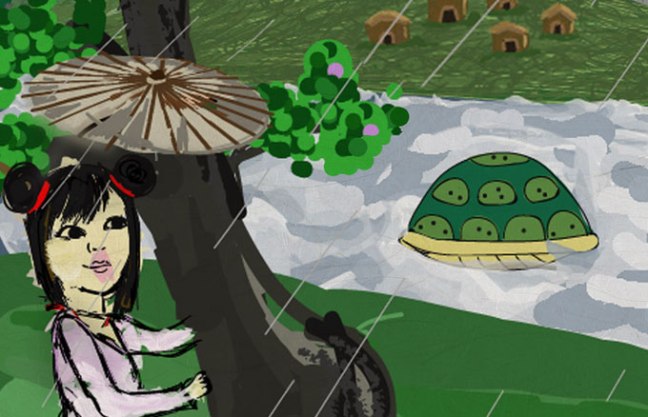
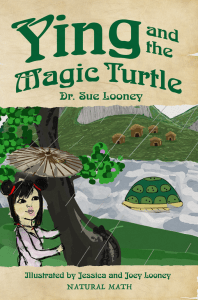
“Long ago in the land of China, there were many rain storms … and the land of China was slowly sinking into the sea. This is the story of how a wise emperor, an observant girl, and a magic turtle saved the villages of China from the great flood.”
So begins the story of Ying and the Magic Turtle.
Children, parents, and teachers can enjoy the book for its rich beauty in mathematics and as an ancient legend.
We can play with the mathematics, too, solving the puzzle of the turtle’s shell right alongside Ying.
And we can delve deeper into the power of magic squares by working with puzzles presented at the end of the story.
Join the Crowdfunding Campaign
For more details about Ying and the Magic Turtle, including a peek at the delightful illustrations, check out the Kickstarter crowdfunding page:
Yes, your kids CAN learn to love math. Keep your children’s math skills fresh with my 8-week email series of math games and activities.

No purchase necessary! Just sign up for my email newsletter, and every week for the next two months you’ll automatically receive one of my favorite math club activities or an excerpt from my series of math game books.
And I’ll send you occasional news updates with playful math tips, resource links, and book sales or other promotions.
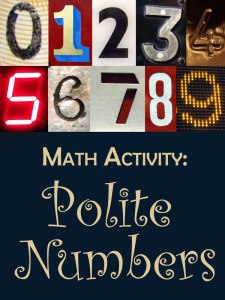
Did you know that numbers can be polite? In math, a polite number is any number we can write as the sum of two or more consecutive positive whole numbers.
(Consecutive means numbers that come one right after another in the counting sequence.)
For example, five is a polite number, because we can write it as the sum of two consecutive numbers:
5 = 2 + 3
Nine is a doubly polite number, because we can write it two ways:
9 = 4 + 5
9 = 2 + 3 + 4
And fifteen is an amazingly polite number. We can write fifteen as the sum of consecutive numbers in three ways:
15 = 7 + 8
15 = 4 + 5 + 6
15 = 1 + 2 + 3 + 4 + 5
How many other polite numbers can you find?
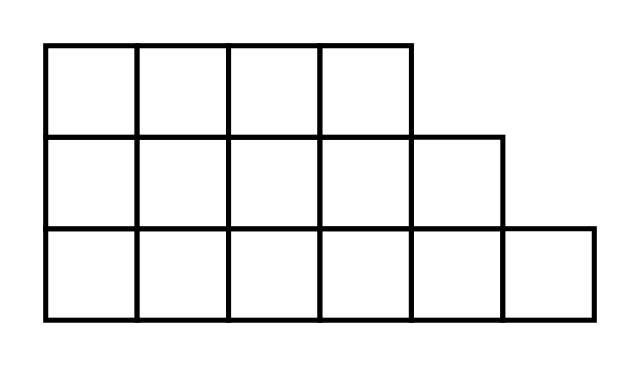
You can build polite numbers (like fifteen) with a staircase of blocks.
What Do You Notice?
Are all numbers polite?
Or can you find an impolite number?
Can you make a collection of polite and impolite numbers? Find as many as you can.
How many different ways can you write each polite number as a sum of consecutive numbers?
What do you notice about your collection of polite and impolite numbers?
Can you think of a way to organize your collection so you can look for patterns?
What Do You Wonder?
Make a conjecture about polite or impolite numbers. A conjecture is a statement that you think might be true.
For example, you might make a conjecture that “All odd numbers are…” — How would you finish that sentence?
Make another conjecture.
And another.
Can you make at least five conjectures about polite and impolite numbers?
What is your favorite conjecture? Does thinking about it make you wonder about numbers?
Can you think of any way to test your conjectures, to know whether they will always be true or not?
Real Life Math Is Social
This is how mathematics works. Mathematicians play with numbers, shapes, or ideas and explore how those relate to other ideas.
After collecting a set of interesting things, they think about ways to organize them, so they can look for patterns and connections. They make conjectures and try to imagine ways to test them.
And mathematicians compare their ideas with each other. In real life, math is a very social game.
So play with polite and impolite numbers. Compare your conjectures with a friend.
My goals are to continue playing with math (1) in my homeschool co–op classes and (2) on this blog — and (3) hopefully to publish a couple of new books as well.
My favorite way to celebrate any new year is by playing the Year Game. It’s a prime opportunity for players of all ages to fulfill the two most popular New Year’s Resolutions: spending more time with family and friends, and getting more exercise.
So grab a partner, slip into your workout clothes, and pump up those mental muscles!
Rules of the Game
Use the digits in the year 2019 to write mathematical expressions for the counting numbers 1 through 100. The goal is adjustable: Young children can start with looking for 1-10, middle grades with 1-25.
You must use all four digits. You may not use any other numbers.
Solutions that keep the year digits in 2-0-1-9 order are preferred, but not required.
You may use a decimal point to create numbers such as .2, .02, etc., but you cannot write 0.02 because we only have one zero in this year’s number.
You may create multi-digit numbers such as 10 or 201 or .01, but we prefer solutions that avoid them.
My Special Variations on the Rules
You MAY use the overhead-bar (vinculum), dots, or brackets to mark a repeating decimal. But students and teachers beware: you can’t submit answers with repeating decimals to Math Forum.
You may NOT use a double factorial, n!! = the product of all integers from 1 to n that have the same parity (odd or even) as n. The Math Forum allows them, but I feel much more creative when I can wrangle a solution without invoking them.
For many years mathematicians, scientists, engineers and others interested in mathematics have played “year games” via e-mail and in newsgroups. We don’t always know whether it is possible to write expressions for all the numbers from 1 to 100 using only the digits in the current year, but it is fun to try to see how many you can find.
Hapollonian Holiday Greetings from my co-op class kids, and best wishes for a grace-filled holiday season.
Do you know of any great math-related seasonal games, crafts, or activities I missed? Please add them to the comments section below.
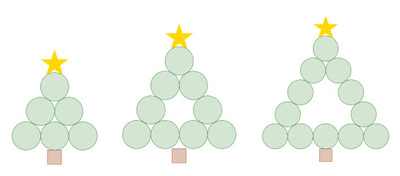
As you scroll through the links below, you find several puzzle graphics from the wonderful Visual Patterns website.
Use them as conversation-starters with your kids: What do you notice? How does each pattern grow?
For older students: Can you write a formula to describe how each pattern? What will it look at stage 43?
Pattern #7, Trees
A Bit of Fun
Setting the mood: Enjoy this bit of seasonal fidgeting from Vi Hart. If you don’t understand some of the references, that’s normal! Pick a phrase, Google it, and enjoy the fun of learning something new.
Every year, some of my favorite websites offer a seasonal selection of activities to encourage your children’s (and your own!) mathematical creativity, one for each day in the run-up to Christmas.
Colleen Young updates the list every year, so check out her pages:
Clarissa (@c0mplexnumber) demonstrates how to make beautiful, challenging origami snowflakes. She recommends beginners try the first few folds — which create a pretty cool design on their own. Let it Snow…
K (@Ms_Kmp) reviews the distributive property with Algebra snowflakes and links to a make-your-own puzzle generator for math review at any level. Or download one of Craig’s (@mrbartonmaths) pre-made Tarsia Jigsaws.
Speaking of Christmas carols, the Christmas Price Index shows the current cost for one set of each of the gifts given in the song “The Twelve Days of Christmas.” I wonder what’s the cumulative cost of all the gifts, when you count each repetition in the song?
Alexandria Jones and her family are fictional characters from my old Mathematical Adventures newsletter. Their stories appear sporadically as I find time to transcribe them from the back-issues. You can find them all on this blog page.
Here are all the Alexandria Jones stories Christmas stories, with activity and craft ideas…
The Playful Math Carnival is like a free online magazine devoted to learning, teaching, and playing around with math from preschool to high school. This month’s edition features articles from bloggers all across the internet.†
You’re sure to find something that will delight both you and your child.
By tradition, we start the carnival with a puzzle in honor of our 123rd edition. But if you would like to jump straight to our featured blog posts, click here to see the Table of Contents.
†Or more, depending on how you count. And on whether I keep finding things to squeeze in under the looming deadline. But if there are more, then there are certainly 36. Right?
This fall, my homeschool co-op math class will play with math journaling.
But my earlier dot-grid notebooks were designed for adults. Too thick, too many pages. And the half-cm dot grid made lines too narrow for young writers.
So I created a new series of paperback dot-grid journals for my elementary and middle school students.
I’m sure we’ll use several of these activities in my homeschool co-op math class this fall.
Noticing and Wondering
Learning math requires more than mastering number facts and memorizing rules. At its heart, math is a way of thinking.
So more than anything else, we need to teach our kids to think mathematically — to make sense of math problems and persevere in figuring them out.
Help your children learn to see with mathematical eyes, noticing and wondering about math problems.
Whenever your children need to learn a new idea in math, or whenever they get stuck on a tough homework problem, that’s a good time to step back and make sense of the math.
Kids can write their noticings and wonderings in the math journal. Or you can act as the scribe, writing down (without comment) everything child says.
For more tips on teaching students to brainstorm about math, check out these online resources from The Math Forum:
Problem-solving is a habit of mind that you and your children can learn and grow in. Help your kids practice slowing down and taking the time to fully understand a problem situation.
Puzzles Are Math Experiments
Almost anything your child notices or wonders can lead to a math experiment.
For example, one day my daughter played an online math game…
A math journal can be like a science lab book. Not the pre-digested, fill-in-the-blank lab books that some curricula provide. But the real lab books that scientists write to keep track of their data, and what they’ve tried so far, and what went wrong, and what finally worked.
Here are a few open-ended math experiments you might try:
Explore Shapes
Pick out a 3×3 set of dots. How many different shapes can you make by connecting those dots? Which shapes have symmetry? Which ones do you like the best?
What if you make shapes on isometric grid paper? How many different ways can you connect those dots?
Limit your investigation to a specific type of shape. How many different triangles can you make on a 3×3 set of dots? How many different quadrilaterals? What if you used a bigger set of dots?
Explore Angles
On your grid paper, let one dot “hold hands” with two others. How many different angles can you make? Can you figure out their degree without measuring?
Are there any angles you can’t make on your dot grid? If your paper extended forever, would there be any angles you couldn’t make?
Does it make a difference whether you try the angle experiments on square or isometric grid paper?
Explore Squares
How many different squares can you draw on your grid paper? (Don’t forget the squares that sit on a slant!) How can you be sure that they are perfectly square?
Number the rows and columns of dots. Can you find a pattern in the corner positions for your squares? If someone drew a secret square, what’s the minimum information you would need to duplicate it?
Does it make a difference whether you try the square experiments on square or isometric grid paper?
I’d love to hear your favorite math explorations or journaling tips!
Please share in the comments section below.
* * *
P.S.: Do you have a blog? If you’d like to feature a math journal review and giveaway, I’ll provide the prize. Send a message through my contact form or leave a comment below, and we’ll work out the details.
This blog is reader-supported.
If you’d like to help fund the blog on an on-going basis, then please head to my Patreon page.
If you liked this post, and want to show your one-time appreciation, the place to do that is PayPal: paypal.me/DeniseGaskinsMath. If you go that route, please include your email address in the notes section, so I can say thank you.
My son can’t stand long division or fractions. We had a lesson on geometry, and he enjoyed that — especially the 3-D shapes. If we can just get past the basics, then we’ll have time for the things he finds interesting. But one workbook page takes so long, and I’m sick of the drama. Should we keep pushing through?
Those upper-elementary arithmetic topics are important. Foundational concepts. Your son needs to master them.
Eventually.
But the daily slog through page after page of workbook arithmetic can wear anyone down.
Many children find it easier to focus on math when it’s built into a game.