Mental Math: Early Subtraction

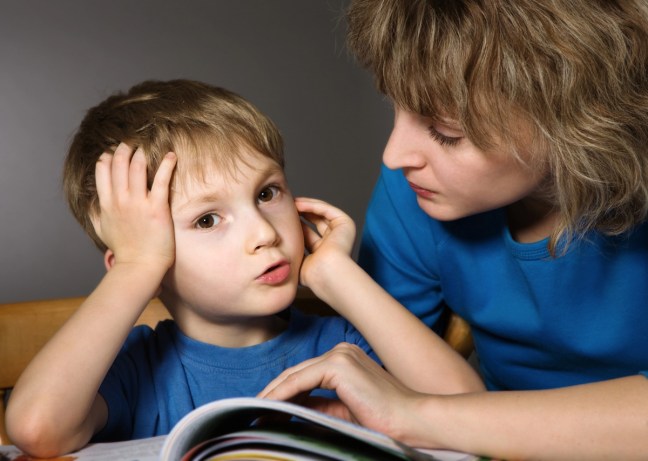
mother and child doing math homework

By doing mental math, we help our children use the basic principles of arithmetic to simplify problems so they can think about number relationships, mastering the basic structures of how numbers work.

And the more our children practice these structures in mental math, the better prepared they will be to recognize the same principles in algebra.

The basic idea of subtraction is finding the difference between two quantities: comparing a larger amount to a smaller one, figuring out what’s left when you remove a part, or finding the distance between two measurements (or two points on the number line).

When you work with young children learning subtraction, remember our two key mental-math strategies.

  • Use friendly numbers.

For early subtraction with numbers less than 20, the most important friendly numbers are 5 and 10, the pairs of numbers that make 10, and the doubles.

  • Estimate, then adjust.

When children apply their creative minds to reasoning about math, they can use friendly numbers to get close to an answer, and then tweak the result as needed.

Continue reading Mental Math: Early Subtraction

Mental Math: Early Addition

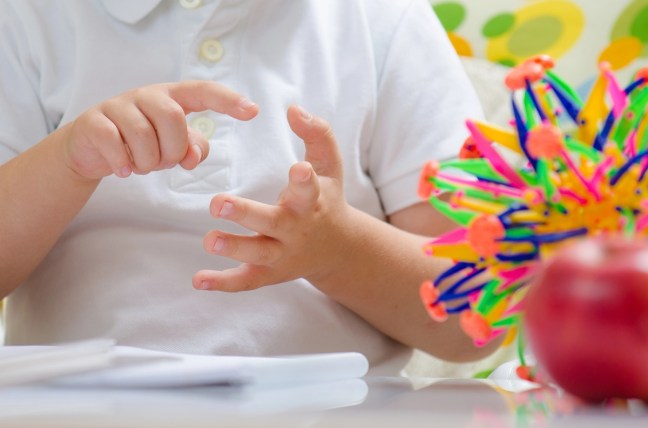
child counting on fingers

From the very beginning of a child’s experience with math, we want to focus on reasoning, making sense of numbers, thinking about how they relate to each other and how we can use these relationships to solve problems.

The basic idea of addition is putting like things together: combining parts to make a whole thing, putting together sets to make a collection, or starting with an original amount and adding the increase as it grows. Connecting two numbers in relationship with a third number we call the sum.

When you work with young children learning addition, remember the two key mental-math strategies I mentioned in the previous post.

  • Use friendly numbers.

For early single-digit addition, the most important friendly numbers are 5 and 10, the pairs of numbers that make 10, and the doubles.

  • Estimate, then adjust.

When children apply their creative minds to reasoning about math, they can use friendly numbers to get close to an answer, and then tweak the result as needed.
Continue reading Mental Math: Early Addition

FAQ: Real Math for Early Learners

photo of family hiking a rocky trail

“I love your image of math as a nature walk. My children are ready to start their homeschooling journey, and I want to put them on the right track from the beginning. How can I help them think about math and problem-solving without using a textbook?”

The most difficult part of teaching our children real math is to change our own way of thinking about the subject you’ve already taken that step, so it looks like your family’s learning journey is off to a great start.

[For readers who are wondering what I mean by math as a nature walk, check out this post. You may also enjoy my article on natural learning: Math with Young Children.]

Continue reading FAQ: Real Math for Early Learners

FAQ: Memorizing the Math Facts

It came up again this week, one of the most frequently asked questions about homeschooling math:

“I believe it’s important for children to memorize the math facts, but my kids are struggling with mental math. How can I help them master these important number relationships?”

We all want our children to own the math facts, those basic relationships between small numbers that form the foundation of all arithmetic.

But I don’t think emphasizing memorization will develop the sort of fluency your children need.

The human brain remembers what it thinks about, so we want children using their brains and thinking as deeply as possible about number relationships from as many different perspectives as we can get, noticing patterns, finding connections, making sense of the math.

Continue reading FAQ: Memorizing the Math Facts

Numberless Word Problems

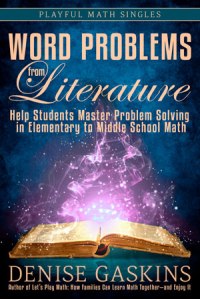
As I mentioned yesterday, my new book includes links to online resources to help you play with word problems. So this week, I’m sharing a few of my favorites.

Visit the Kickstarter

Today we examine a time-tested method to help kids reason about math: Leave out the numbers.

First up, there’s Brian Bushart’s numberless problem bank for young students. Then we’ll look at Farrar Williams’s modern revision of a math teaching classic with problems for upper-elementary and middle school students.

Have fun thinking math with your kids!

Word Problem Bank

Word problems are commonplace in mathematics classrooms, and yet they regularly confound students and lead to frustrated teachers saying things like:
  • “They just add all the numbers! It doesn’t matter what the problem says.”
  • “They don’t stop to think! They just start computing as soon as they’re done reading the problem.”

Brian Bushart offers a collection of ready-to-go slide presentations that walk through the steps of making a word problem make sense.

Visit the Site

Math With No Numbers

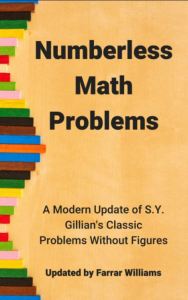
Discover Farrar Williams’s book Numberless Math Problems: A Modern Update of S.Y. Gillian’s Classic Problems Without Figures, available in ebook or paperback.
Williams writes: “In order to answer the question, they’ll have to explain it, because the problem doesn’t give you anything to calculate with. The only way to answer is by explaining your process. See how sneaky a numberless problem is? It makes students really think about the process of solving the problem.”

Find Out More

“When students face a word problem, they often revert to pulling all the numbers out and “doing something” to them. They want to add, subtract, multiply, or divide them, without really considering which operation is the right one to perform or why.

    “When you don’t have numbers, it sidesteps that problem.

      “For students who freeze up when they see the numbers, this can be a really good way to get them to think about their process with math.”

      —Farrar Williams, Math With No Numbers

      CREDITS: Feature photo (top) by saeed karimi via Unsplash.com.

      Exciting New Homeschool Math Program

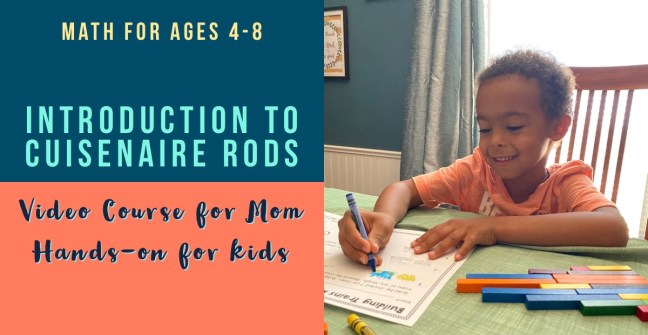
      Homeschooling friends, check out this new homeschool math program that’s fun, rigorous, and engaging — a delightful, hands-on course that helps parents (and their children) understand math.

      Introduction to Cuisenaire Rod Structures Course

      I had the privilege of previewing this class as Sonya and Lacy put it together. I highly recommend it to anyone who struggles with math, or who wants to take a non-traditional approach.

      By focusing on making sense of number relationships, and by teaching algebra before arithmetic, this course provides a stress-free path to rich mathematical mastery.

      And for all they provide, including weekly live workshops and a slew of printable math journal pages that prompt deep thinking, the price is a steal!

      Continue reading Exciting New Homeschool Math Program

      Free Number Sense Resources from Steve Wyborney

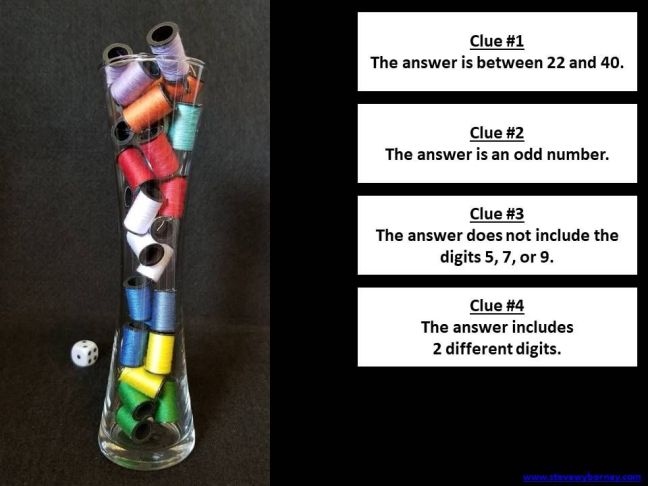
      If you teach children in the primary grades, you’ll enjoy this new series from the wonderful Steve Wyborney. Every day for the rest of the school year, Steve will post a new estimation or number sense resource for grades K–8 (or any age!) at his blog:

      https://youtu.be/dj8Yd48FumU&rel=0

      “This is my way of providing support and encouragement – as well as bringing math joy to your classroom… I’m going to stick with you all year long.”

      —Steve Wyborney

      Click to visit Steve’s blog

      Playing Math with Michael and Nash

      Michael and Nash have been creating and posting new math games with astonishing regularity throughout the pandemic. Their YouTube channel is a great resource for parents who want to play math with elementary-age children.

      Today’s entry: Closest to Ten, a quick game for addition and subtraction fluency with a tiny bit of multiplication potential.

      And here’s one of my favorites for older players: Factor Triangles, a card game for 2-digit multiplication.

      Check out their channel, and have fun playing math with your kids!

      Visit Michael and Nash on YouTube

      FAQ: Math with Young Children

      The question came up again:

      “What is the best curriculum for my children? They are four and six years old, and I’m afraid of letting them fall behind.”

      I remember being a young parent, eager to start homeschooling. I used to get mad (without letting it show, like a true introvert) when people told me, “They are young. Just let them play.”

      Now I see the wisdom in it.

      The most important thing for your children right now, by far, is for them to enjoy learning. The joy of learning is a child’s natural state. As a parent, your primary job is to keep yourself from stomping it out.

      But our parental fears can push us into joy-trampling before we realize it.

      And our own experience of school makes it hard for us to see how much of our children’s play really is learning. We expect education to look like schoolwork, but natural learning looks nothing like that.

      Continue reading FAQ: Math with Young Children

      Playing with a Hundred Chart #35: The Number Grid Game

      This is a pretty simple game, but it makes a nice variation on the Race-to-100 game for young children who need to work on counting by tens from any number.

      See the Number Grid Game (PDF)

      How to Play

      You’ll need a 6-sided die, a hundred chart (printables here), and a small token to mark each player’s square. A crumpled bit of colored construction paper works well as a token.

      Take turns rolling the die. If you roll:

      • 1: Move either 1 or 10 squares, your choice.
      • 2: Move either 2 or 20 squares.
      • 3–6: Move that number of squares.

      The first player to reach the final square by exact count wins the game.

      Variation : For a shorter game, the first player to move off the board wins. You don’t have to hit the final square by exact count.

      Variation : For a longer game, if you cannot move your full roll forward, you must move backward. Rolling 6 is a “wild card” — you can move any number from one to ten.

      Variation : Count down. Start at the highest number on your chart and subtract each roll, moving toward zero. If you have a chart like the original shown above, a player whose move goes past zero into negatives will add the number on their next roll.

      More Ways to Play on a Hundred Chart

      A hundred chart can provide mathematical play from preschool to high school. The list on my blog began many years ago with seven activities, games, and logic puzzles.

      Wow, has it grown!

      Discover 30+ Things To Do with a Hundred Chart

       
      * * *

      This blog is reader-supported.

      If you’d like to help fund the blog on an on-going basis, then please join me on Patreon for mathy inspiration, tips, and an ever-growing archive of printable activities.

      If you liked this post, and want to show your one-time appreciation, the place to do that is PayPal: paypal.me/DeniseGaskinsMath. If you go that route, please include your email address in the notes section, so I can say thank you.

      Which I am going to say right now. Thank you!

      “Playing with a Hundred Chart #35: The Number Grid Game” copyright © 2019 by Denise Gaskins.