The Math Student’s Manifesto

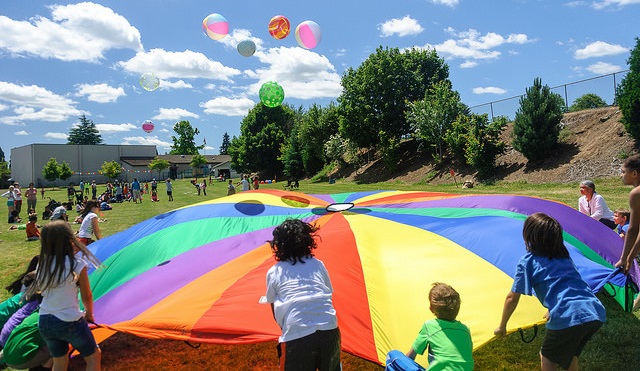
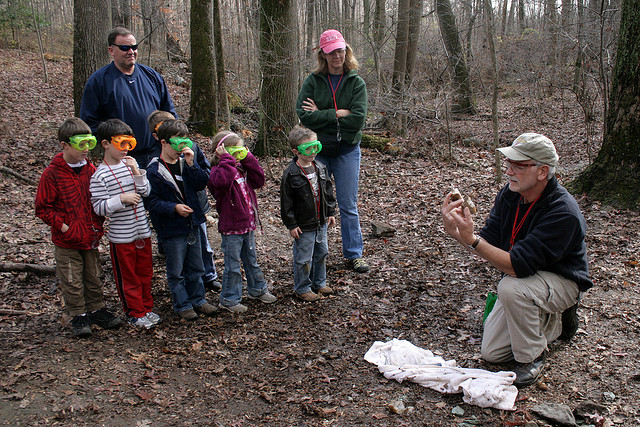
[Feature photo above by Texas A&M University (CC BY 2.0) via Flickr.]

Note to Readers: Please help me improve this list! Add your suggestions or additions in the comment section below…

What does it mean to think like a mathematician? From the very beginning of my education, I can do these things to some degree. And I am always learning to do them better.

(1) I can make sense of problems, and I never give up.

  • I always think about what a math problem means. I consider how the numbers are related, and I imagine what the answer might look like.
  • I remember similar problems I’ve done before. Or I make up similar problems with smaller numbers or simpler shapes, to see how they work.
  • I often use a drawing or sketch to help me think about a problem. Sometimes I even build a physical model of the situation.
  • I like to compare my approach to the problem with other people and hear how they did it differently.

Continue reading The Math Student’s Manifesto

Ruth Beechick on Teaching

Here’s one more quote from homeschooling guru Ruth Beechick. It applies to classroom teachers, too!

Everyone thinks it goes smoothly in everyone else’s house, and theirs is the only place that has problems.

I’ll let you in on a secret about teaching: there is no place in the world where it rolls along smoothly without problems. Only in articles and books can that happen.

you can

— Ruth Beechick
You Can Teach Your Child Successfully (Grades 4-8)

Teaching the Standard Algorithms

[Feature photo above by Samuel Mann, Analytical Engine photo below by Roͬͬ͠͠͡͠͠͠͠͠͠͠͠sͬͬ͠͠͠͠͠͠͠͠͠aͬͬ͠͠͠͠͠͠͠ Menkman, both (CC BY 2.0) via Flickr.]

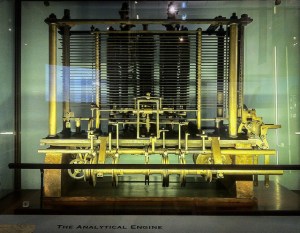
Babbage's Analytical Engine

An algorithm is a set of steps to follow that produce a certain result. Follow the rules carefully, and you will automatically get the correct answer. No thinking required — even a machine can do it.

This photo shows one section of the first true computer, Charles Babbage’s Analytical Engine. Using a clever arrangement of gears, levers, and switches, the machine could crank out the answer to almost any arithmetic problem. Rather, it would have been able to do so, if Babbage had ever finished building the monster.

One of the biggest arguments surrounding the Common Core State Standards in math is when and how to teach the standard algorithms. But this argument is not new. It goes back at least to the late 19th century.

Here is a passage from a book that helped shape my teaching style, way back when I began homeschooling in the 1980s…

Ruth Beechick on Teaching Abstract Notation

“Understanding this item is the key to choosing your strategy for the early years of arithmetic teaching. The question is: Should you teach abstract notation as early as the child can learn it, or should you use the time, instead, to teach in greater depth in the mental image mode?

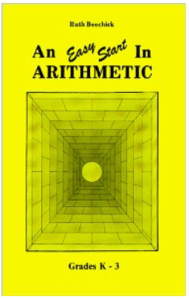
Beechick-EasyStartArithmetic

“Abstract notation includes writing out a column of numbers to add, and writing one number under another before subtracting it. The digits and signs used are symbols. The position of the numbers is an arbitrary decision of society. They are conventions that adult, abstract thinkers use as a kind of shorthand to speed up our thinking.

“When we teach these to children, we must realize that we simply are introducing them to our abstract tools. We are not suddenly turning children into abstract thinkers. And the danger of starting too early and pushing this kind of work is that we will spend an inordinate amount of time with it. We will be teaching the importance of making straight columns, writing numbers in certain places, and other trivial matters. By calling them trivial, we don’t mean that they are unnecessary. But they are small matters compared to real arithmetic thinking.

“If you stay with meaningful mental arithmetic longer, you will find that your child, if she is average, can do problems much more advanced than the level listed for her grade. You will find that she likes arithmetic more. And when she does get to abstractions, she will understand them better. She will not need two or three years of work in primary grades to learn how to write out something like a subtraction problem with two-digit numbers. She can learn that in a few moments of time, if you just wait.”

— Ruth Beechick
An Easy Start in Arithmetic (Grades K-3)
(emphasis mine)

Roadmap to Mathematics: 3rd Grade

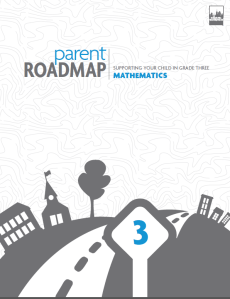
roadmap3

A frequently-asked question on homeschooling forums is, “Are my children working at grade level? What do they need to know?”

The Council of the Great City Schools has published a handy 6-page pdf summary of third grade math concepts, with suggestions for how parents can support their children’s learning:

Whether you are a radical unschooler or passionately devoted to your textbook — or, like me, somewhere in between — you can help your children toward these grade-level goals by encouraging them to view mathematics as mental play. Don’t think of the standards as a “to do” list, but as your guide to an adventure of exploration. The key to learning math is to see it the mathematician’s way, as a game of playing with ideas.

The following are excerpts from the roadmap document (along with a few extra tips) and links to related posts from the past eight years of playing with math on this blog…

Continue reading Roadmap to Mathematics: 3rd Grade

Roadmap to Mathematics: 2nd Grade

roadmap2

A frequently-asked question on homeschooling forums is, “Are my children working at grade level? What do they need to know?”

The Council of the Great City Schools has published a handy 6-page pdf summary of second grade math concepts, with suggestions for how parents can support their children’s learning:

Whether you are a radical unschooler or passionately devoted to your textbook — or, like me, somewhere in between — you can help your children toward these grade-level goals by encouraging them to view mathematics as mental play. Don’t think of the standards as a “to do” list, but as your guide to an adventure of exploration. The key to learning math is to see it the mathematician’s way, as a game of playing with ideas.

The following are excerpts from the roadmap document (along with a couple of extra tips) and links to related posts from the past eight years of playing with math on this blog…

Continue reading Roadmap to Mathematics: 2nd Grade

Roadmap to Mathematics: 1st Grade

[Feature photo (above) by woodleywonderworks. (CC BY 2.0 via Flickr)]

roadmap1

A frequently-asked question on homeschooling forums is, “Are my children working at grade level? What do they need to know?”

The Council of the Great City Schools has published a handy 6-page pdf summary of first grade math concepts, with suggestions for how parents can support their children’s learning:

Whether you are a radical unschooler or passionately devoted to your textbook — or, like me, somewhere in between — you can help your children toward these grade-level goals by encouraging them to view mathematics as mental play. Don’t think of the standards as a “to do” list, but as your guide to an adventure of exploration. The key to learning math is to see it the mathematician’s way, as a game of playing with ideas.

The following are excerpts from the roadmap document, along with links to related posts from the past eight years of playing with math on this blog…

Continue reading Roadmap to Mathematics: 1st Grade

Roadmap to Mathematics: Kindergarten

[Feature photo (above) by MIKI Yoshihito. (CC BY 2.0 via Flickr)]

RoadmapK

A frequently-asked question on homeschooling forums is, “Are my children working at grade level? What do they need to know?”

The Council of the Great City Schools has published a handy 6-page pdf summary of kindergarten math concepts, with suggestions for how parents can support their children’s learning:

Whether you are a radical unschooler or passionately devoted to your textbook — or, like me, somewhere in between — you can help your children toward these grade-level goals by encouraging them to view mathematics as mental play. Don’t think of the standards as a “to do” list, but as your guide to an adventure of exploration. The key to learning math is to see it the mathematician’s way, as a game of playing with ideas.

The following are excerpts from the roadmap document, along with links to related posts from the past eight years of playing with math on this blog…

Continue reading Roadmap to Mathematics: Kindergarten

Math Teachers at Play #79: Puzzles and Games

79

[Feature photo above by Jimmie, and “79” image (right) by Steve Bowbrick via flickr (CC BY 2.0).]

Do you enjoy math? I hope so! If not, browsing this post just may change your mind.

Welcome to the 79th edition of the Math Teachers At Play (MTaP) math education blog carnival — a smorgasbord of links to bloggers all around the internet who have great ideas for learning, teaching, and playing around with math from preschool to pre-college.

Let the mathematical fun begin!

By tradition, we start the carnival with a puzzle, game, or trivia tidbits. If you would like to jump straight to our featured blog posts, click here to see the Table of Contents.

Since I’ve been spending all my free time working on my upcoming Math You Can Play book series, I’m in the mood for games. So I found a few games featuring prime and nonprime numbers [which category is #79 — do you know?], and I’ll sprinkle some of my best-loved math game books throughout the carnival.

Continue reading Math Teachers at Play #79: Puzzles and Games

Fractions: 1/5 = 1/10 = 1/80 = 1?

[Feature photo is a screen shot from the video “the sausages sharing episode,” see below.]

Fractions: 1/5 = 1/10 = 1/80 = 1?

How in the world can 1/5 be the same as 1/10? Or 1/80 be the same as one whole thing? Such nonsense!

No, not nonsense. This is real-world common sense from a couple of boys faced with a problem just inside the edge of their ability — a problem that stretches them, but that they successfully solve, with a bit of gentle help on vocabulary.

Here’s the problem:

  • How can you divide eight sausages evenly among five people?

Think for a moment about how you (or your child) might solve this puzzle, and then watch the video below.

What Do You Notice?

Continue reading Fractions: 1/5 = 1/10 = 1/80 = 1?

Math Teachers at Play #76

76[Feature photo (above) by U.S. Army RDECOM. Photo (right) by Stephan Mosel. (CC BY 2.0)]

On your mark… Get set… Go play some math!

Welcome to the 76th edition of the Math Teachers At Play math education blog carnival — a smorgasbord of links to bloggers all around the internet who have great ideas for learning, teaching, and playing around with math from preschool to pre-college.

By tradition, we start the carnival with a puzzle in honor of our 76th edition. But if you would like to jump straight to our featured blog posts, click here to see the Table of Contents.

Continue reading Math Teachers at Play #76