Math Teachers at Play #92

MTAP-92

Welcome to the 92nd edition of the Math Teachers At Play math education blog carnival‌—‌a monthly smorgasbord of links to bloggers all around the internet who have great ideas for learning, teaching, and playing around with math from preschool to pre-college.

Let the mathematical fun begin!

By tradition, we start the carnival with a couple of puzzles in honor of our 92nd edition…

Puzzle #1

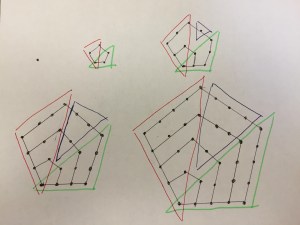
Pentagonal numbers92 is a pentagonal number, so I was delighted when Lisa Winer‘s (@Lisaqt314) carnival submission came in. Her class spent some time playing around with figurate number puzzles‌—‌including pentagonal numbers‌—‌and collaborated on a blog post about their discoveries.

Click here to find Winer’s own notes about the lesson, along with all the puzzle handouts.

What fun!

Puzzle #2

Or, try your hand at the classic Queen’s Puzzle:

  • What is the maximum number of queens that can be placed on an chessboard such that no two attack one another?

Spoiler: Don’t peek! But the answer is here‌—‌and the cool thing is that there are 92 different ways to do it.


Table Of Contents

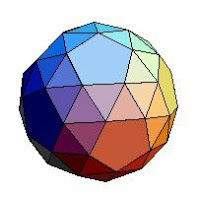
The snub dodecahedron is an Archimedean solid with 92 faces.

And now, on to the main attraction: the blog posts. Many articles were submitted by their authors; others were drawn from the immense backlog in my rss reader. If you’d like to skip directly to your area of interest, click one of these links.

Along the way, I’ve thrown in some videos in honor of the holiday season.

Please: If you enjoy the carnival, would you consider sending in an entry for next month’s edition? Or volunteering to host sometime in 2016?


Early Learning Activities

  • Kids can enjoy making up math problems, but sometimes they can get a bit carried away. Just ask A. O. Fradkin (@aofradkin) about her daughter’s Gruesome Math.
  • Nancy Smith (@nancyqsmith) notices her students struggling with the equal sign in Equality. Strong opinions, and even a few tears. It will be interesting to hear what tomorrow brings…

[Back to top.]
[Back to Table of Contents.]


Elementary Exploration And Middle School Mastery

  • Joshua Greene (@JoshuaGreene19) offers some great ways to tweak an already-wonderful multiplication game in Times square variations. “It was really interesting to see the different strategies that the students took to determining what would go on their boards.”
  • For my own contribution to the carnival, I’ve posted a couple of hands-on arithmetic explorations in A Penny for Your Math.

[Back to top.]
[Back to Table of Contents.]


Adventures in Basic Algebra & Geometry

  • Tina Cardone (@crstn85) experiments with Bar Models in Algebra to help her students think about linear equations. “I did not require students to draw a model, but I refused to discuss an incorrect equation with them until they had a model. Kids would tell me ‘I don’t know how to do fractions or percents’ but when I told them to draw a bar, and then draw 4/5, they could do that without assistance…”

[Back to top.]
[Back to Table of Contents.]


Advanced Mathematical Endeavors

[Back to top.]
[Back to Table of Contents.]


Puzzling Recreations

  • Pradeep Mutalik challenges readers to “infer the simple rule behind a number sequence that spikes up and down like the beating of a heart” in Be Still My Pulsating Sequence.

[Back to top.]
[Back to Table of Contents.]


Teaching Tips

  • How can we get a peek at how our children are thinking? Kristin Gray (@mathminds) starts with a typical set of 1st Grade Story Problems and tweaks them into a lively Notice/Wonder Lesson. “When I told them they would get to choose how many students were at each stop, they were so excited! I gave them a paper with the sentence at the top, let them choose a partner and sent them on their way…”
  • Tracy Zager (@tracyzager) talks about her own mathematical journey in The Steep Part of the Learning Curve: “The more math I learn, the better math teacher I am. I keep growing as a learner; I know more about where my kids are headed; and I understand more about what building is going on top of the foundation we construct in elementary school.”
  • And finally, you may be interested in my new blog post series exploring what it means to understand math. Check out the first post Understanding Math: A Cultural Problem. More to come soon…

[Back to top.]
[Back to Table of Contents.]


Credits

And that rounds up this edition of the Math Teachers at Play carnival. I hope you enjoyed the ride.

The December 2015 installment of our carnival will open sometime during the week of December 21-25 at Math Misery? blog. If you would like to contribute, please use this handy submission form. Posts must be relevant to students or teachers of preK-12 mathematics. Old posts are welcome, as long as they haven’t been published in past editions of this carnival.

Past posts and future hosts can be found on our blog carnival information page.

We need more volunteers. Classroom teachers, homeschoolers, unschoolers, or anyone who likes to play around with math (even if the only person you “teach” is yourself)‌—‌if you would like to take a turn hosting the Math Teachers at Play blog carnival, please speak up!

Infinite Cake: Don Cohen’s Infinite Series for Kids

Math Concepts: division as equal sharing, naming fractions, adding fractions, infinitesimals, iteration, limits
Prerequisite: able to identify fractions as part of a whole

This is how I tell the story:

  • We have a cake to share, just the two of us. It’s not TOO big a cake, ‘cuz we don’t want to get sick. An 8 × 8 or 16 × 16 square on the graph paper should be just right. Can you cut the cake so we each get a fair share? Color in your part.

Bobby Flay German Chocolate Cake

  • How big is your piece compared to the whole, original cake?
  • But you know, I’m on a diet, and I just don’t think I can eat my whole piece. Half the cake is too much for me. Is it okay if I share my piece with you? How can we divide it evenly, so we each get a fair share? How big is your new piece? Color it in.
  • How much of the whole, original cake do you have now? How can you tell?
  • I keep thinking of my diet, and I really don’t want all my piece of cake. It looks good, but it’s still just a bit too big for me. Will you take half of it? How big is that piece?
  • Now how much of the whole, original cake do you have? How could we figure it out?
    [Teaching tip: Don’t make kids do the calculation on paper. In the early stages, they can visualize and count up the fourths or maybe the eighths. As the pieces get smaller, the easiest way to find the sum is what Cohen does in the video below‌—‌identify how much of the cake is left out.]
  • Even for being on a diet, I still don’t feel very hungry…

Continue reading Infinite Cake: Don Cohen’s Infinite Series for Kids

Math Teachers at Play #85

[Feature photo by Tomruen via Wikimedia Commons.]

Do you enjoy math? I hope so! If not, browsing the articles linked in this post just may change your mind.

Welcome to the 85th edition of the Math Teachers At Play math education blog carnival‌—‌a smorgasbord of links to bloggers all around the internet who have great ideas for learning, teaching, and playing around with math from preschool to pre-college.

By tradition, we start the carnival with a short puzzle or activity. But if you would like to jump straight to our featured blog posts, click here to see the Table of Contents.

Let the mathematical fun begin!

Continue reading Math Teachers at Play #85

Ruth Beechick on Teaching

Here’s one more quote from homeschooling guru Ruth Beechick. It applies to classroom teachers, too!

Everyone thinks it goes smoothly in everyone else’s house, and theirs is the only place that has problems.

I’ll let you in on a secret about teaching: there is no place in the world where it rolls along smoothly without problems. Only in articles and books can that happen.

you can

— Ruth Beechick
You Can Teach Your Child Successfully (Grades 4-8)

Teaching the Standard Algorithms

[Feature photo above by Samuel Mann, Analytical Engine photo below by Roͬͬ͠͠͡͠͠͠͠͠͠͠͠sͬͬ͠͠͠͠͠͠͠͠͠aͬͬ͠͠͠͠͠͠͠ Menkman, both (CC BY 2.0) via Flickr.]

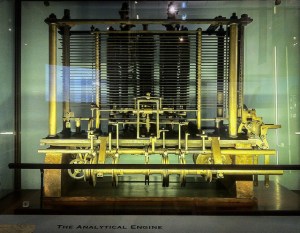
Babbage's Analytical Engine

An algorithm is a set of steps to follow that produce a certain result. Follow the rules carefully, and you will automatically get the correct answer. No thinking required — even a machine can do it.

This photo shows one section of the first true computer, Charles Babbage’s Analytical Engine. Using a clever arrangement of gears, levers, and switches, the machine could crank out the answer to almost any arithmetic problem. Rather, it would have been able to do so, if Babbage had ever finished building the monster.

One of the biggest arguments surrounding the Common Core State Standards in math is when and how to teach the standard algorithms. But this argument is not new. It goes back at least to the late 19th century.

Here is a passage from a book that helped shape my teaching style, way back when I began homeschooling in the 1980s…

Ruth Beechick on Teaching Abstract Notation

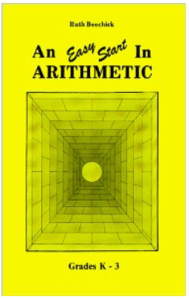
“Understanding this item is the key to choosing your strategy for the early years of arithmetic teaching. The question is: Should you teach abstract notation as early as the child can learn it, or should you use the time, instead, to teach in greater depth in the mental image mode?

Beechick-EasyStartArithmetic

“Abstract notation includes writing out a column of numbers to add, and writing one number under another before subtracting it. The digits and signs used are symbols. The position of the numbers is an arbitrary decision of society. They are conventions that adult, abstract thinkers use as a kind of shorthand to speed up our thinking.

“When we teach these to children, we must realize that we simply are introducing them to our abstract tools. We are not suddenly turning children into abstract thinkers. And the danger of starting too early and pushing this kind of work is that we will spend an inordinate amount of time with it. We will be teaching the importance of making straight columns, writing numbers in certain places, and other trivial matters. By calling them trivial, we don’t mean that they are unnecessary. But they are small matters compared to real arithmetic thinking.

“If you stay with meaningful mental arithmetic longer, you will find that your child, if she is average, can do problems much more advanced than the level listed for her grade. You will find that she likes arithmetic more. And when she does get to abstractions, she will understand them better. She will not need two or three years of work in primary grades to learn how to write out something like a subtraction problem with two-digit numbers. She can learn that in a few moments of time, if you just wait.”

— Ruth Beechick
An Easy Start in Arithmetic (Grades K-3)
(emphasis mine)

Roadmap to Mathematics: 3rd Grade

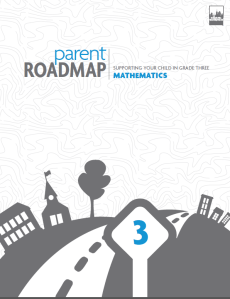
roadmap3

A frequently-asked question on homeschooling forums is, “Are my children working at grade level? What do they need to know?”

The Council of the Great City Schools has published a handy 6-page pdf summary of third grade math concepts, with suggestions for how parents can support their children’s learning:

Whether you are a radical unschooler or passionately devoted to your textbook — or, like me, somewhere in between — you can help your children toward these grade-level goals by encouraging them to view mathematics as mental play. Don’t think of the standards as a “to do” list, but as your guide to an adventure of exploration. The key to learning math is to see it the mathematician’s way, as a game of playing with ideas.

The following are excerpts from the roadmap document (along with a few extra tips) and links to related posts from the past eight years of playing with math on this blog…

Continue reading Roadmap to Mathematics: 3rd Grade

Roadmap to Mathematics: 2nd Grade

roadmap2

A frequently-asked question on homeschooling forums is, “Are my children working at grade level? What do they need to know?”

The Council of the Great City Schools has published a handy 6-page pdf summary of second grade math concepts, with suggestions for how parents can support their children’s learning:

Whether you are a radical unschooler or passionately devoted to your textbook — or, like me, somewhere in between — you can help your children toward these grade-level goals by encouraging them to view mathematics as mental play. Don’t think of the standards as a “to do” list, but as your guide to an adventure of exploration. The key to learning math is to see it the mathematician’s way, as a game of playing with ideas.

The following are excerpts from the roadmap document (along with a couple of extra tips) and links to related posts from the past eight years of playing with math on this blog…

Continue reading Roadmap to Mathematics: 2nd Grade

Roadmap to Mathematics: 1st Grade

[Feature photo (above) by woodleywonderworks. (CC BY 2.0 via Flickr)]

roadmap1

A frequently-asked question on homeschooling forums is, “Are my children working at grade level? What do they need to know?”

The Council of the Great City Schools has published a handy 6-page pdf summary of first grade math concepts, with suggestions for how parents can support their children’s learning:

Whether you are a radical unschooler or passionately devoted to your textbook — or, like me, somewhere in between — you can help your children toward these grade-level goals by encouraging them to view mathematics as mental play. Don’t think of the standards as a “to do” list, but as your guide to an adventure of exploration. The key to learning math is to see it the mathematician’s way, as a game of playing with ideas.

The following are excerpts from the roadmap document, along with links to related posts from the past eight years of playing with math on this blog…

Continue reading Roadmap to Mathematics: 1st Grade

Roadmap to Mathematics: Kindergarten

[Feature photo (above) by MIKI Yoshihito. (CC BY 2.0 via Flickr)]

RoadmapK

A frequently-asked question on homeschooling forums is, “Are my children working at grade level? What do they need to know?”

The Council of the Great City Schools has published a handy 6-page pdf summary of kindergarten math concepts, with suggestions for how parents can support their children’s learning:

Whether you are a radical unschooler or passionately devoted to your textbook — or, like me, somewhere in between — you can help your children toward these grade-level goals by encouraging them to view mathematics as mental play. Don’t think of the standards as a “to do” list, but as your guide to an adventure of exploration. The key to learning math is to see it the mathematician’s way, as a game of playing with ideas.

The following are excerpts from the roadmap document, along with links to related posts from the past eight years of playing with math on this blog…

Continue reading Roadmap to Mathematics: Kindergarten

Math Teachers at Play #79: Puzzles and Games

79

[Feature photo above by Jimmie, and “79” image (right) by Steve Bowbrick via flickr (CC BY 2.0).]

Do you enjoy math? I hope so! If not, browsing this post just may change your mind.

Welcome to the 79th edition of the Math Teachers At Play (MTaP) math education blog carnival — a smorgasbord of links to bloggers all around the internet who have great ideas for learning, teaching, and playing around with math from preschool to pre-college.

Let the mathematical fun begin!

By tradition, we start the carnival with a puzzle, game, or trivia tidbits. If you would like to jump straight to our featured blog posts, click here to see the Table of Contents.

Since I’ve been spending all my free time working on my upcoming Math You Can Play book series, I’m in the mood for games. So I found a few games featuring prime and nonprime numbers [which category is #79 — do you know?], and I’ll sprinkle some of my best-loved math game books throughout the carnival.

Continue reading Math Teachers at Play #79: Puzzles and Games