How to Conquer the Times Table, Part 3

Photo of Javier times 4, by Javier Ignacio Acuña Ditzel, via flickr.

If you remember, we are in the middle of an experiment in mental math. We are using the world’s oldest interactive game — conversation — to explore multiplication patterns while memorizing as little as possible. Talk through these patterns with your student. Work many, many, many oral math problems together. Discuss the different ways you can find each answer, and notice how the number patterns connect to each other.

So far, we have mastered the times-1 and times-10 families and the Commutative Property (that you can multiply numbers in any order).


Continue reading How to Conquer the Times Table, Part 3

Sign Up for the MathCounts Club Program

The MathCounts Club Program provides enrichment activities and puzzles for 6th-8th grade math clubs within schools — and homeschool groups may join, too! Participants receive a free Club in a Box Resource Kit, which includes the Club Resource Guide, two game boards to accompany one of the meeting plans, 12 MathCounts pencils, and a MathCounts tote bag for the coach. (Apparently they had good intentions, but they didn’t follow through. My box had no tote.)

A school (or homeschool group) may choose to participate in the Club Program, the competition or both programs. Since these programs can complement each other, any school that registers for the MathCounts competition automatically gets the Club in a Box Resource Kit, too.

For more information, check out these links:

How to Conquer the Times Table, Part 2

Photo of Eeva times 6, by Eric Horst, via flickr.

The question is common on parenting forums:

My daughter is in 4th grade. She has been studying multiplication in school for nearly a year, but she still stumbles over the facts and counts on her fingers. How can I help her?

Many people resort to flashcards and worksheets in such situations, and computer games that flash the math facts are quite popular with parents. I recommend a different approach: Challenge your student to a joint experiment in mental math. Over the next two months, without flashcards or memory drill, how many math facts can the two of you learn together?

We will use the world’s oldest interactive game — conversation — to explore multiplication patterns while memorizing as little as possible.

Continue reading How to Conquer the Times Table, Part 2

Square One TV: The Mathematics of Love

The Engineer was away on a business trip, and Kitten and I were in the mood to veg out on YouTube, so I hunted for some golden oldies. We used to watch Square One TV faithfully, back when my eldest was in first grade. I can’t believe they haven’t released this show on DVD!

We found recordings of my two favorite songs (“Nine, Nine, Nine” and “8% of My Love”), but the picture quality was horrible. This video was the runner-up:

How to Conquer the Times Table, Part 1

Photo of Evil Erin times 5 (and dog times 2), via flickr.

Perhaps the biggest challenge for any middle-elementary math student is to master the multiplication facts. It can seem like an unending task to memorize so many facts and be able to pull them out of mental storage in any order on demand. Too often, the rote aspect of such memory work overwhelms students, eclipsing their view of the principles behind the math. Yet rote memory is not enough: A student may be able to recite the times tables perfectly and still be reduced to counting on fingers in the middle of a long division problem.

We will use the world’s oldest interactive game — conversation — to learn the multiplication facts one bite at a time. But first, let’s take some time to think about what multiplication really means.

Continue reading How to Conquer the Times Table, Part 1

More Than One Way to Solve It

More-Than-One-Way

Photo by Eirik Newth via flickr.

In a lazy, I-don’t-want-to-do-school mood, Princess Kitten was ready to stop after three math problems. We had gotten two of them correct, but the last one was counting the ways to paint a cube in black and white, and we forgot to count the solid-color options.

For my perfectionist daughter, one mistake was excuse enough to quit. She leaned her head against me as we sat together on the couch and said, “We’re done. Done, done, done.” If she could, she would have started purring — one of the most manipulative noises known to humankind. I’m a soft touch. Who can work on math when there’s a kitten to cuddle?

by tanjila ahmed via flickr

Still, I managed to squeeze in one more puzzle. I picked up my whiteboard marker and started writing:

DONE
DOEN
DNOE
DENO
DNEO
ONED
ODNE

Continue reading More Than One Way to Solve It

Math Teachers at Play #41 via I Hope This Old Train Breaks Down…

The new Math Teachers at Play blog carnival has plenty of fun for math fans of all ages:

Willkommen! Welcome to the Math Teachers at Play blog carnival! Whether you are a teacher, homeschooler, parent, or a math enthusiast interested in general discussions about mathematics, there is a little bit of something for everyone here. Some of these links came as direct submissions by bloggers, and the others came from my Google Reader.

To start, here are some fun facts about the number 41:

  • Starting with 41, if you add 2, then 4, then 6, then 8, etc… you would get a string of 40 prime numbers in a row!
  • 41 is also a Centered Square Number, which means that it is the sum of two consecutive squares — 4^2 and 5^2, in this case. Can you figure out how this picture relates to the Center Square Numbers, and use the picture to explain why all Center Square Numbers are 1 (mod 4)?

Go read the blog carnival at I Hope This Old Train Breaks Down…

Math History Ideas, and Congrats to Giveaway Winners

Congratulations to Fibonacci giveaway winners Ken, Judy, Katie, Penney, Rachel, and Charlotte! 🙂 For everyone else, the comments on the Fibonacci post are full of great ideas for combining math and history in your teaching. Readers recommended several books — some of which are among my family’s favorites, and others I’d never heard of (now waiting in my library loan queue). Thank you to everyone who participated in the contests!

The (Mathematical) Trouble with Pizza

Photo by George Parrilla via flickr.

Kitten complained that some math programs keep repeating the same kind of problems over and over, with bigger numbers: “They don’t get any harder, they just get longer. It’s boring!”

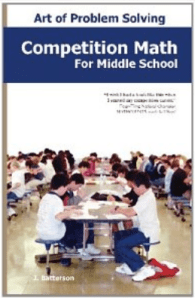
So we pulled out the Counting lessons in Competition Math for Middle School. [Highly recommended book!] Kitten doesn’t like to compete, but she enjoys learning new ideas, and Batterson’s book gives her plenty of those, well organized and clearly explained.

Today’s topic was the Fundamental Counting Principle. It was review, easy-peasy. The problems were too simple, until…

Pizzas at Mario’s come in three sizes, and you have your choice of 10 toppings to add to the pizza. You may order a pizza with any number of toppings (up to 10), including zero. How many choices of pizza are there at Mario’s?

[The book said 9 toppings, but I was skimming/paraphrasing aloud and misread.]

  • Can you figure out the answer?

Continue reading The (Mathematical) Trouble with Pizza