Sue VanHattum and I were chatting about her young adult math books.
[Sue would love to get your help with beta-reading her books. Scroll down to the bottom of this post for details.]
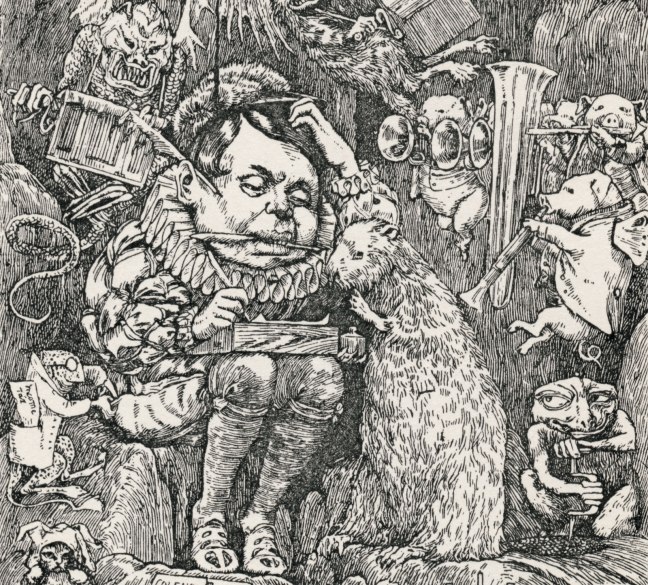
In the first book of the series, Althea and the Mystery of the Imaginary Numbers, Althea learns that Tartaglia came up with a formula to solve cubic equations and wrote about it in a poem.
Sue had discovered an English translation of that poem and shared it with me. (You can read it on JoAnne Growney’s blog.) Then we wondered whether we could come up with a simpler poem, something an algebra student might be able to follow.
Perhaps you and your kids would enjoy making up poems, too. An algebra proof-poem might be too difficult for now, but check out my blog for math poetry ideas.
Earlier, I wrote that “the big ideas of number relationships are found in algebra, not in arithmetic. If we want to bring our children into direct contact with these ideas, we need to teach with algebra in mind from the very beginning.”
Whether we teach the traditional way, beginning with counting and whole number arithmetic or take the road less traveled and explore algebra first — either way, we need to look at number relationships with an algebraic mindset.
So you might wonder, what are these big ideas of number relationships? How can we recognize them?
Math War is the most worksheety of all the math games I play with kids. But you can add a level of choice by playing the Trumps version.
Math War Trumps: Instead of playing for the highest sum, as in Julie’s original game, have each player draw 3 cards. The player whose turn it is first names “X” or “Y” as trump, then all players lay down a card. Highest trump value wins the skirmish.
Variation: Let the player naming trump also decide whether the highest or lowest value will win.
If you’d like to help fund the blog on an on-going basis, then please join me on Patreon for mathy inspiration, tips, and an ever-growing archive of printable activities.
If you liked this post, and want to show your one-time appreciation, the place to do that is PayPal: paypal.me/DeniseGaskinsMath. If you go that route, please include your email address in the notes section, so I can say thank you.
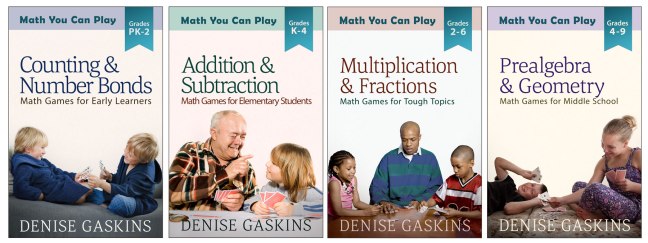
You can prepare your children for high school math by playing with positive and negative integers, number properties, mixed operations, algebraic functions, coordinate geometry, and more. Prealgebra & Geometry features 41 kid-tested games, offering a variety of challenges for students in 4–9th grades and beyond.
A true understanding of mathematics requires more than the ability to memorize procedures. This book helps your children learn to think mathematically, giving them a strong foundation for future learning.
And don’t worry if you’ve forgotten all the math you learned in school. I’ve included plenty of definitions and explanations throughout the book. It’s like having a painless math refresher course as you play.
The all-time most-visited page on this site is my post about Math War: The Game That Is Worth 1,000 Worksheets. It’s easy to adapt to almost any math topic, simple to learn, and quick to play. My homeschool co-op students love it.
But Math War isn’t just for elementary kids. Several teachers have shared special card decks to help middle and high school students practice math by playing games.
Take a look at the links below for games from prealgebra to high school trig. And try the Math War Trumps variation at the end of the post to boost your children’s strategic-thinking potential.
Do you enjoy math? I hope so! If not, browsing this post just may change your mind.
Welcome to the 106th edition of the Math Teachers At Play math education blog carnival — a smorgasbord of links to bloggers all around the internet who have great ideas for learning, teaching, and playing around with math from preschool to pre-college. Let the mathematical fun begin!
By tradition, we start the carnival with a puzzle in honor of our 106th edition. But if you would like to jump straight to our featured blog posts, click here to see the Table of Contents.
Try This Puzzle
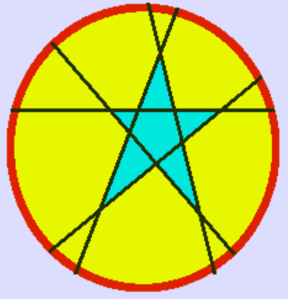
If you slice a pizza with a lightsaber, you’ll make straight cuts all the way across. Slice it once, and you get two pieces.
If you slice it five times, you’ll get a maximum of sixteen pieces. (And if you’re lucky you might get a star!)
How many times would you have to slice the pizza to get 106 pieces?
We’ve examined how our vision of mathematical success shapes our children’s learning. Do we think math is primarily a tool for solving problems? Or do we see math as a web of interrelated concepts?
Instrumental understanding views math as a tool. Relational understanding views math as an interconnected system of ideas. Our worldview influences the way we present math topics to our kids. And our children’s worldview determines what they remember.
In the past two posts, we looked at different ways to understand and teach rectangular area and fraction multiplication. But how about algebra? Many children (and adults) believe “math with letters” is a jumble of abstract nonsense, with too many formulas and rules that have to be memorized if you want to pass a test.
Which of the following sounds the most like your experience of school math? And which type of math are your children learning?
Instrumental Understanding: FOIL
Every mathematical procedure we learn is an instrument or tool for solving a certain kind of problem. To understand math means to know which tool we are supposed to use for each type of problem and how to use that tool — how to categorize the problem, remember the formula, plug in the numbers, and do the calculation.
When you need to multiply algebra expressions, remember to FOIL: multiply the First terms in each parenthesis, and then the Outer, Inner, and Last pairs, and finally add all those answers together.
The FOIL method for multiplying two binomials.
Relational Understanding: The Area Model
Each mathematical concept is part of a web of interrelated ideas. To understand mathematics means to see at least some of this web and to use the connections we see to make sense of new ideas.
The concept of rectangular area has helped us understand fractions. Let’s extend it even farther. In the connected system of mathematics, almost any type of multiplication can be imagined as a rectangular area. We don’t even have to know the size of our rectangle. It could be anything, such as subdividing a plot of land or designing a section of crisscrossed colors on plaid fabric.
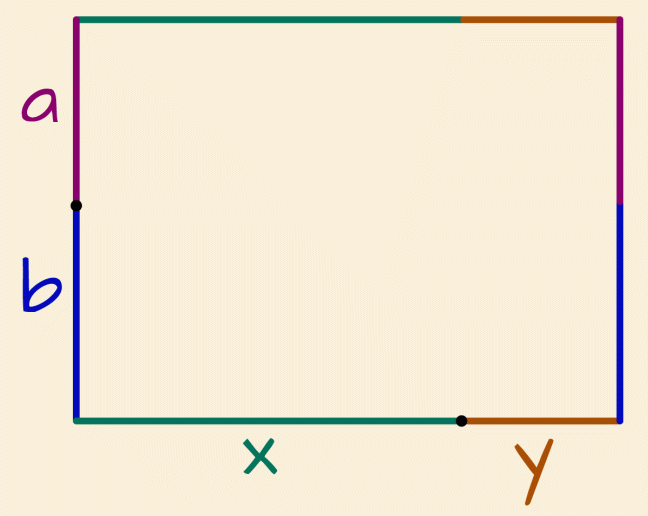
We can imagine a rectangle with each side made up of two unknown lengths. One side has some length a attached to another length b. The other side is x units long, with an extra amount y stuck to its end.
We don’t know which side is the “length” and which is the “width” because we don’t know which numbers the letters represent. But multiplication works in any order, so it doesn’t matter which side is longer. Using the rectangle model of multiplication, we can see that this whole shape represents the area .
An algebraic rectangle: each side is composed of two unknown lengths joined together.
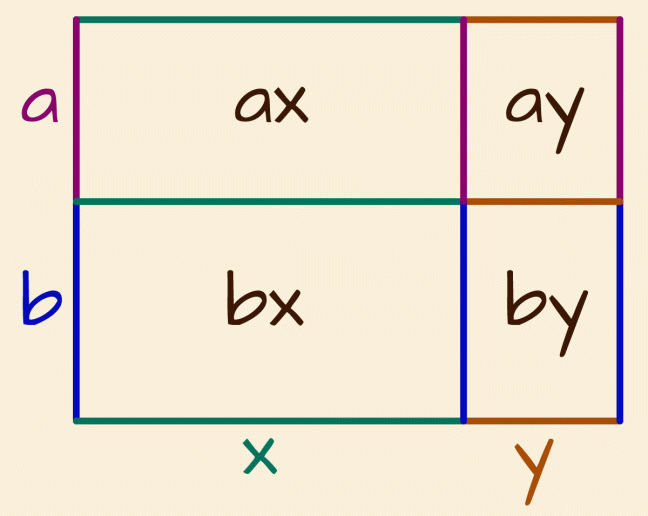
But since the sides are measured in pieces, we can also imagine cutting up the big rectangle. The large, original rectangle covers the same amount of area as the four smaller rectangular pieces added together, and thus we can show that .
Four algebraic rectangles: the whole thing is equal to the sum of its parts.
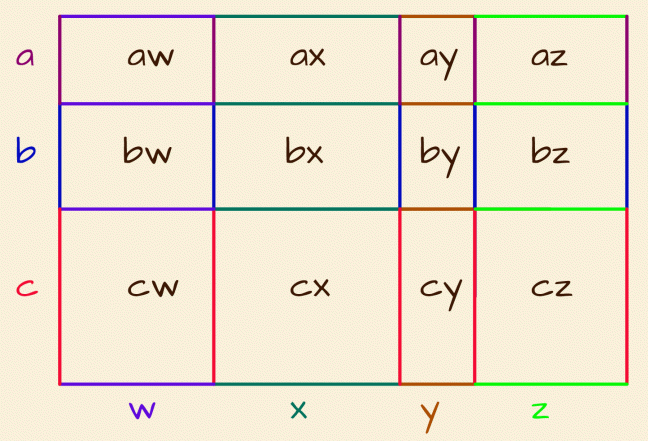
With the FOIL formula mentioned earlier, our students may get a correct answer quickly, but it’s a dead end. FOIL doesn’t connect to any other math concepts, not even other forms of algebraic multiplication. But the rectangular area model will help our kids multiply more complicated algebraic expressions such as .
The rectangle model of multiplication helps students keep track of all the pieces in a complex algebraic calculation.
Not only that, but the rectangle model gives students a tool for making sense of later topics such as polynomial division. And it is fundamental to understanding integral calculus.
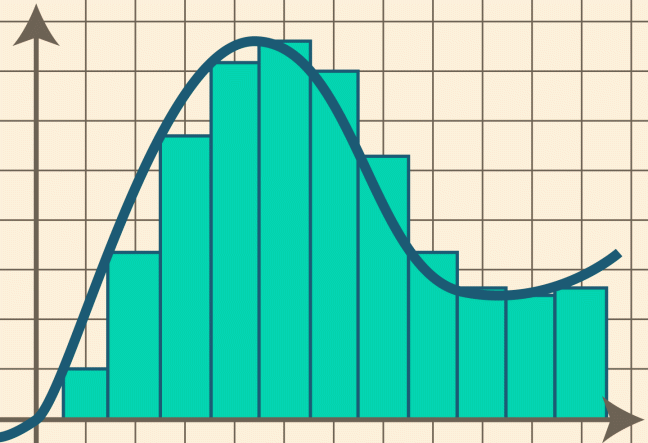
In calculus, students use the rectangle model of multiplication to find irregular areas. The narrower the rectangles, the more accurate the calculation, so we imagine shrinking the widths until they are infinitely thin.
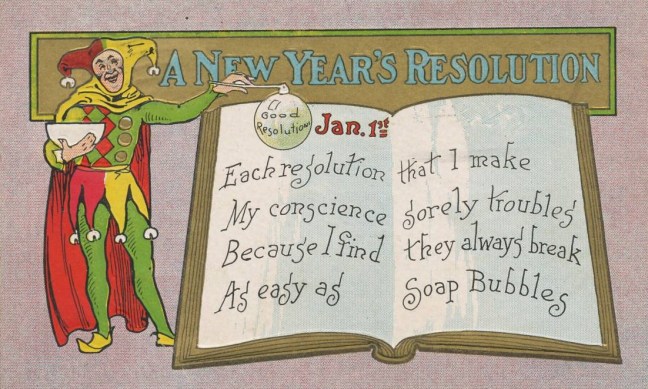
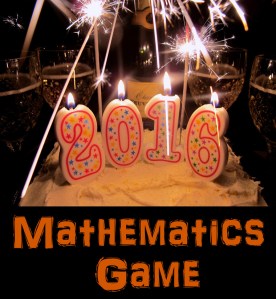
Have you made a New Year’s resolution to spend more time with your family this year, and to get more exercise? Problem-solvers of all ages can pump up their (mental) muscles with the Annual Mathematics Year Game Extravaganza. Please join us!
For many years mathematicians, scientists, engineers and others interested in math have played “year games” via e-mail. We don’t always know whether it’s possible to write all the numbers from 1 to 100 using only the digits in the current year, but it’s fun to see how many you can find.
Use the digits in the year 2016 to write mathematical expressions for the counting numbers 1 through 100. The goal is adjustable: Young children can start with looking for 1-10, middle grades with 1-25.
You must use all four digits. You may not use any other numbers.
Solutions that keep the year digits in 2-0-1-6 order are preferred, but not required.
You may use a decimal point to create numbers such as .2, .02, etc., but you cannot write 0.02 because we only have one zero in this year’s number.
You may create multi-digit numbers such as 10 or 201 or .01, but we prefer solutions that avoid them.
My Special Variations on the Rules
You MAY use the overhead-bar (vinculum), dots, or brackets to mark a repeating decimal. But students and teachers beware: you can’t submit answers with repeating decimals to Math Forum.
You MAY use a double factorial, n!! = the product of all integers from 1 to n that have the same parity (odd or even) as n. I’m including these because Math Forum allows them, but I personally try to avoid the beasts. I feel much more creative when I can wrangle a solution without invoking them.



 Do you enjoy math? I hope so! If not, browsing this post just may change your mind.
 If you slice a pizza with a lightsaber, you’ll make straight cuts all the way across. Slice it once, and you get two pieces.
 We’ve examined how our vision of mathematical success shapes our children’s learning. Do we think math is primarily a tool for solving problems? Or do we see math as a web of interrelated concepts?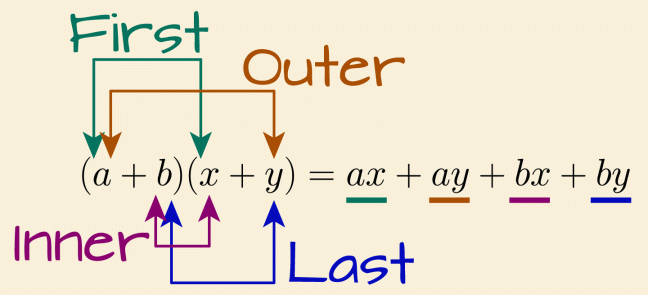
 .
.
 .
.
 .
.


 Denise Gaskins' Let's Play Math
