Journaling Pages

This afternoon, I’ve been working on the printable pdf math activity booklets I’ll be sending out as stretch goals to the backers of my Math You Can Play Kickstarter campaign.

Some of the booklets include dot grid pages for student journaling.

I love dot grid pages for writing because I can start a line anywhere on the page, and the dots help me keep things in line. (They’re also great for doodling.)

As students wrestle their thoughts into shape and create explanations, they do the same sort of work that mathematicians do every day. It’s difficult for children (or anyone) to pin down a thought and put it into words. But it’s great practice for life.

Journaling is a great practice for adult learners, too — and don’t we all want to be lifelong learners?

So I thought I’d share the journaling pages with you all, in case you’d like to get your children writing about math. There are three styles, ranging from plain to ornate parchment. Enjoy!

Download the Journaling Pages

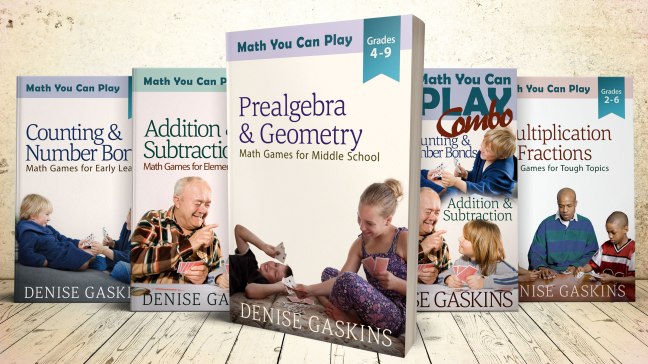
UPDATE: The Kickstarter deals have ended, but my playful math books are still available through your favorite online store or by special order at your local bookshop. (Except for the Prealgebra & Geometry Games book, scheduled for publication in early 2021. Sign up for my email list to get the latest news.)

How Mathematics Works

The full quote, as it appears in my new book:

Make a conjecture. A conjecture is a statement that you think might be true.

For example, you might make a conjecture that “All odd numbers are…” How would you finish that sentence?

Make another conjecture. And another. Does thinking about your conjectures make you wonder about math?

Can you think of any way to test your conjectures, to discover if they will always be true?

This is how mathematics works. Mathematicians notice something interesting about certain numbers, shapes, or ideas. They play around and explore how those relate to other ideas. After collecting a set of interesting things, they think about ways to organize them. They wonder about patterns and connections. They make conjectures and try to imagine ways to test them.

And mathematicians talk with one another and compare their ideas. In real life, math is a very social game.

—Denise Gaskins
Prealgebra & Geometry: Math Games for Middle School

Excerpted from my new book, Prealgebra & Geometry: Math Games for Middle School. Look for it at your favorite online bookstore.

CREDITS: “Three girls counting” photo by Charlein Gracia on Unsplash.

Math Conversation Starter

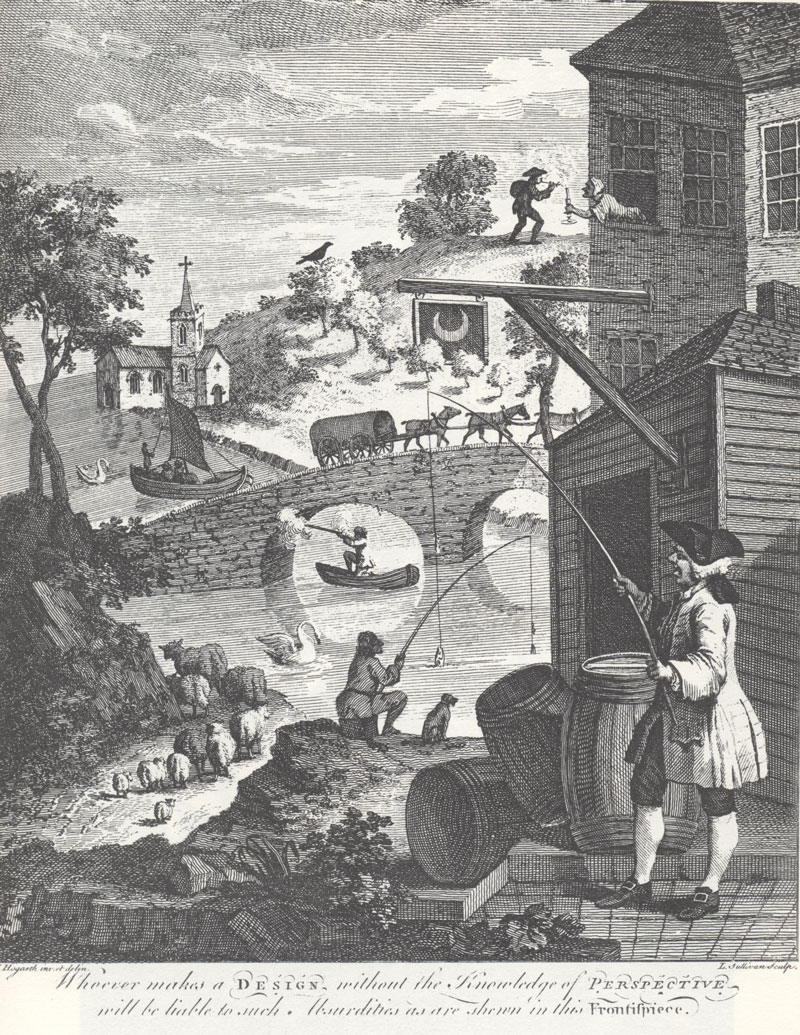
(Click for larger image.)

What do you see?

Does it make you wonder?

How is perspective art similar to the isometric drawing in yesterday’s post? How is it different?

You may also enjoy:

CREDITS: William Hogarth – “The importance of knowing perspective” (Absurd perspectives), Engraving on paper. From Wikimedia Commons.

How to Draw Minecraft Blocks

Running out of time on my Math You Can Play Kickstarter, so I better get to work on that Kickstarter Special Edition math-art book I promised to all the backers as a bonus reward.

Today I’m working on the Isometric Drawing and Impossible Figures section, because my co-op math classes had so much fun learning how to draw those.

Here’s a starter image on how to draw Minecraft blocks. At first I called them “isometric blocks” — but changing the name to “Minecraft” made the students really excited to learn. I’m not sure whether I like the pencil sketch, or if I should remake the illustrations on the computer…

Key steps:

  1. Make a Y.
  2. Turn it into an M.
  3. Slant down for the bottom.
  4. Slant up for the top.
Student drawings from my co-op classes.

The most common problem for beginners is that they try to make the base straight. They know a block can sit on a table, so the bottom has to be flat, right? But once students get a feel for how it goes, they can really take off and have fun.

UPDATE: The Kickstarter deals have ended, but my playful math books are still available through your favorite online store or by special order at your local bookshop. (Except for the Prealgebra & Geometry Games book, scheduled for publication in early 2021. Sign up for my email list to get the latest news.)

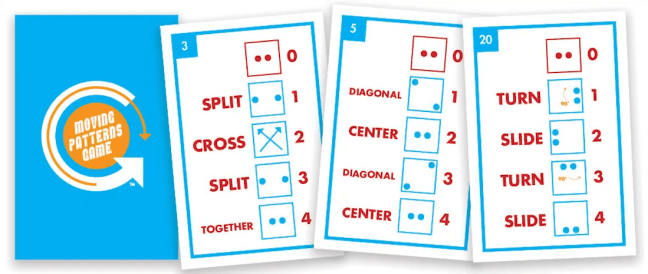
Moving Patterns Game on Kickstarter

We all know kids like to move. But did you know you can harness all of that innate energy into developing a conceptual understanding of mathematics?

The Moving Patterns Game is an active, self-directed game featuring patterns, footwork, friends, and math. Dancing makes life fun, and math makes the dancing more interesting!”

—Malke Rosenfeld

Continue reading Moving Patterns Game on Kickstarter

How to Homeschool Math

Far too many people find themselves suddenly, unexpectedly homeschooling their children. This prompts me to consider what advice I might offer after more than three decades of teaching kids at home.

Through my decades of homeschooling five kids, we lived by two rules:

Do math. Do reading.

As long as we hit those two topics each day, I knew the kids would be fine. Do some sort of mathematical game or activity. Read something from that big stack of books we collected at the library.

Conquer the basics of math and reading, then everything else will fall into place.

Continue reading How to Homeschool Math

Play Math with Your Kids for Free

One of the most common questions I get from parents who want to help their children enjoy math is, “Where do we start?”

My favorite answer: “Play games!”

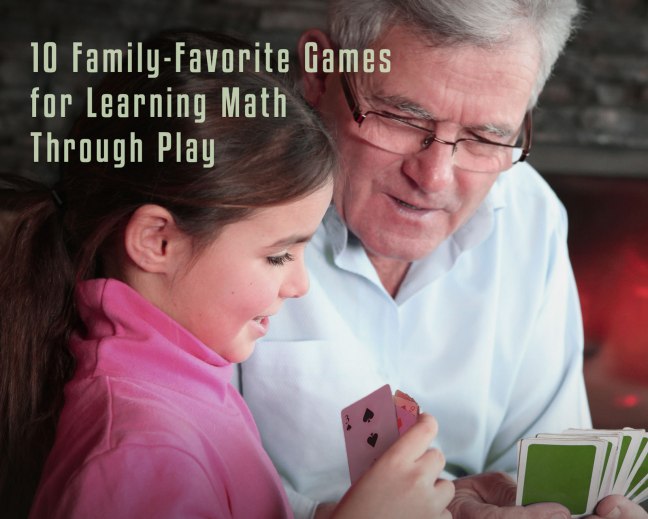
And as the world slowly recovers from the pandemic crisis, it’s even more important for families to play together. So my publisher agreed to make my ebook Let’s Play Math Sampler: 10 Family-Favorite Games for Learning Math Through Play free for the duration.

Continue reading Play Math with Your Kids for Free

Playing with Math: My Favorite Posts

The articles that attract a browsing reader aren’t the same as the ones that pull on my heart. Yesterday, I shared my most-visited blog posts of 2019. Today, I give you my most-loved posts of the year.

#12

A fun challenge, based on an old family-favorite game.

Math Game: Six Hundred

Players around the world have played poker-style dice games for ages. Reiner Knizia included this mathematical version in his book Dice Games Properly Explained

#11

Math art — what a delightful way to learn!

Updated Geometric Coloring Designs

I created these coloring pages for my homeschool co-op math kids, and then collected them into a downloadable 42-page PDF coloring book for your family to enjoy…

#10

I could watch this video every day.

Math That Is Beautiful

Do you have trouble believing that math can be beautiful?

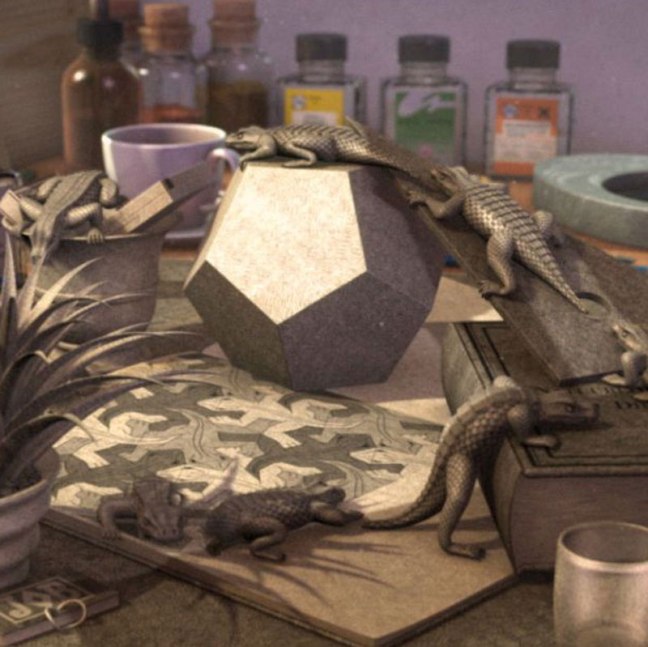
In “Inspirations,” artist Cristóbal Vila creates a wonderful, imaginary work studio for the amazing M.C. Escher…

#9

One of my favorite hobbies is collecting inspirational quotes as I read.

Find the Sweetness in Math

Good problems can help us fall in love with math and make a delicious meal of it, sinking our teeth into tough problems, tenderized by their intrigue…

#8

From the beginning of this blog, more than a decade ago, my desire has been to help homeschooling parents (and other teachers) change how they look at math.

Math Makes Sense — Let’s Teach It That Way

Annie Fetter is talking to classroom teachers, but her message is just as important for homeschoolers. Math is all about making sense. Let’s help our kids see it that way…

#7

An excerpt from the draft of my coming-someday-it-always-takes-longer-than-I-expect Prealgebra & Geometry Games book.

Math Activity: Polite Numbers

Did you know that numbers can be polite? In math, a polite number is any number we can write as the sum of two or more consecutive positive whole numbers…

#6

A sweet little game that was a big hit with my K–2nd grade homeschool co-op math class this year.

Playing with a Hundred Chart #35: The Number Grid Game

You’ll need a 6-sided die, a hundred chart (printables here), and a small token to mark each player’s square. A crumpled bit of colored construction paper works well as a token…

#5

This number-pattern activity was so much fun with my upper-elementary class.

A Puzzle for Palindromes

Here’s a math puzzle for palindrome week — or any time you want to play with math…

#4

For years, I’ve been meaning to create an email series about learning math through play. This year I finally did.

8 Weeks of Playful Math for Families

Yes, your kids CAN learn to love math. Keep your children’s math skills fresh with my 8-week email series of math games and activities…

#3

Not a single blog post but a whole new feature, which I hope to continue in the new year.

Morning Coffee

One of the best ways we can help our children learn mathematics (or anything else) is to always be learning ourselves…

#2

The Playful Math Blog Carnival is a labor of love for all our volunteer hosts. This year, August was my month to play.

Playful Math Education Carnival 130

The Playful Math Carnival is like a free online magazine devoted to learning, teaching, and playing around with math. It’s back-to-school time in the U.S., so this month’s edition focuses on establishing a creative math mindset from preschool to high school…

#1

But the work closest to my heart this year wasn’t math at all. My daughter finally concluded her fantasy novel series, the major project of her teen homeschooling years. When she gave me the manuscript to edit, I didn’t get any sleep that night. She had me hooked — I had to find out how it ended!

The Final Books from a Homeschooled Teen Author

Do you enjoy binge reading tales of epic fantasy? Love exploring magical worlds wracked by the struggle of good against evil? Then don’t miss Teresa Gaskins’s four-book serial adventure, The Riddled Stone

How About You?

Do you play math with kids? Please tell us one (or a few) of your favorite things. What touched your heart this year?

CREDITS: “Sparkling heart” photo (top) by Jamie Street on Unsplash.