Socks Are Like Pants, Cats Are Like Dogs

https://youtu.be/8cSaDlG_2f8&rel=0

Support This New Book from Natural Math

Socks Are Like Pants, Cats Are Like Dogs by Malke Rosenfeld and Gordon Hamilton is filled with a diverse collection of math games, puzzles, and activities exploring the mathematics of choosing, identifying and sorting. The activities are easy to start and require little preparation.

The publisher’s crowdfunding goal is $4,000. The book is almost ready to go to press, and I can hardly wait to see it!

Math Teachers at Play #85

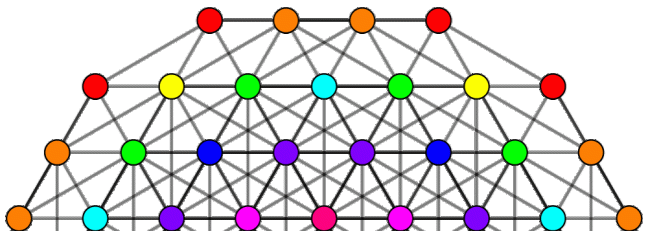
[Feature photo by Tomruen via Wikimedia Commons.]

Do you enjoy math? I hope so! If not, browsing the articles linked in this post just may change your mind.

Welcome to the 85th edition of the Math Teachers At Play math education blog carnival‌—‌a smorgasbord of links to bloggers all around the internet who have great ideas for learning, teaching, and playing around with math from preschool to pre-college.

By tradition, we start the carnival with a short puzzle or activity. But if you would like to jump straight to our featured blog posts, click here to see the Table of Contents.

Let the mathematical fun begin!

Continue reading Math Teachers at Play #85

Playing With Math — the Book

body_Book_cover_for_upload

Update: The crowdfunding campaign is now closed and the book is in the final stages. It should be headed to the printer soon. Check the Playing With Math homepage for publication and ordering information.


There are only a few days left to reserve your copy of Playing With Math: Stories from Math Circles, Homeschoolers, and Passionate Teachers. I don’t have time to finish the review I hoped to write, so instead I’ll share some of my favorite quotes from the book:

What do mathematicians do? We play with math. What are little kids doing when they’re thinking about numbers, shapes, and patterns? They’re playing with math. You may not believe it yet, but you can have fun playing with math, too.

— Sue VanHattum, editor

We had a discussion at the end of the club on how we are all confused now, but pleasantly so, and how important it is to rejoice in confusion and to be comfortable with it. Adults often strive very hard to get rid of any and all possible traces of confusion for kids, making things dreadfully boring.

— Maria Droujkova, after a math circle exploration of infinity

All it talkes to do mathematics is opportunity, a frustrating problem, and a bit of stubbornness.

— Ellen Kaplan, math circle leader

Our own school experiences can make it hard for us to teach without being tempted to “help them master” a concept that they may or may not be ready to master. What we never learned in school was the concept of playing around with math, allowing ideas to “percolate,” so to speak, before mastery occurs, and that process may take time.

— Julie Brennan, homeschooler

Continue reading Playing With Math — the Book
Playing With Math: Stories from Math Circles, Homeschoolers, and Passionate Teachers

body_Book_cover_for_upload

Update: The crowdfunding campaign is now closed and the book is in the final stages. It should be headed to the printer soon. Check the Playing With Math homepage for publication and ordering information.


There’s a problem: Most people don’t like math. Why is that? Perhaps it has something to do with the way math is taught in school. As a teacher to my own kids and mentor to homeschooling parents, I’ve been fighting math anxiety for decades.

This book is one part of the solution.

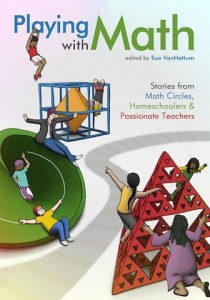
Playing With Math: Stories from Math Circles, Homeschoolers, and Passionate Teachers features more than thirty authors who tell delightful stories of learning to appreciate math and of sharing their enthusiasm with their communities, families, or students. After every chapter is a puzzle, game, or activity to get you and your kids playing with math, too.

You can read a couple of excerpts at PlayingWithMath.org:

Continue reading Playing With Math: Stories from Math Circles, Homeschoolers, and Passionate Teachers

Talking Math with Your Kids

Danielson-Talking Math

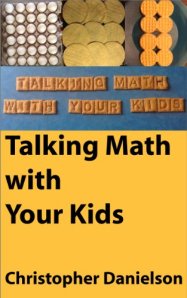
Christopher Danielson, one of my favorite math bloggers, has a new book out that is perfect for parents of preschool and elementary-age children:

It’s a short book with plenty of great stories, advice, and conversation-starters. While Danielson writes directly to parents, the book will also interest grandparents, aunts & uncles, teachers, and anyone else who wants to help children notice and think about math in daily life.

“You don’t need special skills to do this. If you can read with your kids, then you can talk math with them. You can support and encourage their developing mathematical minds.
 
“You don’t need to love math. You don’t need to have been particularly successful in school mathematics. You just need to notice when your children are being curious about math, and you need some ideas for turning that curiosity into a conversation.
 
“In nearly all circumstances, our conversations grow organically out of our everyday activity. We have not scheduled “talking math time” in our household. Instead, we talk about these things when it seems natural to do so, when the things we are doing (reading books, making lunch, riding in the car, etc) bump up against important mathematical ideas.
 
“The dialogues in this book are intended to open your eyes to these opportunities in your own family’s life.”

— Christopher Danielson
Talking Math with Your Kids

 
* * *

This blog is reader-supported.

If you’d like to help fund the blog on an on-going basis, then please join me on Patreon for mathy inspiration, tips, and an ever-growing archive of printable activities.

If you liked this post, and want to show your one-time appreciation, the place to do that is PayPal: paypal.me/DeniseGaskinsMath. If you go that route, please include your email address in the notes section, so I can say thank you.

Which I am going to say right now. Thank you!

“Talking Math with Your Kids” copyright © 2013 by Denise Gaskins.

Math Teachers at Play #62: A Carnival with Books

by Robert Webb

Do you enjoy math? I hope so! If not, browsing this post just may change your mind. Welcome to the Math Teachers At Play blog carnival — a smorgasbord of ideas for learning, teaching, and playing around with math from preschool to pre-college.

Let the mathematical fun begin!

POLYHEDRON PUZZLE

By tradition, we start the carnival with a puzzle in honor of our 62nd edition:

An Archimedean solid is a polyhedron made of two or more types of regular polygons meeting in identical vertices. A rhombicosidodecahedron (see image above) has 62 sides: triangles, squares, and pentagons.

  • How many of each shape does it take to make a rhombicosidodecahedron?
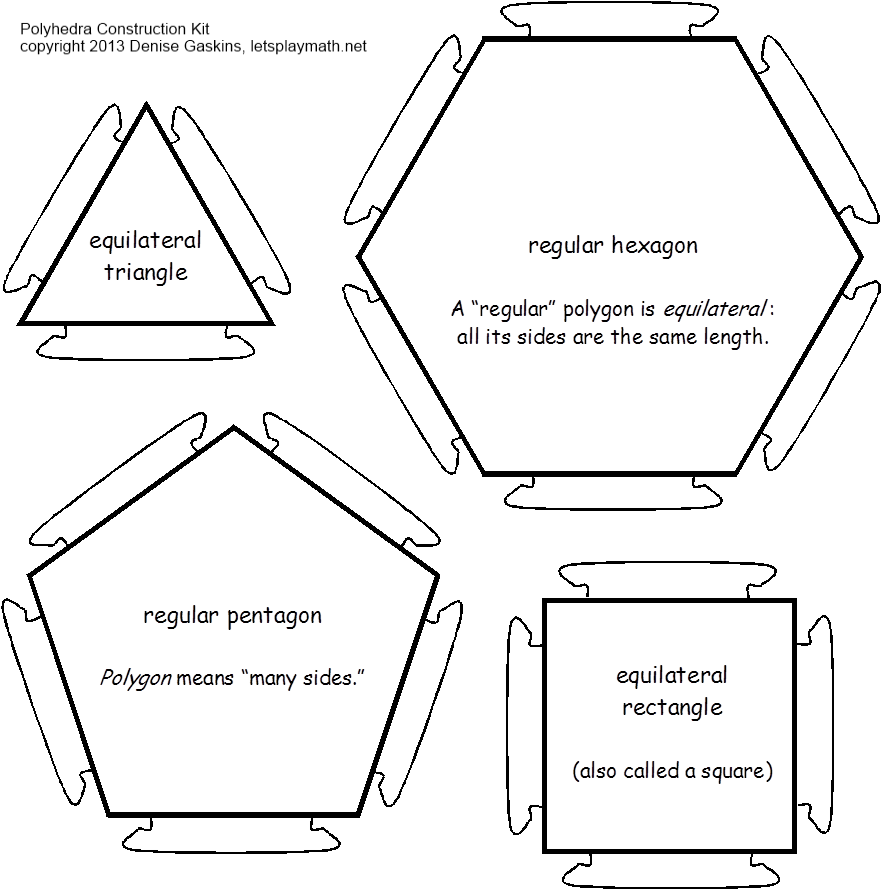
Click for full-size template.
Click for template.

My math club students had fun with a Polyhedra Construction Kit. Here’s how to make your own:

  1. Collect a bunch of empty cereal boxes. Cut the boxes open to make big sheets of cardboard.
  2. Print out the template page (→) and laminate. Cut out each polygon shape, being sure to include the tabs on the sides.
  3. Turn your cardboard brown-side-up and trace around the templates, making several copies of each polygon. I recommend 20 each of the pentagon and hexagon, 40 each of the triangle and square.
  4. Draw the dark outline of each polygon with a ballpoint pen, pressing hard to score the cardboard so the tabs will bend easily.
  5. Cut out the shapes, being careful around the tabs.
  6. Use small rubber bands to connect the tabs. Each rubber band will hold two tabs together, forming one edge of a polyhedron.

So, for instance, it takes six squares and twelve rubber bands to make a cube. How many different polyhedra (plural of polyhedron) will you make?

  • Can you build a rhombicosidodecahedron?

And now, on to the main attraction: the 62 blog posts. Many of the following articles were submitted by their authors; others were drawn from the immense backlog in my blog reader. If you’d like to skip directly to your area of interest, here’s a quick Table of Contents:

Continue reading Math Teachers at Play #62: A Carnival with Books

Moebius Noodles: New Must-Read Math Book

MoebiusNoodles2DCover

Homeschoolers, after-schoolers, unschoolers, or anyone else: if you’re a parent with kids at home, you need this book. If you work with children in any way (grandparent, aunt/uncle, teacher, child care, baby sitter, etc.) you need this book. Or if you hated math in school and never understood how anyone could enjoy it, you need this book!

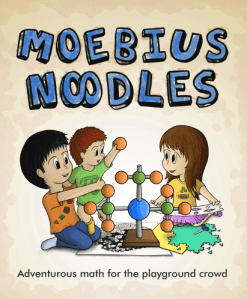
Moebius Noodles is a travel guide to the Math Universe for adventurous families (and it has lots of beautiful pictures, too!) featuring games and activities that draw out the rich, mathematical properties of everyday objects in ways accessible to parents and children:

  • A snowflake is an example of a fractal and an invitation to explore symmetry.
  • Cookies offer combinatorics and calculus games.
  • Paint chips come in beautiful gradients, and floor tiles form tessellations.

Continue reading Moebius Noodles: New Must-Read Math Book

Reviews for my Daughter’s Book

I cleaned up the clutter on my other blog, and so I decided to make a page about my daughter’s book, which meant taking the time to pull out excerpts from her reviews. And since I hadn’t posted anything about her on this blog for a couple of months, I thought I’d brag a bit to you all, too.

Reviews of Banished

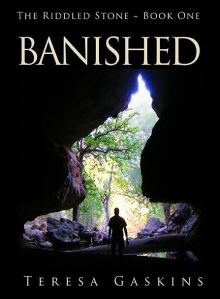
Banished is a captivating fantasy story with a well-thought-out plot that would be a credit to any writer. But it is especially remarkable coming from a thirteen-year-old student who has been homeschooled all her life.

Teresa Gaskins actually wrote this book as a project for the National Novel Writing Month program. One noteworthy thing about the book is that there is no sexuality or bad language (the euphemistic interjection “Blasted” is used once), so, other than those who object to the presence of any kind of magic in books, parents can let their kids read the novel with no reservations.

However, be forewarned. When you reach the final page and find the words, “Not the End…,” you will cry, “Oh! No!” The story does not resolve itself at the end and then pick up in a sequel. Rather, the plot is left hanging at the end and will continue in another book. I for one feel as if I simply can’t wait to read the next installment to find out what happens to Chris and his friends. It’s that good!

— Wayne at Home School Book Review

Continue reading Reviews for my Daughter’s Book

Who Killed Professor X?

What a Fun Book!

professorX

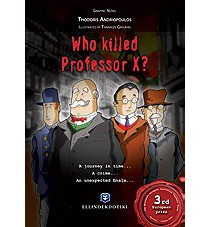
Who Killed Professor X? is a work of fiction based on actual incidents, and its heroes are real people who left their mark on the history of mathematics. The murder takes place in Paris in 1900, and the suspects are the greatest mathematicians of all time. Each suspect’s statement to the police leads to a mathematical problem, the solution of which requires some knowledge of secondary-school mathematics. But you don’t have to solve the puzzles in order to enjoy the book.

Fourteen pages of endnote biographies explain which parts of the mystery are true, which details are fictional, and which are both (true incidents slightly modified for the sake of the story).

My daughter Kitten, voracious as always, devoured it in one sitting — and even though she hasn’t studied high school geometry yet, she was able to work a couple of the problems.