What Are Mixed Numbers?

I just discovered a fascinating fact: In some places in the world, mixed numbers apparently don’t exist.

So that made me curious about my blog readers:

  • Did you learn about mixed numbers in school?
  • Do you ever use mixed numbers in daily life?
  • Are your children learning to work with them?

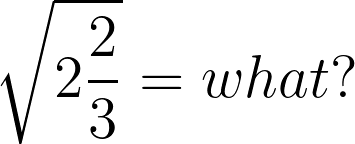
And if you DO know mixed numbers, can you simplify this mess:

[If you enjoy dry math humor, the answer is worth the work.]

Continue reading What Are Mixed Numbers?

Exciting New Homeschool Math Program

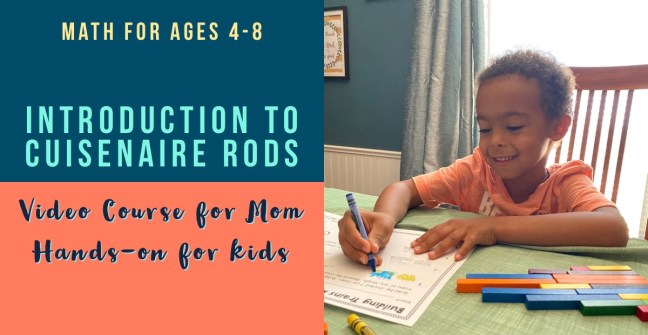
Homeschooling friends, check out this new homeschool math program that’s fun, rigorous, and engaging — a delightful, hands-on course that helps parents (and their children) understand math.

Introduction to Cuisenaire Rod Structures Course

I had the privilege of previewing this class as Sonya and Lacy put it together. I highly recommend it to anyone who struggles with math, or who wants to take a non-traditional approach.

By focusing on making sense of number relationships, and by teaching algebra before arithmetic, this course provides a stress-free path to rich mathematical mastery.

And for all they provide, including weekly live workshops and a slew of printable math journal pages that prompt deep thinking, the price is a steal!

Continue reading Exciting New Homeschool Math Program

More Dover Samples

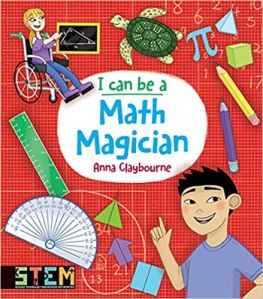
“Without mathematics you can’t do anything! Everything around you is mathematics. Everything around you is numbers.”

—Anna Claybourne, I Can Be a Math Magician


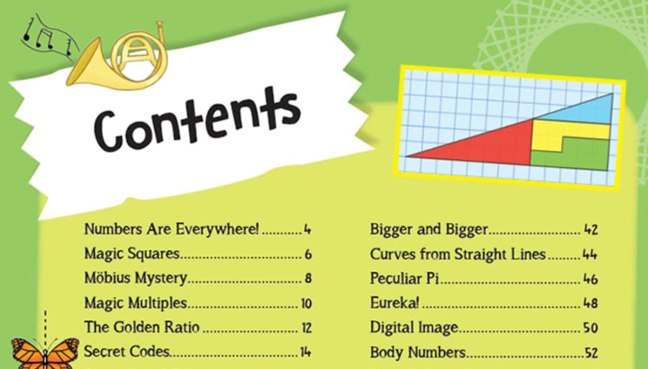
Dover Publications sent out a new email today with fun coloring and craft samples. And several puzzles from I Can Be a Math Magician: Fun STEM Activities for Kids by Anna Claybourne.

Enjoy!

If you’d like to receive future Dover Sampler emails, you can sign up here.

THE FINE PRINT: I am an Amazon affiliate. If you follow the book link above and buy something, I’ll earn a small commission (at no cost to you).

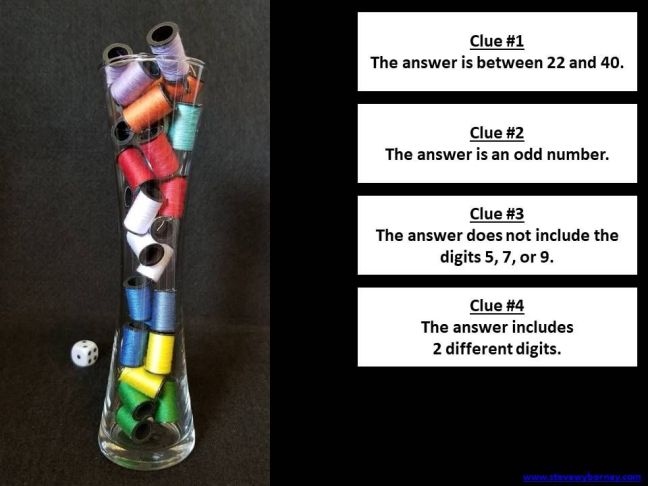
Free Number Sense Resources from Steve Wyborney

If you teach children in the primary grades, you’ll enjoy this new series from the wonderful Steve Wyborney. Every day for the rest of the school year, Steve will post a new estimation or number sense resource for grades K–8 (or any age!) at his blog:

“This is my way of providing support and encouragement – as well as bringing math joy to your classroom… I’m going to stick with you all year long.”

—Steve Wyborney

Click to visit Steve’s blog

Playing Math with Michael and Nash

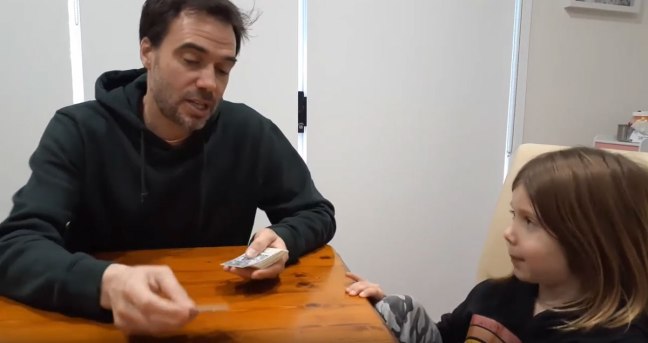
Michael and Nash have been creating and posting new math games with astonishing regularity throughout the pandemic. Their YouTube channel is a great resource for parents who want to play math with elementary-age children.

Today’s entry: Closest to Ten, a quick game for addition and subtraction fluency with a tiny bit of multiplication potential.

And here’s one of my favorites for older players: Factor Triangles, a card game for 2-digit multiplication.

Check out their channel, and have fun playing math with your kids!

Visit Michael and Nash on YouTube

Math for Star Wars Day

May the Fourth be with you!

Here is a math problem in honor of one of our family’s favorite movies…
Han Solo was doing much-needed maintenance on the Millennium Falcon. He spent 3/5 of his money upgrading the hyperspace motivator. He spent 3/4 of the remainder to install a new blaster cannon. If he spent 450 credits altogether, how much money did he have left?

Stop and think about how you would solve it before reading further.

Continue reading Math for Star Wars Day

Homeschooling Tip #1: Start with Play

For children, learning always begins with play. This is how they wrap their minds around new ideas and make them their own.

“There should be no element of slavery in learning. Enforced exercise does no harm to the body, but enforced learning will not stay in the mind. So avoid compulsion, and let your children’s lessons take the form of play.”

—Plato, The Republic

If we want our children to enjoy learning math, our first job is to establish an attitude of playfulness.

This is especially important for anyone working with a discouraged child or a child who is afraid of math. The best way to help a discouraged child is to put away the workbook. Try something different, fun, and challenging.

Continue reading Homeschooling Tip #1: Start with Play

How to Homeschool Math

Far too many people find themselves suddenly, unexpectedly homeschooling their children. This prompts me to consider what advice I might offer after more than three decades of teaching kids at home.

Through my decades of homeschooling five kids, we lived by two rules:

Do math. Do reading.

As long as we hit those two topics each day, I knew the kids would be fine. Do some sort of mathematical game or activity. Read something from that big stack of books we collected at the library.

Conquer the basics of math and reading, then everything else will fall into place.

Continue reading How to Homeschool Math

Play Math with Your Kids for Free

One of the most common questions I get from parents who want to help their children enjoy math is, “Where do we start?”

My favorite answer: “Play games!”

And as the world slowly recovers from the pandemic crisis, it’s even more important for families to play together. So my publisher agreed to make my ebook Let’s Play Math Sampler: 10 Family-Favorite Games for Learning Math Through Play free for the duration.

Continue reading Play Math with Your Kids for Free

Playing with a Hundred Chart #35: The Number Grid Game

This is a pretty simple game, but it makes a nice variation on the Race-to-100 game for young children who need to work on counting by tens from any number.

See the Number Grid Game (PDF)

How to Play

You’ll need a 6-sided die, a hundred chart (printables here), and a small token to mark each player’s square. A crumpled bit of colored construction paper works well as a token.

Take turns rolling the die. If you roll:

  • 1: Move either 1 or 10 squares, your choice.
  • 2: Move either 2 or 20 squares.
  • 3–6: Move that number of squares.

The first player to reach the final square by exact count wins the game.

Variation #1: For a shorter game, the first player to move off the board wins. You don’t have to hit the final square by exact count.

Variation #2: For a longer game, if you cannot move your full roll forward, you must move backward. Rolling 6 is a “wild card” — you can move any number from one to ten.

Variation #3: Count down. Start at the highest number on your chart and subtract each roll, moving toward zero. If you have a chart like the original shown above, a player whose move goes past zero into negatives will add the number on their next roll.

More Ways to Play on a Hundred Chart

A hundred chart can provide mathematical play from preschool to high school. The list on my blog began many years ago with seven activities, games, and logic puzzles.

Wow, has it grown!

Discover 30+ Things To Do with a Hundred Chart

 
* * *

This blog is reader-supported.

If you’d like to help fund the blog on an on-going basis, then please join me on Patreon for mathy inspiration, tips, and an ever-growing archive of printable activities.

If you liked this post, and want to show your one-time appreciation, the place to do that is PayPal: paypal.me/DeniseGaskinsMath. If you go that route, please include your email address in the notes section, so I can say thank you.

Which I am going to say right now. Thank you!

“Playing with a Hundred Chart #35: The Number Grid Game” copyright © 2019 by Denise Gaskins.