Probability Issue: Hints and Answers

Remember the Math Adventurer’s Rule: Figure it out for yourself! Whenever I give a problem in an Alexandria Jones story, I will try to post the answer soon afterward. But don’t peek! If I tell you the answer, you miss out on the fun of solving the puzzle. So if you haven’t worked these problems yet, go back to the original posts. If you’re stuck, read the hints. Then go back and try again. Figure them out for yourself — and then check the answers just to prove that you got them right.

This post offers hints and answers to puzzles from these blog posts:

Continue reading Probability Issue: Hints and Answers

Hobbit Math: Elementary Problem Solving 5th Grade

[Photo by OliBac. Visit OliBac’s photostream for more.]

The elementary grades 1-4 laid the foundations, the basics of arithmetic: addition, subtraction, multiplication, division, and fractions. In grade 5, students are expected to master most aspects of fraction math and begin working with the rest of the Math Monsters: decimals, ratios, and percents (all of which are specialized fractions).

Word problems grow ever more complex as well, and learning to explain (justify) multi-step solutions becomes a first step toward writing proofs.

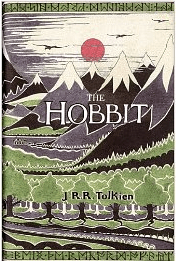
This installment of my elementary problem solving series is based on the Singapore Primary Mathematics, Level 5A. For your reading pleasure, I have translated the problems into the world of J.R.R. Tolkien’s classic, The Hobbit.

UPDATE: Problems have been genericized to avoid copyright issues.

Continue reading Hobbit Math: Elementary Problem Solving 5th Grade

Narnia Math: Elementary Problem Solving 4th Grade

[Photo by armigeress.]

In 4th grade, math problems take a large step up on the difficulty scale. Students are more mature and can read and follow more complex stories. Multi-step word problems become the new norm, and proportional relationships (like “three times as many”) show up frequently. As the year progresses, fractions grow to be a dominant theme.

As a math teacher, one of my top goals is that my students learn to solve word problems. Arithmetic is (relatively) easy, but many children struggle in applying it to “real world” situations.

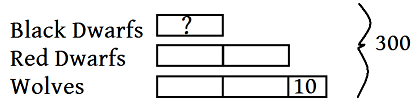
In previous posts, I introduced the problem-solving tools of word algebra and bar diagrams, either of which can help students organize the information in a word problem and translate it into a mathematical calculation. The earlier posts in this series are:

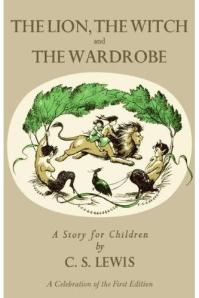
In this installment, I will continue to demonstrate the problem-solving tool of bar diagrams through a series of ten 4th grade problems based on the Singapore Primary Math series, level 4A. For your reading pleasure, I have translated the problems into the universe of a family-favorite story by C. S. Lewis, The Lion, the Witch and the Wardrobe.

UPDATE: Problems have been genericized to avoid copyright issues.

Continue reading Narnia Math: Elementary Problem Solving 4th Grade

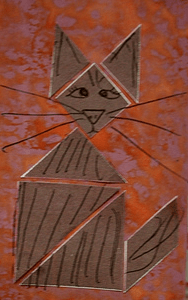
Tangrams and Other Dissection Puzzles

tangram-cat[Photo by jimmiehomeschoolmom.]

One of the things I meant to do with my elementary math class (the one that got canceled due to low enrollment):

And then we would play around with Tangram puzzles, and perhaps make up a few of our own.

Continue reading Tangrams and Other Dissection Puzzles

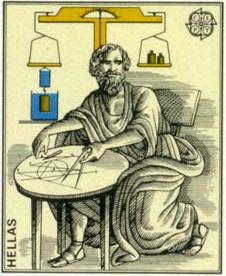
Math History on the Internet

[Image from the MacTutor Archive.]

The story of mathematics is the story of interesting people. What a shame it is that our children see only the dry remains of these people’s passion. By learning math history, our students will see how men and women wrestled with concepts, made mistakes, argued with each other, and gradually developed the knowledge we today take for granted.

In a previous article, I recommended books that you may find at your local library or be able to order through inter-library loan. Now, let me introduce you to the wealth of math history resources on the Internet.

Continue reading Math History on the Internet

Math Games by Kids

Photo by Mike Licht, NotionsCapital.com.

The cold came back and knocked me flat, but there are compensations. The downtime gave me a chance to browse my overflowing bookmarks folder, and I found something to add to my resource page. Princess Kitten and I enjoyed exploring these games and quizzes from Ambleweb.

Continue reading Math Games by Kids

Subtracting Mixed Numbers: A Cry for Help

Photo by powerbooktrance.

Paraphrased from a homeschool math discussion forum:

“Help me teach fractions! My son can do long subtraction problems that involve borrowing, and he can handle basic fraction math, but problems like 9  -  5 \frac{2}{5} give him a brain freeze. To me, this is an easy problem, but he can’t grasp the concept of borrowing from the whole number. It is even worse when the math book moves on to 10 \frac{1}{4}  -  2 \frac{3}{7} .”

Several homeschooling parents replied to this question, offering advice about various fraction manipulatives that might be used to demonstrate the concept. I am not sure that manipulatives are needed or helpful in this case. The boy seems to have the basic concept of subtraction down, but he gets flustered and is unsure of what to do in the more complicated mixed-number problems.

The mother says, “To me, this is an easy problem” — and that itself is one source of trouble. Too often, we adults (homeschoolers and classroom teachers alike) don’t appreciate how very complicated an operation we are asking our students to perform. A mixed-number calculation like this is an intricate dance that can seem overwhelming to a beginner.

I will go through the calculation one bite at a time, so you can see just how much a student must remember. As you read through the steps, pay attention to your own emotional reaction. Are you starting to feel a bit of brain freeze, too?

Afterward, we’ll discuss how to make the problem simpler…

Continue reading Subtracting Mixed Numbers: A Cry for Help