Math Teachers at Play #66

[Feature photo above by Franz & P via flickr. Route 66 sign by Sam Howzit via flickr. (CC BY 2.0)]
Route 66 Sign

Welcome to the Math Teachers At Play blog carnival — which is not just for math teachers! If you like to learn new things and play around with ideas, you are sure to find something of interest.

By tradition, we start the carnival with a couple of puzzles in honor of our 66th edition.

Let the mathematical fun begin!

Puzzle 1

how crazy 66

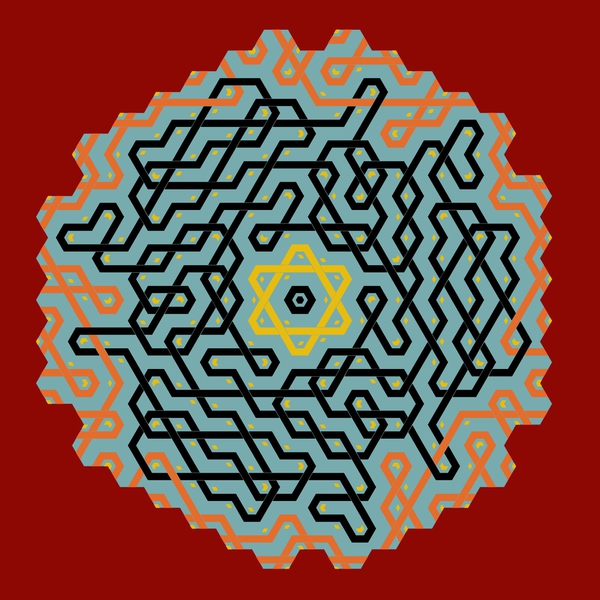
Our first puzzle is based on one of my favorite playsheets from the Miquon Math workbook series. Fill each shape with an expression that equals the target number. Can you make some cool, creative math?

Click the image to download the pdf playsheet set: one page has the target number 66, and a second page is blank so you can set your own target number.

Continue reading Math Teachers at Play #66

Math Teachers at Play #62: A Carnival with Books

by Robert Webb

Do you enjoy math? I hope so! If not, browsing this post just may change your mind. Welcome to the Math Teachers At Play blog carnival — a smorgasbord of ideas for learning, teaching, and playing around with math from preschool to pre-college.

Let the mathematical fun begin!

POLYHEDRON PUZZLE

By tradition, we start the carnival with a puzzle in honor of our 62nd edition:

An Archimedean solid is a polyhedron made of two or more types of regular polygons meeting in identical vertices. A rhombicosidodecahedron (see image above) has 62 sides: triangles, squares, and pentagons.

  • How many of each shape does it take to make a rhombicosidodecahedron?
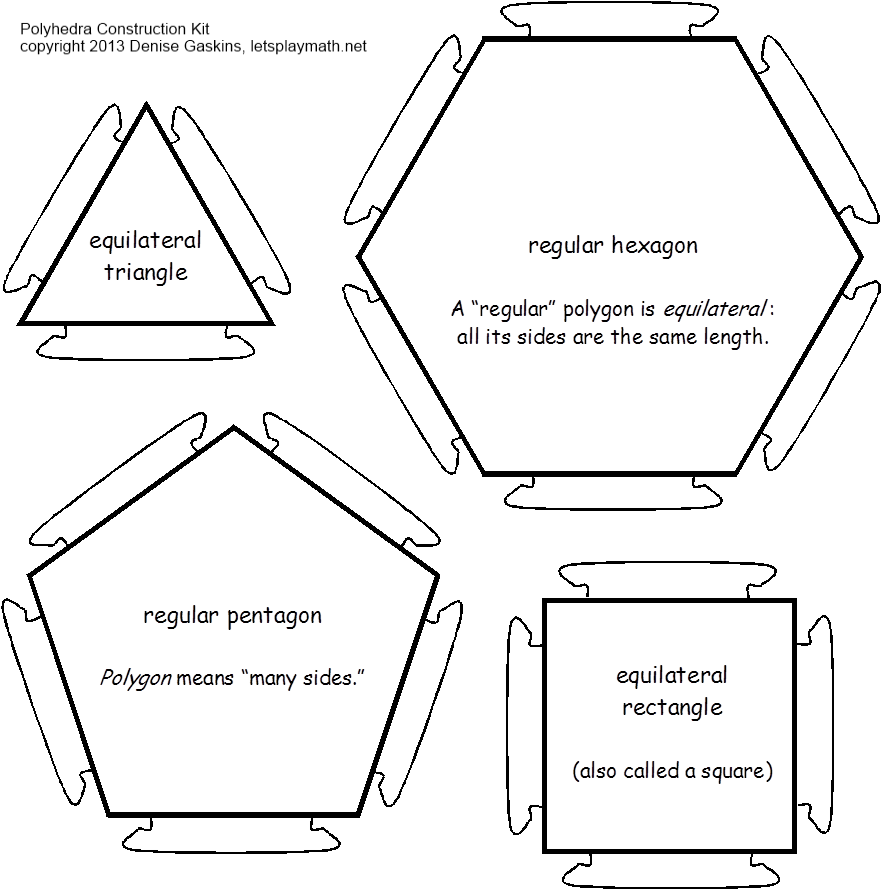
Click for full-size template.
Click for template.

My math club students had fun with a Polyhedra Construction Kit. Here’s how to make your own:

  1. Collect a bunch of empty cereal boxes. Cut the boxes open to make big sheets of cardboard.
  2. Print out the template page (→) and laminate. Cut out each polygon shape, being sure to include the tabs on the sides.
  3. Turn your cardboard brown-side-up and trace around the templates, making several copies of each polygon. I recommend 20 each of the pentagon and hexagon, 40 each of the triangle and square.
  4. Draw the dark outline of each polygon with a ballpoint pen, pressing hard to score the cardboard so the tabs will bend easily.
  5. Cut out the shapes, being careful around the tabs.
  6. Use small rubber bands to connect the tabs. Each rubber band will hold two tabs together, forming one edge of a polyhedron.

So, for instance, it takes six squares and twelve rubber bands to make a cube. How many different polyhedra (plural of polyhedron) will you make?

  • Can you build a rhombicosidodecahedron?

And now, on to the main attraction: the 62 blog posts. Many of the following articles were submitted by their authors; others were drawn from the immense backlog in my blog reader. If you’d like to skip directly to your area of interest, here’s a quick Table of Contents:

Continue reading Math Teachers at Play #62: A Carnival with Books

Math Teachers at Play #58: Crazy, Funny Math

No 58 - gold on blue[Feature photo (above) by Alex Kehr. Photo (right) by kirstyhall via flickr.]

Welcome to the Math Teachers At Play blog carnival — a smorgasbord of ideas for learning, teaching, and playing around with math from preschool to pre-college. If you like to learn new things and play around with ideas, you are sure to find something of interest.

Let the mathematical fun begin…

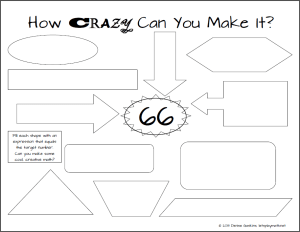
PUZZLE 1

By tradition, we start the carnival with a pair of puzzles in honor of our 58th edition. Click to download the pdf:

How CRAZY Can You Make It

Continue reading Math Teachers at Play #58: Crazy, Funny Math

Welcome, TIME Readers!

[Photo by Luis Argerich via flickr.]

If you’ve come here from Bonnie Rochman’s article, Bedtime Math: A Problem a Day Keeps Fear of Arithmetic Away, thank you for dropping in! I have nearly 800 published posts about learning and teaching math, which can seem pretty overwhelming.

Here are a few good places to start:

  • Tell Me a (Math) Story
    What better way could there be to do math than snuggled up on a couch with your little one, or side by side at the sink while your middle-school student helps you wash the dishes, or passing the time on a car ride into town?
  • Homeschooling with Math Anxiety Series
    Our childhood struggles with schoolwork gave most of us a warped view of mathematics. Yet even parents who suffer from math anxiety can learn to enjoy math with their children.
  • How to Conquer the Times Table
    Challenge your student to a joint experiment in mental math. Over the next two months, without flashcards or memory drill, how many math facts can the two of you learn together? We will use the world’s oldest interactive game — conversation — to explore multiplication patterns while memorizing as little as possible.

I hope you enjoy your visit to my blog.

PUFM 1.5 Multiplication, Part 2

Poster by Maria Droujkova of NaturalMath.com. In this Homeschooling Math with Profound Understanding (PUFM) Series, we are studying Elementary Mathematics for Teachers and applying its lessons to home education.

Multiplication is taught and explained using three models. Again, it is important for understanding that students see all three models early and often, and learn to use them when solving word problems.

— Thomas H. Parker & Scott J. Baldridge
Elementary Mathematics for Teachers

I hope you are playing the Tell Me a (Math) Story game often, making up word problems for your children and encouraging them to make up some for you. As you play, don’t fall into a rut: Keep the multiplication models from our lesson in mind and use them all. For even greater variety, use the Multiplication Models at NaturalMath.com to create your word problems.

Continue reading PUFM 1.5 Multiplication, Part 2

Math Teachers at Play #52

[Photo by bumeister1 via flickr.]

Welcome to the Math Teachers At Play blog carnival — which is not just for math teachers! We have games, lessons, and learning activities from preschool math to calculus. If you like to learn new things and play around with mathematical ideas, you are sure to find something of interest.

Scattered between all the math blog links, I’ve included highlights from the Common Core Standards for Mathematical Practice, which describe the types of expertise that teachers at all levels — whether in traditional, experimental, or home schools — should seek to develop in their math students.

Let the mathematical fun begin…

TRY THESE PUZZLES

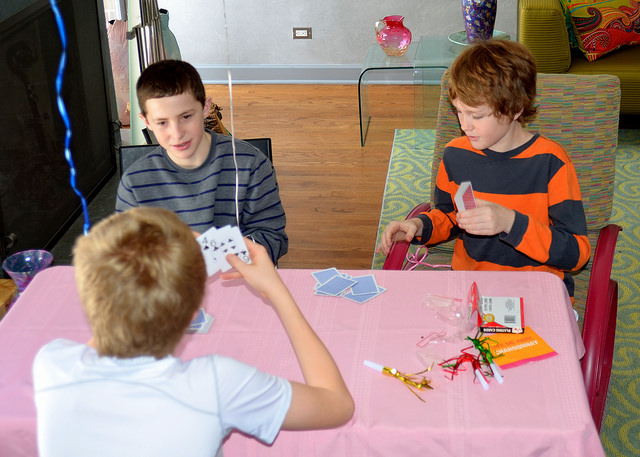
By tradition, we start the carnival with a couple of puzzles in honor of our 52nd edition. Since there are 52 playing cards in a standard deck, I chose two card puzzles from the Maths Is Fun Card Puzzles page:

  • A blind-folded man is handed a deck of 52 cards and told that exactly 10 of these cards are facing up. How can he divide the cards into two piles (which may be of different sizes) with each pile having the same number of cards facing up?
  • What is the smallest number of cards you must take from a 52-card deck to be guaranteed at least one four-of-a-kind?

The answers are at Maths Is Fun, but don’t look there. Having someone give you the answer is no fun at all!

Continue reading Math Teachers at Play #52

Princess in the Dungeon Game

Yet more fun from Rosie at Education Unboxed. I found these while looking for videos to use in my PUFM Subtraction post. Rosie says:

This is seriously embarrassing and I debated whether to put this video online or not because this is NOT my normal personality, but my girls made up this game and will play it for over an hour and ask for it repeatedly… so I figured someone out there might be able to use it with their kids, too.

If you know me, please don’t ever ask me to do this in public. I will refuse.

Princess in the Dungeon, Part 1 – Fractions with Cuisenaire Rods

http://vimeo.com/42739095

Continue reading Princess in the Dungeon Game

Math Teachers at Play #46: Living Books for Math

Welcome to the Math Teachers At Play blog carnival — which is not just for math teachers! Here is a smorgasbord of ideas for learning, teaching, and playing around with math from preschool to pre-college. Some articles were submitted by their authors, others were drawn from the immense backlog in my blog reader. If you like to learn new things, you are sure to find something of interest.

Living Books for Math

A child’s intercourse must always be with good books, the best that we can find… We must put into their hands the sources which we must needs use for ourselves, the best books of the best writers.

For the mind is capable of dealing with only one kind of food; it lives, grows and is nourished upon ideas only; mere information is to it as a meal of sawdust to the body.

Charlotte Mason
Toward A Philosophy of Education

Princess Kitten and I took a longer than usual holiday break from homeschooling, but now I’m in plan-for-the-new-semester mode. I hope to include more living math in our schedule, so I decided to illustrate this edition of the MTaP carnival with a few of my favorite living math books. I’d love to hear more living book suggestions in the comments!

If you click on a book cover, the links take you to Amazon.com, where you can read reviews and other details (and where I earn a small affiliate commission if you actually buy the book), but all of these books should be available through your public library or via inter-library loan.

Let the mathematical fun begin…

Continue reading Math Teachers at Play #46: Living Books for Math