PUFM 1.0 Introduction

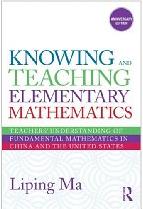
Profound Understanding of Fundamental Mathematics (PUFM) is a phrase coined by Liping Ma in her landmark book, Knowing and Teaching Elementary Mathematics, to describe the deep, broad, and thorough understanding exhibited by several of the Chinese teachers she interviewed.

The Chinese teachers with PUFM didn’t get it automatically. It grew over many years of teaching several levels of elementary math and of studying their textbooks and teaching materials. They met weekly in teaching research groups to learn from each other’s experience, to find multiple ways to solve problems, and to broaden their mathematical understanding.

More than eight years ago, a group of homeschooling friends started a Yahoo “teaching research group” to discuss math in hope of deepening our own understanding and learning to better help our students. We had a good time, but the busy-ness of everyday life eventually won out. The group has mostly disbanded, though the archives remain. Now I’d like to bring that study to my blog, bit by bit, updated with things I’ve learned in the years since.

Continue reading PUFM 1.0 Introduction

Skit: Knights and Knaves Logic Puzzles

photo by puuikibeach via flickr

Our homeschool co-op held an end-of-semester assembly. Each class was supposed to demonstrate something they had learned. I planned to set up a static display showing some of our projects, like the fractal pop-up card and the game of Nim, but the students voted to do a skit based on the logic puzzles of Raymond Smullyan.

We had a small class (only four students), but you can easily divide up the lines make room for more players. We created signs from half-sheets of poster board with each native’s line on front and whether she was a knight or knave on the flip side. In the course of a skit, there isn’t enough time to really think through the puzzles, so the audience had to vote based on first impressions — which gave us a fair showing of all opinions on each puzzle.

Continue reading Skit: Knights and Knaves Logic Puzzles

What I’m Reading: Fermat’s Enigma

Homeschooling is much more than just doing school at home — it’s a lifelong lifestyle of learning. And thanks to the modern miracle of inter-library loan, even those of us who live in the middle of nowhere can get just about any book sent directly to our tiny home-town libraries.

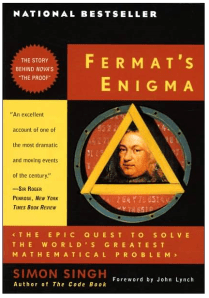
As I mentioned in Math Teachers at Play 46, I’m trying to add more living books about math to our homeschool schedule, including my own self-education reading. So, a copy of Fermat’s Enigma: The Epic Quest to Solve the World’s Greatest Mathematical Problem finally showed up at my library, and I am thoroughly enjoying it.

Continue reading What I’m Reading: Fermat’s Enigma

Do You Teach Math to Young Children?

Sue VanHattum is trying to convince the publishers that this excellent book would reach a wider audience if they made it available at a lower price. What do you think?

As anyone who has taught or raised young children knows, mathematical education for little kids is a real mystery. What are they capable of? What should they learn first? How hard should they work? Should they even “work” at all? Should we push them, or just let them be?

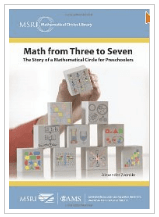
There are no correct answers to these questions, and Zvonkin deals with them in classic math-circle style: He doesn’t ask and then answer a question, but shows us a problem — be it mathematical or pedagogical — and describes to us what happened. His book is a narrative about what he did, what he tried, what worked, what failed, but most important, what the kids experienced.

This book is not a guidebook. It does not purport to show you how to create precocious high achievers. It is just one person’s story about things he tried with a half-dozen young children. On the other hand, if you are interested in running a math circle, or homeschooling children, you will find this book to be an invaluable, inspiring resource. It’s not a “how to” manual as much as a “this happened” journal. … Just about every page contains a really clever teaching idea, a cool math problem, and an inspiring and funny story.

— Paul Zeitz
Introduction to Math from Three to Seven

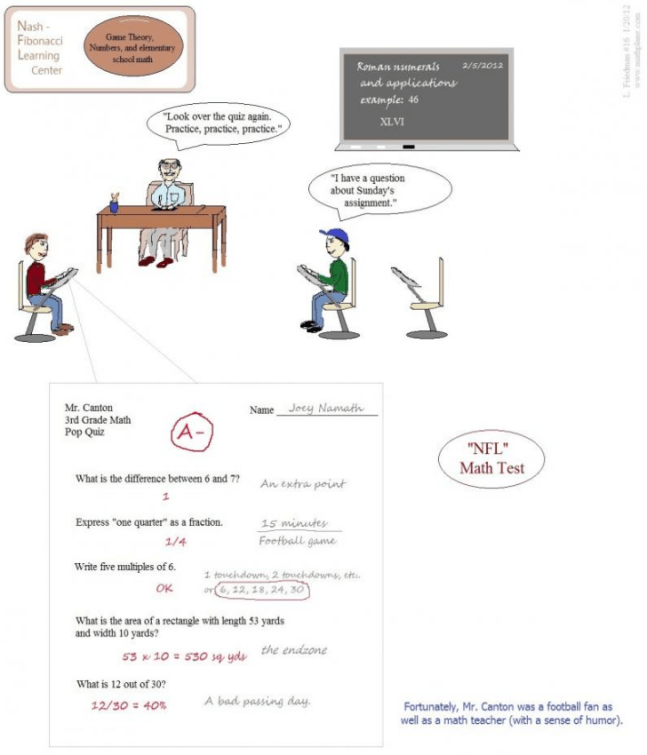
Super Bowl XLVI Math Worksheet and Football Comic

Lance Friedman of MathPlane.com has posted two bits of fun in honor of Super Bowl XLVI. (Click the images to go to Lance’s site.) And if you’re a homeschooler, Currclick is offering a Super Bowl Mini-Helper free this week.

NFL Math Quiz

Continue reading Super Bowl XLVI Math Worksheet and Football Comic

Free Math from Dover Publications

I love Dover books, don’t you? They publish so-o-o-o-o many interesting titles at reasonable prices. I always have several Dover books on my wishlist, waiting for my next bit of extra cash.

But you don’t have to wait to enjoy free math from Dover books. Sign up for the Dover Sampler, and each week they will send an email with links to content from all sorts of books. Or try the Dover Children’s Sampler and Dover Teacher’s Sampler for coloring books, mazes, literature, and more. All the Dover samplers are completely free, and you can cancel at any time.

From Last Week’s Sampler

Last week’s email included a section on “Exploring Mathematics”:

And that’s only the beginning. Below, I’ve listed a wide variety of math-related links collected from past samplers. Though be warned: Dover does change its website from time to time, so these pages may disappear without notice.

Download, print, enjoy!

Continue reading Free Math from Dover Publications

Working on My Let’s Play Math! Books

Workplace stress caused by an unsuitable work ...
Image via Wikipedia

This blog originally grew out of my books, and now it’s coming full circle: New, expanded editions of my long-out-of-print books are ripening on the vine, growing out of the blog. To bring them to harvest, I’m going to need your help.

The Books

I’m working on the games books first because I think they will be the most helpful supplements to any math program.

  • Let’s Play Math! Number Games for All Ages
    This book will include games like Tens Concentration and Hit Me, as well as tips for teaching negative numbers, the times table, and more. Never before published, because it was planned as the fifth book in my earlier how-to-teach-homeschool-math series, but my self-publishing experiment ended after book four.
  • Others to be announced, if I ever get the first two done…

Continue reading Working on My Let’s Play Math! Books

Good News for a Change

As I was checking through archive posts and clearing out the dead links, I found a couple of links that I thought would be dead but which are still good. So I am re-posting them here, for your browsing pleasure:

Free Shakespeare for Fun and Copywork

CurrClick (which carries the Math Mammoth workbook series) is offering Quotations from Shakespeare’s Plays as a free download. This ebook includes copywork tips from Charlotte Mason and about 30 pages of passages from Macbeth, King Lear, Much Ado About Nothing, etc.

[And if you are planning a study of the Bard, you won’t want to miss the many other Internet resources in my original post.]

Great Leaders in a Crisis: Lincoln, Churchill

What does it take to lead your nation through a crisis? Character, determination, wisdom, the courage of your convictions. What can we learn about leadership from those who have been there, done that?

Abraham Lincoln and Winston Churchill are two of these great leaders — men whose courage and conviction took their nations through challenging moments and forever altered the course of Western civilization…

The Teaching Company (one of my favorite resources for homeschooling high school) is offering two free lectures for the downloading: Great Leaders: Abraham Lincoln and Winston Churchill.

[More details in my original post.]

Math Project: Measure the Earth

Tomorrow, September 23, is the equinox — when night and day are equally balanced (or would be, if the sun appeared as a point, rather than a disc). If we lived on the equator, the sun would appear directly overhead at noon and would cast no shadow. Therefore, it’s a great day to perform Eratosthenes’ experiment of measuring the earth:

Continue reading Math Project: Measure the Earth

Alexandria Jones and the Mathematical Carnival

Alexandria JonesMaria Jones hung up the phone and collapsed at the kitchen table. She buried her head in her hands and groaned. Alex looked up from her game of Solitaire.

“Let me guess,” she said. “Can’t-Say-No Syndrome, again?”

Mrs. Jones nodded. “This time I volunteered to plan an activity for next month’s homeschool group meeting.”

Leon wandered in and pulled an apple from the fruit bowl. “Ha!” he said. “She means she volunteered us to plan an activity, right?”

Mrs. Jones smiled. “That’s my motto: When in doubt, delegate!”

Continue reading Alexandria Jones and the Mathematical Carnival