Quotable: What to Do When You’re Stuck

When a kid is feeling bad about being stuck with a problem, or just very anxious, I sometimes ask him to make as many mistakes as he can, and as outrageous as he can. Laughter happens (which is valuable by itself, and not only for the mood — deep breathing brings oxygen to the brain). Then the kid starts making mistakes. In the process, features of the problem become much clearer, and in many cases a way to a solution presents itself.

Maria Droujkova
Natural Math discussion of math club activities

Does It Work?

While I was collecting entries for the Math Teachers at Play #35 blog carnival, I ran across this post by Dave Lanovaz:

Babymath: Story Problem Challenge III

<a href="http://www.flickr.com/photos/goetter/2352128932/"Photo by Raphael Goetter via Flickr

Alex and Leon enjoyed their baby sister, but they were amazed at how much work taking care of a baby could be. One particularly colicky night, everyone in the family took turns holding the baby, rocking the baby, patting her back, and walking her around before she finally succumbed to sleep.

Then Alex collapsed on the couch, and Leon sank into the recliner. They teased each other with these story problems.

Continue reading Babymath: Story Problem Challenge III

Probability Issue: Hints and Answers

Remember the Math Adventurer’s Rule: Figure it out for yourself! Whenever I give a problem in an Alexandria Jones story, I will try to post the answer soon afterward. But don’t peek! If I tell you the answer, you miss out on the fun of solving the puzzle. So if you haven’t worked these problems yet, go back to the original posts. If you’re stuck, read the hints. Then go back and try again. Figure them out for yourself — and then check the answers just to prove that you got them right.

This post offers hints and answers to puzzles from these blog posts:

Continue reading Probability Issue: Hints and Answers

Rate Puzzle: How Fast Does She Read?


[Photo by Arwen Abendstern.]

If a girl and a half
can read a book and a half
in a day and a half,
then how many books can one girl read in the month of June?

Kitten reads voraciously, but she decided to skip our library’s summer reading program this year. The Border’s Double-Dog Dare Program was a lot less hassle and had a better prize: a free book! Of course, it didn’t take her all summer to finish 10 books.

How fast does Kitten read?

Continue reading Rate Puzzle: How Fast Does She Read?

Hobbit Math: Elementary Problem Solving 5th Grade

[Photo by OliBac. Visit OliBac’s photostream for more.]

The elementary grades 1-4 laid the foundations, the basics of arithmetic: addition, subtraction, multiplication, division, and fractions. In grade 5, students are expected to master most aspects of fraction math and begin working with the rest of the Math Monsters: decimals, ratios, and percents (all of which are specialized fractions).

Word problems grow ever more complex as well, and learning to explain (justify) multi-step solutions becomes a first step toward writing proofs.

This installment of my elementary problem solving series is based on the Singapore Primary Mathematics, Level 5A. For your reading pleasure, I have translated the problems into the world of J.R.R. Tolkien’s classic, The Hobbit.

UPDATE: Problems have been genericized to avoid copyright issues.

Continue reading Hobbit Math: Elementary Problem Solving 5th Grade

Best Articles about Solving Word Problems


[Photo by scui3asteveo.]

I’m still working on that Best of Blog page. [It’s done! :D] Here are the 20 best Let’s Play Math! blog articles about solving word problems (also known as story problems)…

Solving Word Problems

More recent posts tagged ‘Word problems’

Bar Diagrams Help Students Think

More recent posts tagged ‘Bar diagrams’

Other Post in the Best of Blog Series

Update: My New Book

You can help prevent math anxiety by giving your children the mental tools they need to conquer the toughest story problems.

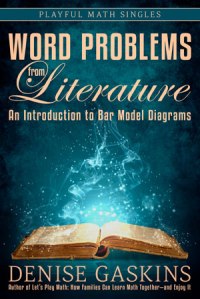
Check out Word Problems from Literature: An Introduction to Bar Model Diagrams—now available at all your favorite online bookstores!

And there’s a Student Workbook, too.

Word Problems from Literature

[Photo by Passion of Bilwa.]

I’ve put the word problems from my elementary problem solving series into printable worksheets:

Continue reading Word Problems from Literature

Narnia Math: Elementary Problem Solving 4th Grade

[Photo by armigeress.]

In 4th grade, math problems take a large step up on the difficulty scale. Students are more mature and can read and follow more complex stories. Multi-step word problems become the new norm, and proportional relationships (like “three times as many”) show up frequently. As the year progresses, fractions grow to be a dominant theme.

As a math teacher, one of my top goals is that my students learn to solve word problems. Arithmetic is (relatively) easy, but many children struggle in applying it to “real world” situations.

In previous posts, I introduced the problem-solving tools of word algebra and bar diagrams, either of which can help students organize the information in a word problem and translate it into a mathematical calculation. The earlier posts in this series are:

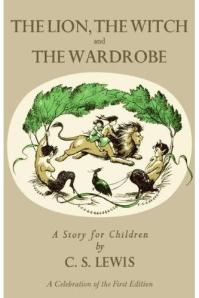
In this installment, I will continue to demonstrate the problem-solving tool of bar diagrams through a series of ten 4th grade problems based on the Singapore Primary Math series, level 4A. For your reading pleasure, I have translated the problems into the universe of a family-favorite story by C. S. Lewis, The Lion, the Witch and the Wardrobe.

UPDATE: Problems have been genericized to avoid copyright issues.

Continue reading Narnia Math: Elementary Problem Solving 4th Grade

Algebra: A Problem in Translation

[Photo by *Irish.]

In my post Elementary Problem Solving: The Tools, I introduced word algebra as a way to help students think their way through a story problem. In the next two posts, I showed how the tool worked with simple word problems.

Now, before I move on to focus exclusively on bar diagrams, I would like to show how word algebra can help a student solve a typical first-year algebra puzzle.

A homeschooling friend who avoided algebra in high school, trying to help her son cope with a subject she never understood, posted: “Help! Our answer is different from the book’s.” Here is the homework problem:

Josh earned $72 less than his sister who earned $93 more than her mom. If they earned a total of $504, how much did Josh earn?

Continue reading Algebra: A Problem in Translation