Math holiday alert: March 14th is Pi Day. But why limit ourselves to a single day? Playing with math should be a year-round adventure! Here are some ideas to help you celebrate…
Seven years ago, I blogged a revision of the first article I ever wrote about homeschooling math. I can’t even remember when the original article was published — years before the original (out of print) editions of my math books.
I hope you enjoy this “Throw-back Thursday” blast from the Let’s Play Math! blog archives:
I love story problems. Like a detective, I enjoy sifting out clues and solving the mystery. But what do you do when you come across a real stumper? Acting out story problems could make a one-page assignment take all week.
You don’t have to bake a pie to study fractions or jump off a cliff to learn gravity. Use your imagination instead. The following suggestions will help you find the clues you need to solve the case…
Math is like ice cream, with more flavors than you can imagine — and if all your children ever do is textbook math, that’s like feeding them broccoli-flavored ice cream.
The February math education blog carnival is now posted for your browsing pleasure, featuring 71 playful ways to explore mathematics from preschool to calculus:
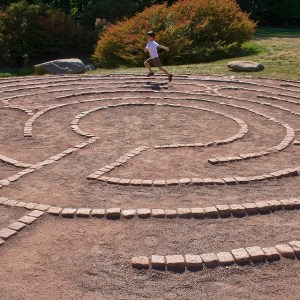
Math teachers at play know that math is best learned when the student is thoroughly engaged, through their body, their imagination (story-telling), or the world of games. I’ve started out this month’s post with those three categories.
Most of the submissions this month described hands-on, or feet-on, activities. It’s as if there had been a theme agreed upon without anyone mentioning it. Some of the following posts are from submissions, and others are posts that I wanted to share from my internet wanderings.
This post has 71 links. (You might need to digest it in smaller bites.) Enjoy!
I sat in class three days ago and thought to myself, “They need a class called ‘Math as a second language’ or MSL for short.”
It is easy to understand what a median is, or what attributes a kite has, or why is a rectangle a square but a square not a rectangle… for a minute or a day.
It is easy to temporarily memorize a fact. But without true understanding of the concept those “definitions” fade. If the foundation of truly understanding is not there to begin with then there is little hope for any true scaffolding and even less chance of any true learning.
Alexandria Jones collapsed onto the couch with a dramatic sigh. Her father, the world-famous archaeologist Dr. Fibonacci Jones, glanced up from his newspaper and rolled his eyes.
“I don’t even want to hear about it,” he said.
Alex’s brother Leonhard was playing on the floor, making faces at the baby. He looked up at Alex and grinned.
“I’ll take the bait,” he said. “What happened?”
“Mom called my bedroom a Strange Attractor.”
“Oh? What does it attract?”
“I don’t know. Mostly books and model horses. But what’s so strange about that?”
The Mathematics of Chaos
Animation of a double compound pendulum showing chaotic behaviour.
Dr. Jones laughed and put down his paper. “Strange attractor is a technical term from the branch of mathematics called dynamical systems analysis — often called chaos theory.”
“So my bedroom is a math problem?”
“No. I think Mom meant your bedroom was chaos.”
“Oh.” Alex looked like she might pout, then she shrugged. “I guess she’s right, at that. So what is a strange attractor, really?”
“Well, when scientists first drew graphs of classical, non-chaotic systems — like a planet’s orbit or the flight of a football — it was surprising how often they got an ellipse or parabola or some similar curve,” Dr. Jones explained. “For some reason, nature seemed to be attracted to the shapes of classical geometry.”
Do you like Pinterest? I’ve enjoyed exploring the site lately, so I set up a few boards where I can pin the goodies I find. It may take awhile before I get all the old games and posts from this blog loaded up, so save the links and come back often…
Playful Math Games & Activities
As our children (and their parents!) play around with mathematical ideas and the relationships between them, we develop deep understanding that is strong enough to support future learning. Playful math links include math games, activities, and interesting lesson plans.
Making abstract math visual: Math doodles let us see and experiment with a wide range of mathematical structures — and even to feel them, if we include hands-on 3D doodles in clay or other media. Links include art projects, geometry constructions, and physical models to explore.
A variety of math teaching ideas for homeschool families or classroom teachers. Learning mathematics is more than just answer-getting: help your students make conceptual connections. These links are more “schooly” than on the other boards, and they include conceptual lessons that build your own understanding of mathematics as well as that of your students. And math notebooking resources, too.
Since early 2009, the Math Teachers at Play (MTaP) blog carnival has offered tips, tidbits, games, and activities for students and teachers of preschool through pre-college mathematics. Now published once a month, the carnival welcomes entries from parents, students, teachers, homeschoolers, and just plain folks. If you like to learn new things and play around with ideas, you are sure to find something of interest.
Last week, Kitten and I reached her textbook’s chapter on graphing linear equations, and a minor mistake with negative numbers threw her into an “I can’t do it!” funk. It’s not easy teaching a perfectionist kid.
Usually her mood improves if we switch to a slightly more advanced topic, and luckily I had saved these worksheets on my desktop, waiting for just such an opportunity. Today’s lesson:
Some fun(ish) worksheets
“For tomorrow, students will be graphing systems of inequalities, so I decided to create a little Ohio Jones adventure (Indiana’s lesser known brother)…”
I offered to give her a hint, but she wanted to try it totally on her own. It took her about 40 minutes to work through the first few rooms of the Lost Templo de los Dulces and explain her solutions to me. I’m sure she’ll speed up with experience.
So far, she’s enjoying it much more than the textbook lesson. It’s fascinating to me how the mere hint of fantasy adventure can change graphing equations from boring to cool. Thanks, Dan!