Math Game: Logarithm War

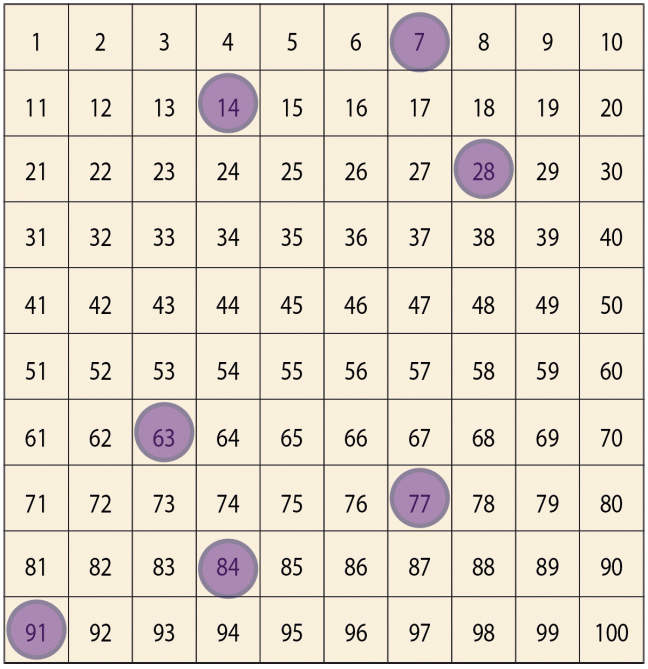
[Graph created at Draw Function Graphs.]

Kate at f(t) took my popular Math War game to a new level by making a set of Logarithm War cards. Cool! Download a deck for yourself:

Update

Logs and Trig War—Jim Pai extended Kate’s logarithm war to include trig functions. Double the cards, double the fun! Download from Jim’s blog: War: what is it good for?

Contig Game: Master Your Math Facts

[Photo by Photo Mojo via Flickr (CC BY 2.0).]

Yahtzee and other board games provide a modicum of math fact practice. But for intensive, thought-provoking math drill, I can’t think of any game that would beat Contig.

Math concepts: addition, subtraction, multiplication, division, order of operations, mental math
Number of players: 2 – 4
Equipment: Contig game board, three 6-sided dice, pencil and scratch paper for keeping score, and bingo chips or wide-tip markers to mark game squares

Set Up

Place the game board and dice between players, and give each player a marker or pile of chips. (Markers do not need to be different colors.) Write the players’ names at the top of the scratch paper to make a score sheet.

Continue reading Contig Game: Master Your Math Facts
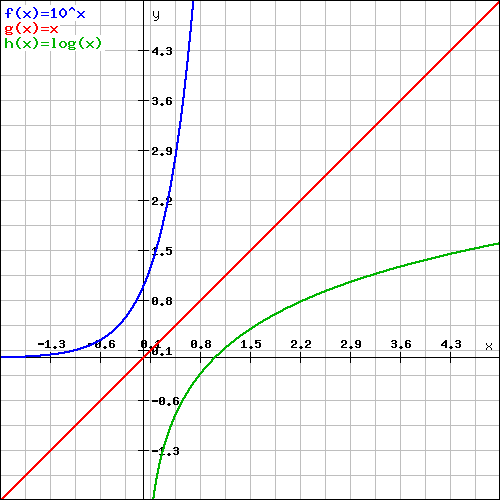
30+ Things to Do with a Hundred Chart

[Photo by geishaboy500 via Flickr (CC BY 2.0).]

Are you looking for creative ways to help your children study math? Even without a workbook or teacher’s manual, your kids can learn a lot about numbers. Just spend an afternoon playing around with a hundred chart (also called a hundred board or hundred grid).

My free 50-page PDF Hundred Charts Galore! printables file features 1–100 charts, 0–99 charts, bottom’s-up versions, multiple-chart pages, blank charts, game boards, and more. Everything you need to play the activities below and those in my new 70+ Things to Do with a Hundred Chart book.
Download Free “Hundred Charts Galore!” Printables

Shop for “70+ Things To Do with a Hundred Chart” Book

And now, let’s play…

Continue reading 30+ Things to Do with a Hundred Chart

Online Game: Math Caching

In the treasure-hunting game of Geocaching (pronounced “geo-cashing”), players use GPS systems to locate boxes hidden at different geographical locations across the country.

Now, the creative people at Mathbits.com have come up with an online treasure-hunting activity for junior high and high school students, called MathCaching. Students solve mathematical problems to find hidden “boxes” on the Internet. Each box reveals clues to the location of the next one.

The MathCaching game covers pre-algebra through trigonometry topics, with calculus levels under development. For more information, visit the MathCaching site, or read the post on my Frugal Homeschooling blog.

Math Game: What Number Am I?

Photo by jaycoxfilm.

Math concepts: mental calculations, math vocabulary, and anything else you want to include
Number of players: any number, but I think it works best with two players who alternate asking questions
Equipment: imagination and, if necessary, scratch paper

Many years ago, I read a magazine article by mathematical music critic Edward Rothstein, wherein he described a game he invented for his daughter:

  • “What number am I? If you add me to myself, you get four.”

Rather than explaining the rules of the game, let me tell you a story…

Continue reading Math Game: What Number Am I?

Hit Me! (A Math Game)

Photo by paparutzi.

Math concepts: addition, subtraction, negative numbers, mental math, absolute value
Number of players: any number
Equipment: math cards (two decks may be needed for a large group)

Set Up

One player (the dealer) shuffles the math cards and deals one card face down for each player, beginning with the player on his left and proceeding in turn around the table. Then he deals one card face up beside each face down card.

Continue reading Hit Me! (A Math Game)

The Function Machine Game

Math concepts: odd numbers, even numbers, greater-than/less-than, rounding off, addition, subtraction, multiplication, division, fractions, negative numbers, prime numbers, square numbers, problem solving, mental math
Number of players: two or more
Equipment: pencil (or pen) and paper for every player

Continue reading The Function Machine Game

Game: Avoid Three, or Tic-Tac-No!

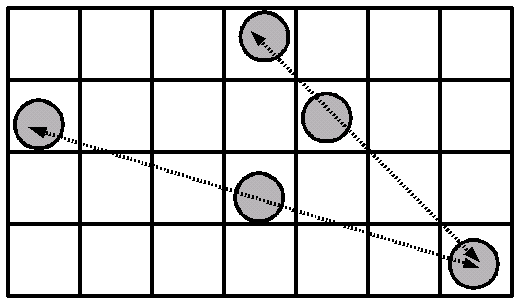
Math concepts: slope, logical strategy
Number of players: 2 or more
Equipment: 4×4 or larger grid, pebbles or other tokens to mark squares

Set Up

Alexandria Jones and her brother Leon played Avoid Three with pebbles on a grid scratched in the sand, but you can also use pencils or markers on graph paper. You need a rectangular playing area at least 4×4 squares large. The bigger your grid, the longer your game.

Continue reading Game: Avoid Three, or Tic-Tac-No!

Euclid’s Game on a Hundred Chart

Math concepts: subtraction within 100, number patterns, mental math
Number of players: 2 or 3
Equipment: printed hundred chart (also called a hundred board), and highlighter or translucent disks to mark numbers — or use this online hundred chart

Set Up

Place the hundred chart and highlighter where all players can reach them.

How to Play

  • Allow the youngest player choice of moving first or second; in future games, allow the loser of the last game to choose.
  • The first player chooses a number from 1 to 100 and marks that square on the hundred chart.
  • The second player chooses and marks any other number.
  • On each succeeding turn, the player subtracts any two marked numbers to find and mark a difference that has not yet been taken.
  • Play alternates until no more numbers can be marked.

Continue reading Euclid’s Game on a Hundred Chart