Photo by ninjapoodles.
Do you and your students have trouble keeping track of those pesky English/American measurements? Here is a great visual showing the relationship between common volumes:

Photo by ninjapoodles.
Do you and your students have trouble keeping track of those pesky English/American measurements? Here is a great visual showing the relationship between common volumes:
Photo by Mike Licht, NotionsCapital.com.
The cold came back and knocked me flat, but there are compensations. The downtime gave me a chance to browse my overflowing bookmarks folder, and I found something to add to my resource page. Princess Kitten and I enjoyed exploring these games and quizzes from Ambleweb.
Photo by Complicated.
Princess Kitten is recovering from her cold and getting some energy back. She came to me and said wistfully, “I wish I could do backwards math.”
I looked up from my keyboard. “Backwards math? What do you mean?”
“Umm. It’s kinda hard to explain, but I can show you.”
[Feature photo above by pauladamsmith.]
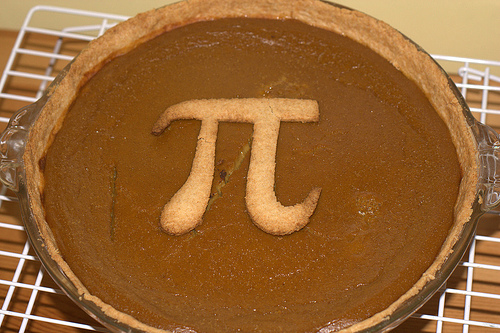
Now there is an ancient Greek letter,
And I think no other is better.
It isn’t too tall,
It might look very small,
But its digits, they go on forever.— Scott
Mrs. Mitchell’s Virtual School
Are your students doing anything special for Day? After two months with no significant break, we are going stir crazy. We need a day off — and what better way could we spend it than to play math all afternoon?

If you need ideas, here are some great pages:

Photo by Brittany G.
I found this cute lesson on Meeyauw’s blog:
And that sent me searching for more St. Patrick’s Day math:
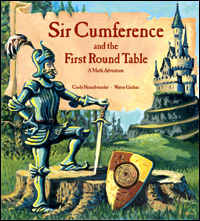
If you and your students have enjoyed the Sir Cumference picture book series, then you will love these two worksheets from Waltzing Matilda:
[Hat tip: Living and Loving Numbers forum.]
Dave Marain of MathNotations is running a poll about how to teach multiplication, but the question has broader application:
How should we teach the arithmetic algorithms
— or should we teach them at all?
Algorithms are step-by-step methods for doing something. In arithmetic, we have standard algorithms for addition, subtraction, multiplication, and long division. Once the student masters the steps for any particular algorithm, he can follow the steps to a correct answer without ever thinking about what the numbers mean.
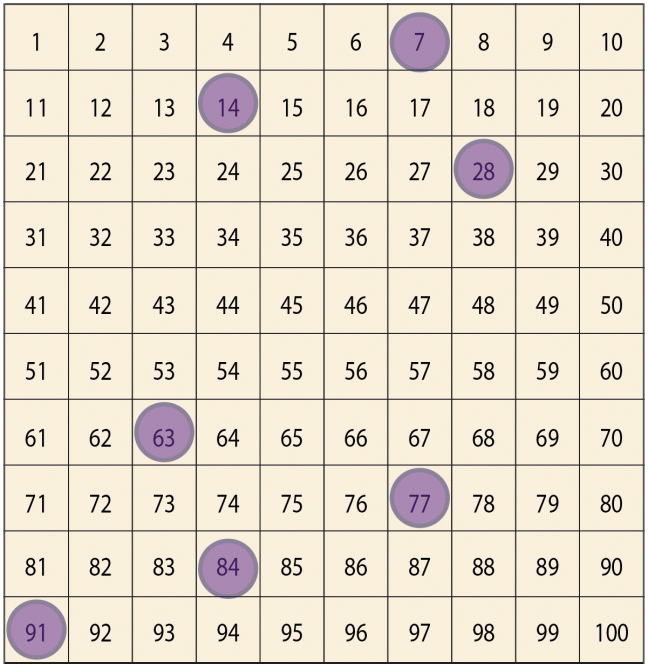
Math concepts: subtraction within 100, number patterns, mental math
Number of players: 2 or 3
Equipment: printed hundred chart (also called a hundred board), and highlighter or translucent disks to mark numbers — or use this online hundred chart
Place the hundred chart and highlighter where all players can reach them.

As we all head back to school, here are some interesting calendar puzzles:

UPDATE: Some of the links below have gone missing, as internet sites tend to do. Check out my *huge* new blog post:
We interrupt our regularly scheduled math program to bring you the following Christmas links…
First, A to Z Home’s Cool offers some fun for older students and teachers:
Also check out the annual Price of Christmas Index to see what the “12 Days of Christmas” gifts would cost you this year. Or explore the Nrich Advent Math Calendars to play with a new math activity every day until Christmas.
You can find just the song here: http://vihart.com/music/gauss12days.mp3.