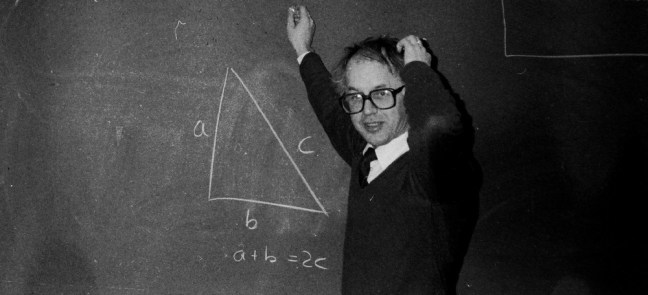
Math with Many Right Answers

The discussion matters more than the final answer.

One of the most persistent math myths in popular culture is the idea that mathematics is primarily about getting right answers.

The truth is, the answer doesn’t matter that much in math. What really matters is how you explain that answer. An answer is “right” if the explanation makes sense.

And if you don’t give an explanation, then you really aren’t doing mathematics at all.

Try This Number Puzzle

Here is a short sequence of numbers. Can you figure out the rule and fill in the next three blanks?

2, 3, 5, 7, ___, ___, ___, …

Remember, what’s important is not which numbers you pick, but rather how you explain your answer.

Possibility 1

Perhaps the sequence is the prime numbers?

2, 3, 5, 7, 11, 13, 17, …

The prime numbers make a wonderful sequence, though it isn’t the one I was thinking of.

Continue reading Math with Many Right Answers

Noticing Fractions in a Sidewalk

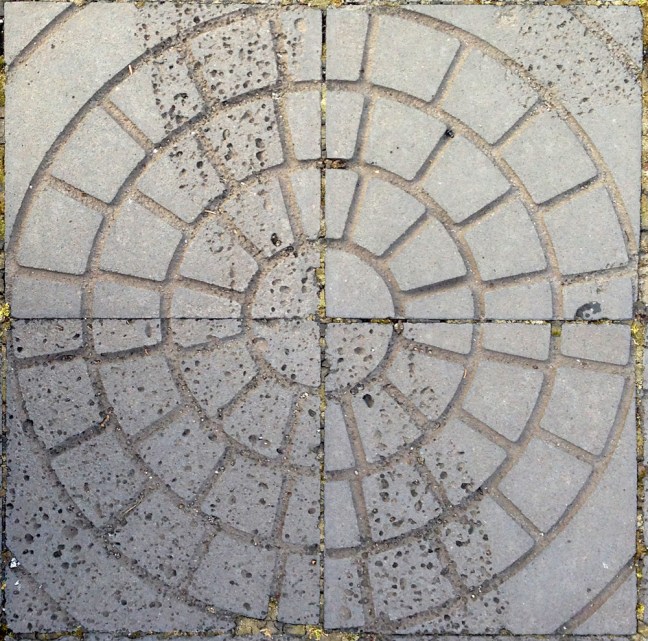
fraction-circle

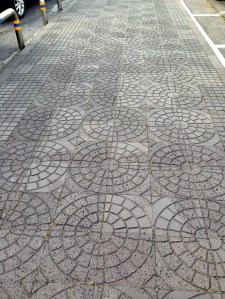
My daughters didn’t want to admit to knowing me, when I stopped to take a picture of the sidewalk along a back street during our trip to Jeju. But aren’t those some wonderful fractions?

What do you see? What do you wonder?

Here is one of the relationships I noticed in the outer ring:

\frac{4 \frac {2}{2}}{20} = \frac {1}{4}

sidewalk

And this one’s a little trickier:

\frac{1 \frac {1}{2}}{12} = \frac {1}{8}

Can you find it in the picture?

Each square of the sidewalk is made from four smaller tiles, about 25 cm square, cut from lava rock. Some of the sidewalk tiles are cut from mostly-smooth rock, some bubbly, and some half-n-half.

I wonder how far we could go before we had to repeat a circle pattern?

Continue reading Noticing Fractions in a Sidewalk

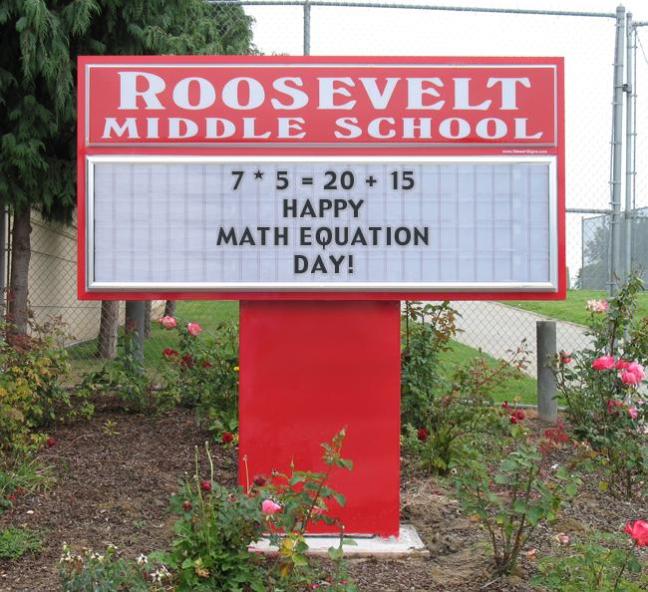
Happy Math Equation Day!

math equation day

Every Day Is Mathematics Day!

I’m still having fun with David Coffey’s meme, which started a couple of years ago with this blog post:

Make Your Own

Would you like to create a math holiday, too? Try one of these sign generators:

What kind of math will you celebrate? Leave a link to your Happy Math Day post in the comments below!

Infinite Cake: Don Cohen’s Infinite Series for Kids

Math Concepts: division as equal sharing, naming fractions, adding fractions, infinitesimals, iteration, limits
Prerequisite: able to identify fractions as part of a whole

This is how I tell the story:

  • We have a cake to share, just the two of us. It’s not TOO big a cake, ‘cuz we don’t want to get sick. An 8 × 8 or 16 × 16 square on the graph paper should be just right. Can you cut the cake so we each get a fair share? Color in your part.

Bobby Flay German Chocolate Cake

  • How big is your piece compared to the whole, original cake?
  • But you know, I’m on a diet, and I just don’t think I can eat my whole piece. Half the cake is too much for me. Is it okay if I share my piece with you? How can we divide it evenly, so we each get a fair share? How big is your new piece? Color it in.
  • How much of the whole, original cake do you have now? How can you tell?
  • I keep thinking of my diet, and I really don’t want all my piece of cake. It looks good, but it’s still just a bit too big for me. Will you take half of it? How big is that piece?
  • Now how much of the whole, original cake do you have? How could we figure it out?
    [Teaching tip: Don’t make kids do the calculation on paper. In the early stages, they can visualize and count up the fourths or maybe the eighths. As the pieces get smaller, the easiest way to find the sum is what Cohen does in the video below‌—‌identify how much of the cake is left out.]
  • Even for being on a diet, I still don’t feel very hungry…

Continue reading Infinite Cake: Don Cohen’s Infinite Series for Kids

Socks Are Like Pants, Cats Are Like Dogs

Support This New Book from Natural Math

Socks Are Like Pants, Cats Are Like Dogs by Malke Rosenfeld and Gordon Hamilton is filled with a diverse collection of math games, puzzles, and activities exploring the mathematics of choosing, identifying and sorting. The activities are easy to start and require little preparation.

The publisher’s crowdfunding goal is $4,000. The book is almost ready to go to press, and I can hardly wait to see it!

Review Game: Once Through the Deck

Math Concepts: basic facts of addition, multiplication.
Players: one.
Equipment: one deck of math cards (poker- or bridge-style playing cards with the face cards and jokers removed).

The best way to practice the math facts is through the give-and-take of conversation, orally quizzing each other and talking about how you might figure the answers out. But occasionally your child may want a simple, solitaire method for review.

Continue reading Review Game: Once Through the Deck

New Internet Math Reference Pages

The Internet boasts a wide-ranging assortment of math websites, and for years I maintained (or mostly neglected) a huge page of reference links. This spring I’ve been working on the paperback edition of my book‌—‌with its appendix of favorite books and internet sites‌—‌and I decided to revise my blog links to match.

Blogging while we watch the tide come in. :)
Blogging while we watch the tide come in.

So this week, I’m in Jeju, South Korea, visiting my daughter who teaches English there. In between seeing touristy sites and gorging ourselves on amazingly delicious food, she took me to a beautiful coffee shop that overlooks the beach in Aewol.

Great place to work on my blog!

The long monster list morphed into eight topical pages. I hope you find something useful.

Playing tourist with two of my daughters at Halla Arboretum.

I will try to keep these pages up to date, but the Internet is volatile. If you find a broken link, you can search for the website by name or enter the defunct URL into the Internet Wayback Machine at Archive.org.

Changing of the guard at Old City Hall, Jeju-si.

And if you know of a fantastic website I’ve missed, please send me an email (LetsPlayMath@gmail.com, or use the comment form on my “About” page). I appreciate your help.


Feature photo above by Fractal Ken via Flickr (CC BY 2.0). Korea photos ©2015 Denise Gaskins, all rights reserved. For more math resource suggestions, check out my Math with Living Books pages. They’re not finished yet, but I’ll be working on them next.

Puzzle: Crystal Ball Connection Patterns

K4 matchings

In the land of Fantasia, where people communicate by crystal ball, Wizard Mathys has been placed in charge of keeping the crystal connections clean and clear. He decides to figure out how many different ways people might talk to each other, assuming there’s no such thing as a crystal conference call.

Mathys sketches a diagram of four Fantasian friends and their crystal balls. At the top, you can see all the possible connections, but no one is talking to anyone else because it’s naptime. Fantasians take their siesta very seriously. That’s one possible state of the 4-crystal system.

On the second line of the diagram, Joe (in the middle) wakes up from siesta and calls each of his friends in turn. Then the friends take turns calling each other, bringing the total number of possible connection-states up to seven.

Finally, Wizard Mathys imagines what would happen if one friend calls Joe at the same time as the other two are talking to each other. That’s the last line of the diagram: three more possible states. Therefore, the total number of conceivable communication configurations for a 4-crystal system is 10.

For some reason Mathys can’t figure out, mathematicians call the numbers that describe the connection pattern states in his crystal ball communication system Telephone numbers.

TheWizardBySeanMcGrath-small

  • Can you help Wizard Mathys figure out the Telephone numbers for different numbers of people?
    T(0) = ?
    T(1) = ?
    T(2) = ?
    T(3) = ?
    T(4) = 10 connection patterns (as above)
    T(5) = ?
    T(6) = ?
    and so on.

Hint: Don’t forget to count the state of the system when no one is on the phone crystal ball.


Feature photo at top of post by Christian Schnettelker (web designer) and wizard photo by Sean McGrath via Flickr (CC BY 2.0). This puzzle was originally featured in the Math Teachers At Play (MTaP) math education blog carnival: MTaP #76.

Math Game: Fan Tan (Sevens)

Math Concepts: sorting by attribute (card suits), counting up, counting down, standard rank of playing cards (aces low).
Players: two or more, best with four to six.
Equipment: one complete deck of cards (including face cards), or a double deck for more than six players. Provide a card holder for young children.

How to Play

Deal out all the cards, even if some players get more than others. The player to the dealer’s left begins by playing a seven of any suit. If that player does not have a seven, then the play passes left to the first player who does.

After that, on your turn you may lay down another seven or play on the cards that are already down. If you cannot play, say, “Pass.”

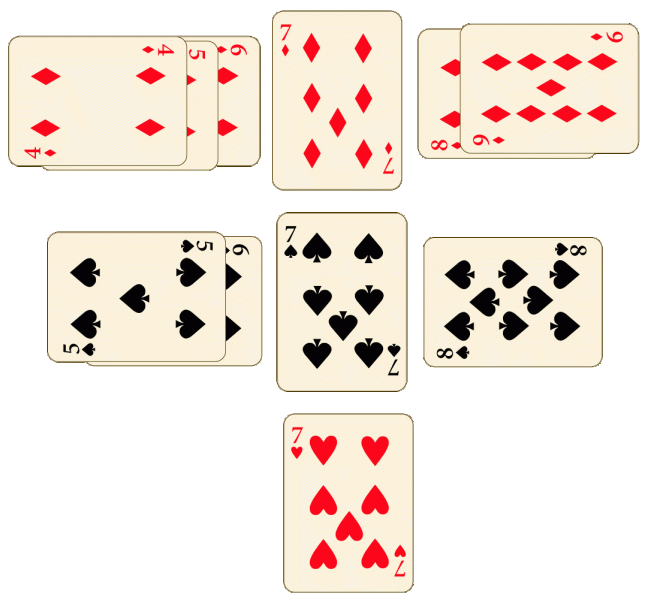
Once a seven is played in any suit, the six and the eight of that suit may be played on either side of it, forming the fan. Then the five through ace can go on the six in counting-down order, and the nine through king can go on the eight, counting up. You can arrange these cards to overlap each other so the cards below are visible, or you can square up the stacks so only the top card is seen.

A Fan Tan game in progress.

Continue reading Math Game: Fan Tan (Sevens)

Math Games with Factors, Multiples, and Prime Numbers

Students can explore prime and non-prime numbers with these free favorite classroom games:

For $15-20 you can buy a downloadable file of the beautiful, colorful, mathematical board game Prime Climb. Or pick up the full Prime Climb game box at Amazon.

Or you can try the following game by retired Canadian education professor Jerry Ameis:

Factor Finding Game

FactorFindingGame

Math Concepts: multiples, factors, composite numbers, and primes.
Players: only two.
Equipment: pair of 6-sided dice, 10 squares each of two different colors construction paper, and the game board (click the image to print it, or copy by hand).

On your turn, roll the dice and make a 2-digit number. Use one of your colored squares to mark a position on the game board. You can only mark one square per turn.

  • If your 2-digit number is prime, cover a PRIME square.
  • If any of the numbers showing are factors of your 2-digit number, cover one of them.
  • BUT if there’s no square available that matches your number, you lose your turn.

The first player to get three squares in a row (horizontal, vertical, or diagonal) wins. Or for a harder challenge, try for four in a row.

 
* * *

This game was featured in the Math Teachers At Play (MTaP) math education blog carnival: MTaP #79. Hat tip: Jimmie Lanley.

This blog is reader-supported.

If you’d like to help fund the blog on an on-going basis, then please join me on Patreon for mathy inspiration, tips, and an ever-growing archive of printable activities.

If you liked this post, and want to show your one-time appreciation, the place to do that is PayPal: paypal.me/DeniseGaskinsMath. If you go that route, please include your email address in the notes section, so I can say thank you.

Which I am going to say right now. Thank you!

“Math Games with Factors, Multiples, and Prime Numbers” copyright © 2015 by Denise Gaskins. Image at the top of the post copyright © Jimmie via flickr (CC BY 2.0).