92nd Carnival of Homeschooling
Charlotte Mason Carnival: Music/Composer Study

And the Homeschool Blog Awards site is gearing up for this year’s program, for anyone who reads homeschooling blogs — and that’s all of us, right?
92nd Carnival of Homeschooling
Charlotte Mason Carnival: Music/Composer Study
And the Homeschool Blog Awards site is gearing up for this year’s program, for anyone who reads homeschooling blogs — and that’s all of us, right?

The Carnival of Education: Week 137…er, 138?
Charlotte Mason Blog Carnival – First Edition
And what goes together better than homeschooling, families, and frugal living?
After a hectic couple of weeks, I finally found a little time to sit at the computer and browse — and boy, was I amazed to see what I had missed! If you have not yet read Dave‘s interview with Prof. Lynn Arthur Steen about the state of math education reform, click over and check it out: Part I here, and Part II here.
According to the intro, Prof. Steen “has been a driving force for the reform of school mathematics for many years and was on the development team that produced NCTM’s Curriculum and Evaluation Standards for School Mathematics. For the last few years, he has been involved in Achieve’s commitment to developing world-class mathematics standards for K-8 and ADP’s similar commitment to secondary mathematics.” He has some interesting things to say, although many of his statements are open to various interpretations, and at times he seems determined to provoke a hot-headed response. For instance:
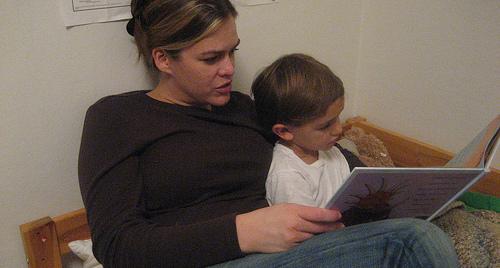
[Photo by Betsssssy.]
Do you ever take your kids’ math tests? It helps me remember what it is like to be a student. I push myself to work quickly, trying to finish in about 1/3 the allotted time, to mimic the pressure students feel. And whenever I do this, I find myself prone to the same stupid mistakes that students make.
Even teachers are human.
In this case, it was a multi-step word problem, a barrage of information to stumble through. In the middle of it all sat this statement:
…and there were 3/4 as many dragons as gryphons…
My eyes saw the words, but my mind heard it this way:
…and 3/4 of them were dragons…
What do you think — did I get the answer right? Of course not! Every little word in a math problem is important, and misreading even the smallest word can lead a student astray. My mental glitch encompassed several words, and my final tally of mythological creatures was correspondingly screwy.
But here is the more important question: Can you explain the difference between these two statements?
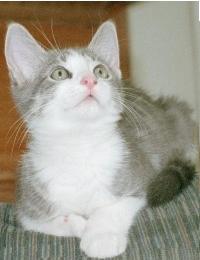
I found this worksheet on the KISS Grammar website, and I loved the quotations so much I just had to share them:
In a cat’s eye, all things belong to cats.
— English proverb
One cat just leads to another.
— Ernest Hemingway
Excellent post (quoting Rafe Esquith, author of Teach Like Your Hair’s On Fire) over at Mindless Math Mutterings.

Have you considered experimenting with writing in your math class this year? It seems that math journals are a growing fad, and for good reason:
Writing is how we think our way into a subject and make it our own.
Math journal entries can be as simple as class notes, or they can be research projects that take hours of experimentation and pondering. Students may use the journal to store their thoughts as they work several days to solve a challenge problem of the week, or they might jot down quick reflections about what they learned in today’s math class.
 The Carnival of Homeschooling #85: School Stuff Edition at Dewey’s Trehouse is stocking up for back-to-school season. From comfy couches to high-tech gadgets, they have a bit of everything. Be sure to check it out.
And the 132nd Carnival of Education comes to my neighborhood—well, to Illinois at any rate—hosted at Education Matters. Plenty of great reading to browse, think about, and post comments on. Enjoy!
Registrations have been rolling in for our homeschool co-op, and the most popular classes are full already. Math doesn’t seem to be a “most popular” class. I can’t imagine why! Still, many of my students from last year are coming back for another go, and I am getting spill-over from the science class waiting list.
Anyway, I have started planning in earnest for our fall session. As usual, I look to those wiser than myself for inspiration…
Many teachers are concerned about the amount of material they must cover in a course. One cynic suggested a formula: since, he said, students on the average remember only about 40% of what you tell them, the thing to do is to cram into each course 250% of what you hope will stick.
Continue reading Quotations XIII: Mathematics Education Is Much More Complicated than You Expected
This week’s Carnival of Homeschooling highlights the Department of Education’s (yes, the federal government agency) list of top reasons to homeschool your children. Janine Cate of Why Homeschool, the carnival’s home blog, says:
I’ve noticed that these reasons for homeschooling are phrased with the assumption that there must be something wrong with the school, wrong with the child or wrong with the family to motivate homeschooling. This is not surprising considering the list came from the Department of Education. Thus, I’ve added my own commentary in parenthesis.
It is an interesting read, as are the many homeschooling blog articles in the carnival. Check it out!
As I write, there is still time to send in your submissions for this week’s Carnival of Education, which should be up sometime tomorrow at The Education Wonks. I will come back then to put up a specific link.
Edited to add: The Carnival Of Education—Week 127 is now posted.
 Denise Gaskins' Let's Play Math