How To Master Quadratic Equations

G'Day Math logo

Feature photo above by Junya Ogura via Flickr (CC BY 2.0).

A couple of weeks ago, James Tanton launched a wonderful resource: a free online course devoted to quadratic equations. (And he promises more topics to come.)

Kitten and I have been working through the lessons, and she loves it!

We’re skimming through pre-algebra in our regular lessons, but she has enjoyed playing around with simple algebra since she was in kindergarten. She has a strong track record of thinking her way through math problems, and earlier this year she invented her own method for solving systems of equations with two unknowns.

I would guess her background is approximately equal to an above-average Algebra 1 student near the end of the first semester.

After few lessons of Tanton’s course, she proved — within the limits of experimental error — that a catenary (the curve formed by a hanging chain) cannot be described by a quadratic equation. Last Friday, she easily solved the following equations:

\left ( x+4 \right )^2 -1=80

and:

w^2 + 90 = 22 w - 31

and (though it took a bit more thought):

4x^2 + 4x + 4 = 172

We’ve spent less than half an hour a day on the course, as a supplement to our AoPS Pre-Algebra textbook. We watch each video together, pausing occasionally so she can try her hand at an equation before listening to Tanton’s explanation. Then (usually the next day) she reads the lesson and does the exercises on her own.

So far, she hasn’t needed the answers in the Companion Guide to Quadratics, but she did use the “Dots on a Circle” activity — and knowing that she has the answers available helps her feel more independent.

Continue reading How To Master Quadratic Equations

How to Recognize a Successful Homeschool Math Program

photo by danielrmccarthy
photo by Dan McCarthy (cc-by)

After teaching co-op math classes for several years, I’ve become known as the local math maven. Upon meeting one of my children, fellow homeschoolers often say, “Oh, you’re Denise’s son/daughter? You must be really good at math.”

The kids do their best to smile politely — and not to roll their eyes until the other person has turned away.

I hear similar comments after teaching a math workshop: “Wow, your kids must love math!” But my children are individuals, each with his or her own interests. A couple of them enjoy an occasional geometry or logic puzzle, but they never voluntarily sit down to slog through a math workbook page.

In fact, one daughter expressed the depth of her youthful perfectionist angst by scribbling all over the cover of her Miquon math workbook:

  • “I hate math! Hate, hate, hate-hate-HATE MATH!!!”

Translation: “If I can’t do it flawlessly the first time, then I don’t want to do it at all.”

photo by Jason Bolonski (cc-by)

Continue reading How to Recognize a Successful Homeschool Math Program

5 Stars at Home School Book Review

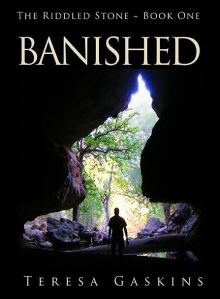
Wayne at Home School Book Review just posted a very kind review of my daughter’s book:

Banished is a captivating fantasy story with a well-thought-out plot that would be a credit to any writer. But it is especially remarkable coming from a thirteen-year-old student who has been homeschooled all her life.

However, be forewarned. When you reach the final page and find the words, “Not the End…,” you will cry, “Oh! No!”

I for one feel as if I simply can’t wait to read the next installment to find out what happens to Chris and his friends. It’s that good!

More Than One Way to Solve It, Again

photo by Annie Pilon via flickr

We continue with our counting lessons — and once again, Kitten proves that she doesn’t think the same way I do. In fact, her solution is so elegant that I think she could have a future as a mathematician. After all, every aspiring novelist needs a day job, right?

If only I could get her to give up the idea that she hates math…

Permutations with Complications

How many of the possible distinct arrangements of 1-6 have 1 to the left of 2?

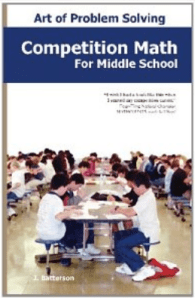
Competition Math for Middle School, by J. Batterson

Continue reading More Than One Way to Solve It, Again

More Than One Way to Solve It

More-Than-One-Way

Photo by Eirik Newth via flickr.

In a lazy, I-don’t-want-to-do-school mood, Princess Kitten was ready to stop after three math problems. We had gotten two of them correct, but the last one was counting the ways to paint a cube in black and white, and we forgot to count the solid-color options.

For my perfectionist daughter, one mistake was excuse enough to quit. She leaned her head against me as we sat together on the couch and said, “We’re done. Done, done, done.” If she could, she would have started purring — one of the most manipulative noises known to humankind. I’m a soft touch. Who can work on math when there’s a kitten to cuddle?

by tanjila ahmed via flickr

Still, I managed to squeeze in one more puzzle. I picked up my whiteboard marker and started writing:

DONE
DOEN
DNOE
DENO
DNEO
ONED
ODNE

Continue reading More Than One Way to Solve It

The (Mathematical) Trouble with Pizza

Photo by George Parrilla via flickr.

Kitten complained that some math programs keep repeating the same kind of problems over and over, with bigger numbers: “They don’t get any harder, they just get longer. It’s boring!”

So we pulled out the Counting lessons in Competition Math for Middle School. [Highly recommended book!] Kitten doesn’t like to compete, but she enjoys learning new ideas, and Batterson’s book gives her plenty of those, well organized and clearly explained.

Today’s topic was the Fundamental Counting Principle. It was review, easy-peasy. The problems were too simple, until…

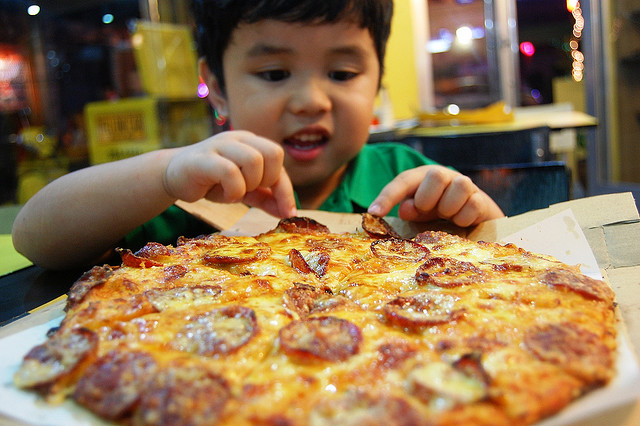
Pizzas at Mario’s come in three sizes, and you have your choice of 10 toppings to add to the pizza. You may order a pizza with any number of toppings (up to 10), including zero. How many choices of pizza are there at Mario’s?

[The book said 9 toppings, but I was skimming/paraphrasing aloud and misread.]

  • Can you figure out the answer?

Continue reading The (Mathematical) Trouble with Pizza

Our Power Outage Adventure

[Photo by Nestor Galina.]

Our power finally came back on this afternoon after a couple of cold, dark nights.

Staying Warm

We heated the house with candles and stove-top burners (propane). We found that if you get enough candles lit in a room, it really can make a difference, and the stove was able to keep the kitchen in the upper-50’s, even above 60 degrees at times, which was pretty comfortable. We dressed in lots of layers and wore gloves, drank a plenty of coffee and hot chocolate, listened to oldies on the battery-powered radio, and went to bed early each night. (Hooray for sleeping bags!)

Continue reading Our Power Outage Adventure

A Little Bit of This, a Little Bit of That…

funny pictures of cats with captions

It’s high time I got back on track with my Alexandria Jones posts, so I’ve been working hard on a short introduction to probability, to go along with The Birthday Surprise. Or, more honestly, I’ve been procrastinating on a short intro … well, anyway, here’s a little of what I’ve been reading around the interwebs lately.

Continue reading A Little Bit of This, a Little Bit of That…

Congratulations, Kitten!

[Photo by dougwoods.]

Today is my daughter Princess Kitten’s blogiversary. Check out her post:

And then take some time to browse her blog. I think you’ll enjoy her stories. She’s even written a few things about math:

[Update: I just noticed that this is the 500th post to be published on Let’s Play Math! blog. Wow! I guess Kitten and I will both be celebrating today…]

Rate Puzzle: How Fast Does She Read?


[Photo by Arwen Abendstern.]

If a girl and a half
can read a book and a half
in a day and a half,
then how many books can one girl read in the month of June?

Kitten reads voraciously, but she decided to skip our library’s summer reading program this year. The Border’s Double-Dog Dare Program was a lot less hassle and had a better prize: a free book! Of course, it didn’t take her all summer to finish 10 books.

How fast does Kitten read?

Continue reading Rate Puzzle: How Fast Does She Read?