5 Ways To Enrich Your Student’s Experience of Math

In previous posts, I encouraged parents, homeschoolers, and teachers to explore the world of math and introduced one of my favorite learning tools, the math journal.

But you may be wondering, what can my students do with their journal? How do I find good math prompts?

Here are five different ways your children can explore math through writing, classified by the type of reasoning involved.

#1: Game Prompts

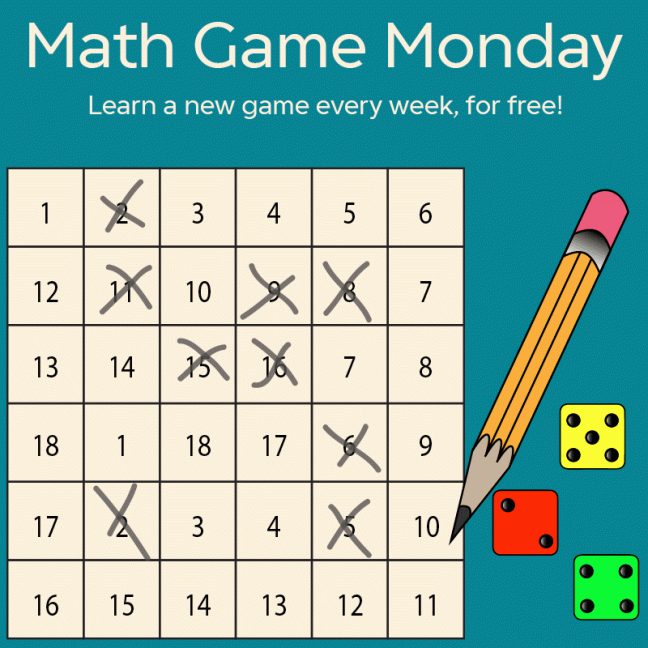
Ask your children to play a number or strategy game and then write about it.

Game prompts break through the idea that math is dull and boring. They help students develop a positive attitude toward math while practicing their number skills or strategic thinking.

Continue reading 5 Ways To Enrich Your Student’s Experience of Math

Why Math Game Monday?

Learn a new game with Math Game Monday

There’s a new Math Game Monday this week.

Have your kids tried it yet?

This week’s game is one of my favorites for early elementary grades, a logic game that makes children think about numbers and strategy.

Or, if you’re reading this post later and missed that one, there’s another great new game this week for you to play.

Check it out:

Visit Math Game Monday

Continue reading Why Math Game Monday?

What Is a Math Journal?

In my previous post, I encouraged parents, homeschoolers, and teachers to think of math as a nature walk through an infinite world of wonder.

A math journal is a record of your child’s journey through this world of mathematics.

In a math journal, children explore their own concepts about numbers, shapes, and patterns through drawing or writing in response to a question. Journaling teaches them to see with mathematical eyes — not just to remember what we adults tell them, but to create their own math.

Journaling brings math back into the liberal arts. It makes abstract ideas accessible and stretches children’s understanding, building math fluency and creating a solid foundation for future learning.

Continue reading What Is a Math Journal?

The Creative Way To Help Your Kids Learn Math

Are you a parent, homeschooler, or teacher? Do your children struggle to learn math? Are you worried about them falling behind?

So many parents (and teachers, too!) feel like they are “not a math person,” yet they know how important math is for their children to learn. How can we teach something we don’t really understand ourselves?

Others feel comfortable with math themselves — and may even love it — yet still struggle to pass on their knowledge to their kids. How can we share the joy we see in numbers, shapes, and patterns with youngsters who think they hate math?

Continue reading The Creative Way To Help Your Kids Learn Math

Playful Math #152: Auld Lang Syne Edition

Welcome to the 152nd edition of the Playful Math Education Blog Carnival — a smorgasbord of delectable tidbits of mathy fun. It’s like a free online magazine devoted to learning, teaching, and playing around with math from preschool to high school.

Bookmark this post, so you can take your time browsing. There’s so much playful math to enjoy!

We didn’t have a volunteer host for January, so I’m squeezing this in between other commitments. This is my third no-host-emergency carnival in the last year, which is NOT sustainable. If you’d like to help keep the Playful Math Carnival alive, we desperately need hosts for 2022!

By tradition, we start the carnival with a puzzle or activity in honor of our 152nd edition. But if you’d rather jump straight to our featured blog posts, click here to see the Table of Contents.

Math Journaling with Prime Numbers
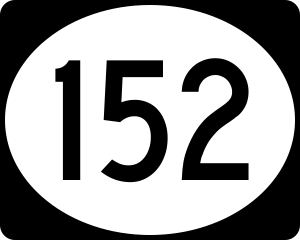
Cool facts about 152: The eighth prime number is 19, and 8 × 19 = 152. When you square 152, you get a number that contains all the digits from 0–4. You can make 152 as the sum of eight consecutive even numbers, or as the sum of four consecutive prime numbers.

But 152 has two real claims to fame:

  • It’s the smallest number that is the sum of the cubes of two distinct odd primes.
  • And it’s the largest known even number you can write as the sum of two primes in exactly four ways.

So here’s your math investigation prompt:

  • Play around with prime numbers. Explore their powers, their sums, and anything else about them you like.
  • What do you notice? What do you wonder?
  • What’s the most interesting number relationship you can find?

Continue reading Playful Math #152: Auld Lang Syne Edition
Playful Math Education Carnival 147

Welcome to the 147th edition of the Playful Math Education Blog Carnival — a smorgasbord of delectable tidbits of mathy fun. It’s like a free online magazine devoted to learning, teaching, and playing around with math from preschool to high school.
Bookmark this post, so you can take your time browsing. There’s so much playful math to enjoy!

By tradition, we start the carnival with a puzzle in honor of our 147th edition. But if you’d rather jump straight to our featured blog posts, click here to see the Table of Contents.

Continue reading Playful Math Education Carnival 147

Playful Math Carnival 144: Anniversary Edition

Welcome to the 144th edition of the Playful Math Education Blog Carnival — a smorgasbord of delectable tidbits of mathy fun. It’s like a free online magazine devoted to learning, teaching, and playing around with math from preschool to high school.
Bookmark this post, so you can take your time browsing.

There’s so much playful math to enjoy!

By tradition, we would start the carnival with a puzzle/activity in honor of our 144th edition. But this time, I want to take a peek back at the history of our carnival.

But if you’d rather jump straight to our featured blog posts, click here to see the Table of Contents.

Continue reading Playful Math Carnival 144: Anniversary Edition

What Are Mixed Numbers?

I just discovered a fascinating fact: In some places in the world, mixed numbers apparently don’t exist.

So that made me curious about my blog readers:

  • Did you learn about mixed numbers in school?
  • Do you ever use mixed numbers in daily life?
  • Are your children learning to work with them?

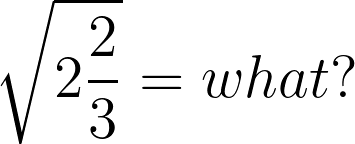
And if you DO know mixed numbers, can you simplify this mess:

[If you enjoy dry math humor, the answer is worth the work.]

Continue reading What Are Mixed Numbers?

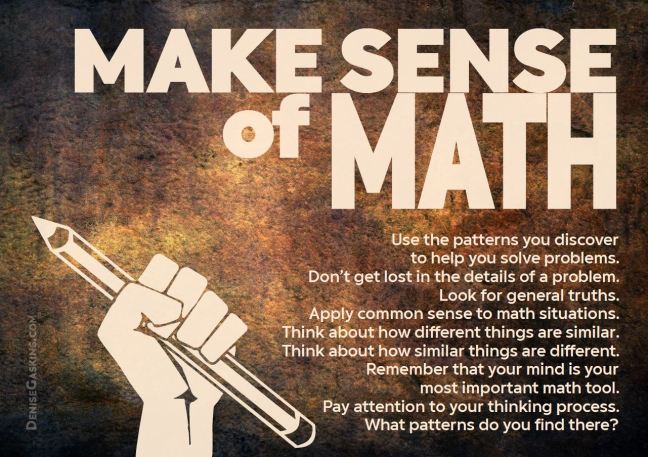
Make Sense of Math

So, I decided to rewrite the Standards for Mathematical Practice into student-friendly language.

Here’s the final installment…

Math Tip # 8: Make Sense of Math.

  • Use the patterns you discover to help you solve problems.
  • Don’t get lost in the details of a problem. Look for general truths.
  • Apply common sense to math situations.
  • Think about how different things are similar.
  • Think about how similar things are different.
  • Remember that your mind is your most important math tool.
  • Pay attention to your thinking process. What patterns do you find there?

Continue reading Make Sense of Math

The Professor of Legend

The traditional mathematics professor of the popular legend is absentminded.

    He usually appears in public with a lost umbrella in each hand.

      He prefers to face the blackboard and to turn his back to the class.

        He writes a, he says b, he means c; but it should be d.

          Some of his sayings are handed down from generation to generation.

            • “In order to solve this differential equation you look at it till a solution occurs to you.”
            • “This principle is so perfectly general that no particular application of it is possible.”
            • “Geometry is the science of correct reasoning on incorrect figures.”
            • “My method to overcome a difficulty is to go round it.”
            • “What is the difference between method and device? A method is a device which you used twice.”

            George Pólya
            How To Solve It

            If you’re not familiar with Polya’s work, here’s a 4-page summary of his problem-solving method.

            Or check out David Butler’s wonderful Solving Problems Poster, which encapsulates Pólya’s system in a visual, easy-to-follow way that works with younger students, too.

            4 steps to solving problems

            CREDITS: “Professor” cartoon (top) by André Santana via Pixabay.
            THE FINE PRINT: I am an Amazon affiliate. If you follow the book link above and buy something, I’ll earn a small commission (at no cost to you).